
Chimney Sweep: Repair or Replace? How East Boston Homeowners Decide
Chimney repair or replacement in East Boston isn’t a gut call. It comes down to three things you can actually measure: the condition of the liner, the structural integrity of everything above the roofline, and the cost per remaining year of useful life. A chimney that looks fine from the street can hide a cracked terra cotta liner, spalled mortar joints, and a worn crown, and those repairs stack fast. Get close to a rebuild in total and replacement stops being the expensive option.
If you’d rather have someone look before you guess, call (888) 898-1071.
What Does “Replace” Actually Mean on a Chimney?
Full teardown and rebuild is rare. When East Boston homeowners hear “replace,” they picture a mason knocking the whole stack down, and that’s usually not what the job requires. In most cases, “replace” means replacing the liner inside the flue, which is a completely different scope and cost from rebuilding masonry. Here’s how the two divide out:
- Liner replacement: the flue gets a new stainless or cast-in-place liner run inside the existing masonry chase. The chimney structure stays up.
- Crown and cap replacement: the top seal and the cap come off and get rebuilt or swapped. This is chimney cap & crown work, and it’s often what people actually need when they think they need a rebuild.
- Masonry rebuild: the brick column above the roofline comes down and goes back up from the first course. This is the real heavy end of the spectrum, and it’s reserved for structural failure.
Knowing which of these you’re facing changes the whole conversation. A chimney with a failed liner doesn’t need a new chimney. It needs a new liner, and that’s a fraction of the work.
Which Liner Failures Make Repair Impossible?
Not all liner cracks are equal. On a camera inspection, we sort them into three categories, and only one of them forces replacement. The difference is direction and extent, not how scary the crack looks on a screen.
Offset cracks
These run across the tile, usually at a joint or where the flue takes a slight bend. They’re often patchable with resurfacing. We use HeatShield, a ceramic repair system designed to extend liner life without a full reliner, when the crack pattern and remaining tile integrity support it. It’s a cost-aware option most generalist contractors don’t carry.
Longitudinal cracks
These run the length of the tile, along its axis. A single longitudinal crack can sometimes be resurfaced. Multiple longitudinal cracks across several sections usually mean the tile is done and a new liner is the safer call. This is where the camera footage matters, because you can see the difference yourself.
Complete section collapse
When a tile section has broken away and dropped, or the flue has lost its continuous shape, repair is off the table. The flue can’t be resurfaced back into a reliable path for exhaust. At that point a DuraFlex flexible liner system gets installed, which we stock and install directly, so there’s no waiting on third-party sourcing for one of the most common chimney repair needs in East Boston.
When Does Masonry Above the Roofline Need to Come Down?
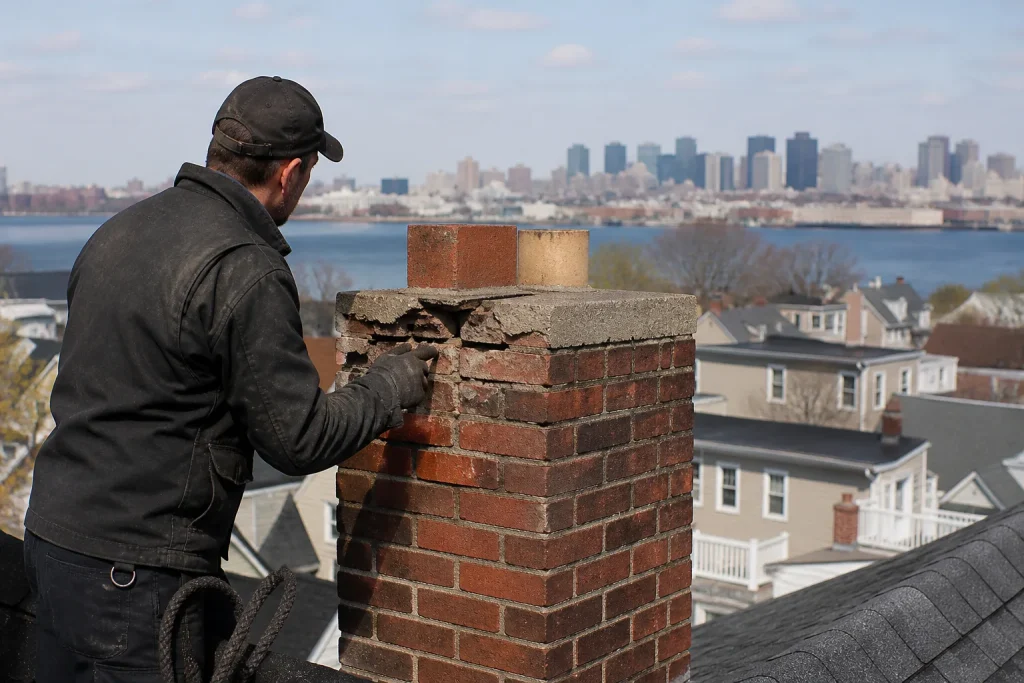
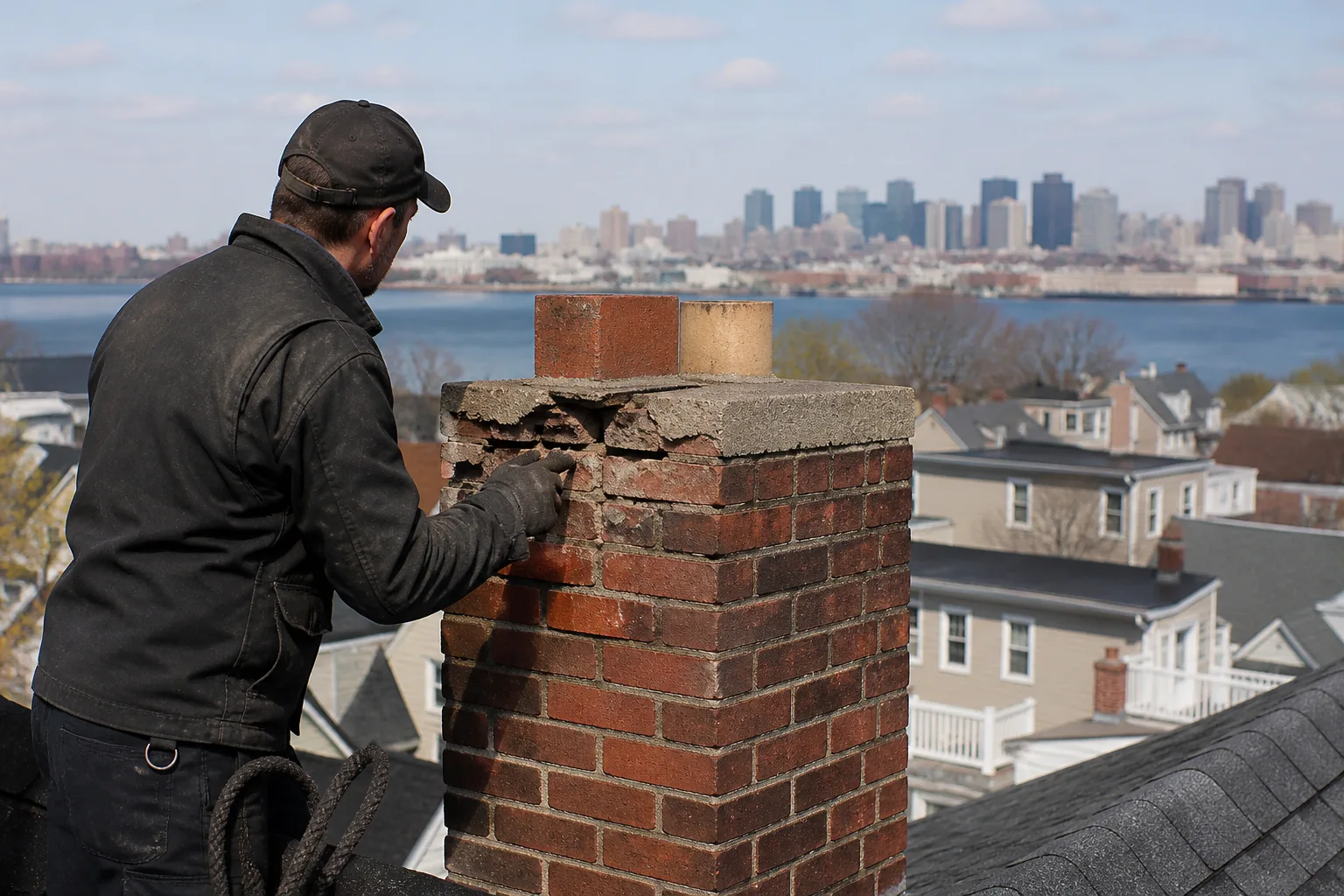
This is the structural threshold, and it’s where the repair-versus-replace decision gets real. Spalling brick and eroded mortar joints are patchable up to a point. Past that point, you’re rebuilding.
The framework we use:
- Isolated spalling and repointing: a handful of bricks are flaking, a few joints have recessed. Tuckpointing and spot replacement handle this. Repair territory.
- Widespread joint erosion with sound brick: mortar is washing out across the column, but the brick faces are intact. Still repairable, though the repointing scope is larger.
- Spalling through multiple courses with lost bond: the brick faces are failing and the mortar has lost its grip on the units. At this stage, the column can’t be trusted to hold a new liner or carry a cap load. The masonry above the roofline comes down and goes back up from the first course.
What pushes a chimney from category two to category three is rarely one dramatic event. It’s cumulative. An East Boston chimney that’s been through many freeze-thaw cycles without a crown protecting the top is the classic case, because water gets in at the top and works down through the joints all winter. The crown is the part that keeps that from happening, and a crown that’s cracked or pulling away from the flue is the first thing we check. We select Gelco and Famco caps for fit and draft compatibility, because a cap that blocks draft or fails to shed water just relocates the problem.
How Do You Calculate the Break-Even Point?
This is the part most homeowners never get shown. Repair-versus-replace isn’t about which option is cheaper today. It’s about cost divided by remaining years of service. A cheap repair that buys three years can cost more per year than a proper replacement that runs for decades.
The lifespan framework:
- Stainless 316 liner: the long-life option. It handles the heat and the condensate a wood-burning or oil flue throws at it, and it’s what we’d install where the flue is going to see regular use.
- Aluminum liner: shorter service life, suited to specific applications like certain gas appliances. It’s not the right choice for a wood-burning flue, and treating it as a universal substitute is where a lot of cheap liner jobs go wrong.
- Cast-in-place liner: a poured or sprayed system that insulates and seals. Good where the existing flue shape needs structural support and resurfacing isn’t enough.
- Masonry with proper maintenance: a brick column that’s capped, crowned, and kept sealed can run for many decades. The maintenance is what buys the years, not the brick alone.
Run the math on a property in East Boston this way. Take the cost of a repair that buys you, say, a limited number of years, and divide it by those years. Do the same with a replacement liner and its expected service life. Whichever number is lower per year is the better financial decision for that specific chimney. We’ll walk you through that calculation on your own property, using the actual numbers from your inspection, not generic estimates.
If you have multiple issues and aren’t sure what to tackle first, a standalone inspection is the right starting point. It scopes the whole system and gives you a written picture to work from, and it’s useful for home buyers or insurance requirements too.
What About the Real Estate Side?
An older chimney with repair documentation sells better than one with no service history. That’s the part most East Boston homeowners underestimate until they’re in a disclosure conversation. A buyer’s inspector will look at the chimney, and a buyer’s lender may ask about it. What you want in hand is a paper trail: a camera inspection report, a record of what was done and when, and a warranty on the liner if one was installed.
A replaced liner with a transferable warranty is a concrete line item in a disclosure package. It answers the question before the buyer asks it, and it removes the “unknown condition” discount a nervous buyer will otherwise apply. A chimney with a documented repair history does the same thing on a smaller scale. The point isn’t that everything has to be new. The point is that the condition is known and written down.
If you’re prepping a house in East Boston for sale, an inspection and a written report is often the highest-value thing you can do before listing. It tells you what to fix and what can safely wait, and the buyer gets a document instead of a shrug.
What Can Safely Wait, and What Can’t
Here’s where we’re honest with you. Not every finding on an inspection report needs work this season. Some items are watch-and-monitor, and telling you that is part of doing the job properly.
- Can usually wait: minor isolated spalling, a cap that’s intact but showing cosmetic wear, light surface buildup that a routine sweep clears.
- Shouldn’t wait: a cracked crown letting water into the masonry, an active liner breach, a collapsed section, or a cracked flue serving a fuel-burning appliance. These are the ones that get worse with every freeze-thaw cycle and every burn.
A failed flue liner isn’t just a draft problem. It’s the path that combustion gases and carbon monoxide would travel into the home if the flue can’t contain them, and a cracked flue in a wood system is also where creosote can sit against bare masonry. We won’t tell you a hazard exists that we haven’t shown you on camera. Everything we recommend comes with footage and photos you can see for yourself. That’s how you avoid being told you need thousands in liner or masonry work you have no way to verify.
When to Call a Pro
Some of this you can check yourself. A visual look at the crown for cracks, a glance at the cap for damage, and a note of any water stains or draft problems will tell you something is off. But the liner and the mortar joints inside the flue? Those need a camera. And any repair involving a liner, a crown rebuild, or masonry above the roofline is not a weekend project, particularly where heat and exhaust are involved.
Our technicians have up to 8 years of experience running the full system, from the sweep to the repair to the cap, so you’re dealing with one team from diagnosis through the fix. Our chimney sweep clears the flue and the fireplace repair side handles the firebox, and it’s all the same crew. No sourcing a second contractor mid-project.
Related services in East Boston: chimney inspection, sweep, cap and crown, fireplace repair, and chimney repair.
The Bottom Line
The repair-versus-replace decision on a chimney is a function of three measurable factors: liner condition, structural integrity above the roofline, and cost per remaining year of useful life. Full teardown and rebuild is rare. More often, the answer is a liner replacement, a crown rebuild, or targeted masonry work, and a camera inspection is what tells you which. Get the footage, get the numbers, and the decision makes itself.
If you’re in East Boston and want a straight answer on your chimney, Chimney Sweep East Boston offers free estimates. Call (888) 898-1071. We answer 24/7. Fast dispatch from 7am to 7pm, Sunday through Friday. Closed Saturday.
Frequently Asked Questions
A routine sweep in East Boston is a straightforward service priced per job by a written estimate, and the estimate itself is free. The cost depends on the flue configuration, how much buildup there is, and whether inspection findings add scope. Call (888) 898-1071 for an exact quote.
It depends on the crack pattern. Offset cracks at a joint are often resurfaced with HeatShield ceramic repair. Longitudinal cracks across several sections usually call for a new liner, and a collapsed section always does. You should see the camera footage and make the call with the technician, not on faith. Call (888) 898-1071 for an exact quote.
Sweeping frequency depends on how much you burn and what you burn. A wood-burning fireplace in regular use needs more frequent sweeping than a gas insert. An annual inspection is the reliable way to know when the flue has reached its limit, and it’s why we treat inspection as a standalone service. Call (888) 898-1071 for an exact quote.
Small problems compound. A cracked crown lets water into the masonry, and freeze-thaw cycles widen every joint it reaches. A liner breach stops containing exhaust properly. Skipping a repair doesn’t save money, it moves the cost to a larger job later. Call (888) 898-1071 for an exact quote and find out what can safely wait and what can’t.
Written by the team at Chimney Sweep East Boston.
Need Chimney Cleaning Help?
Call Chimney Sweep East Boston - the local pro we connect you with is licensed and insured, here with fast help in East Boston.
(888) 898-1071