
Last updated November 25, 2026
 Sweep & inspection
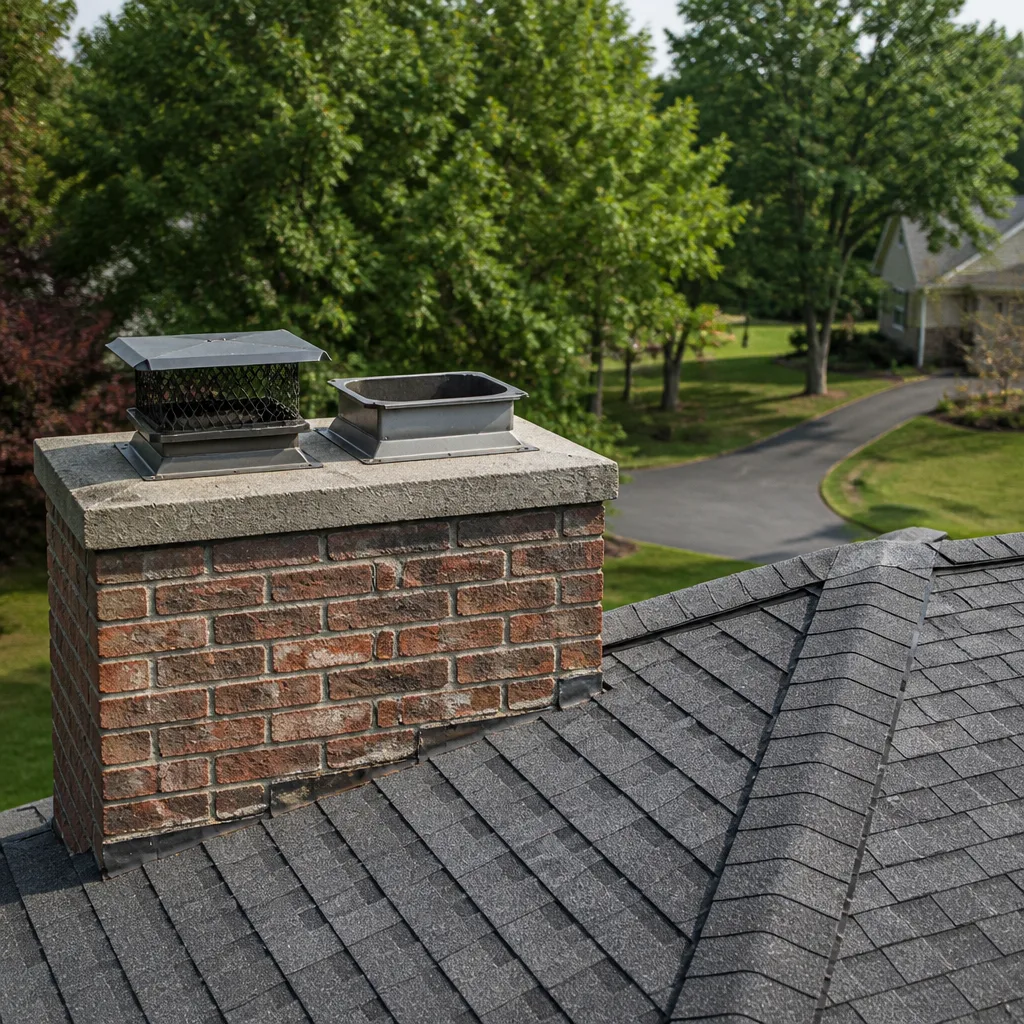
 Caps & crowns
 Flue relining
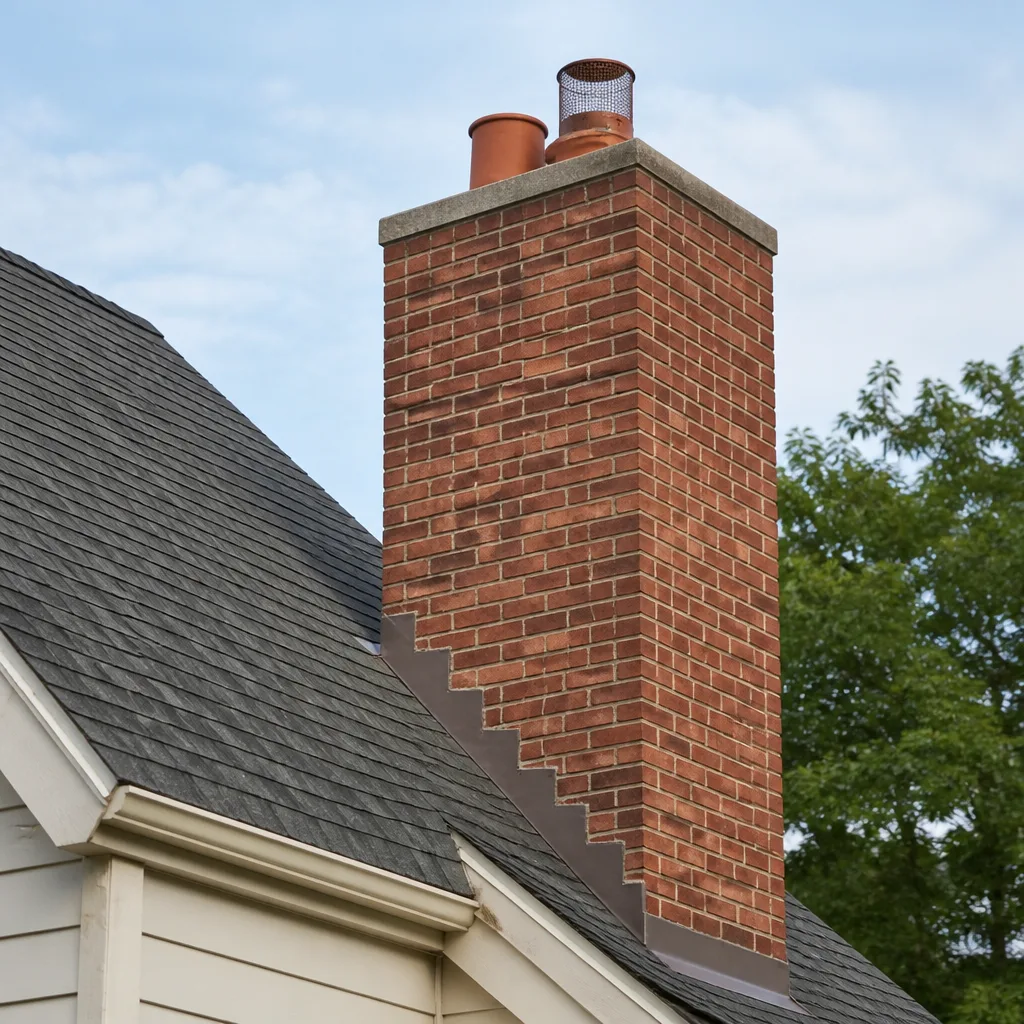 Masonry repair
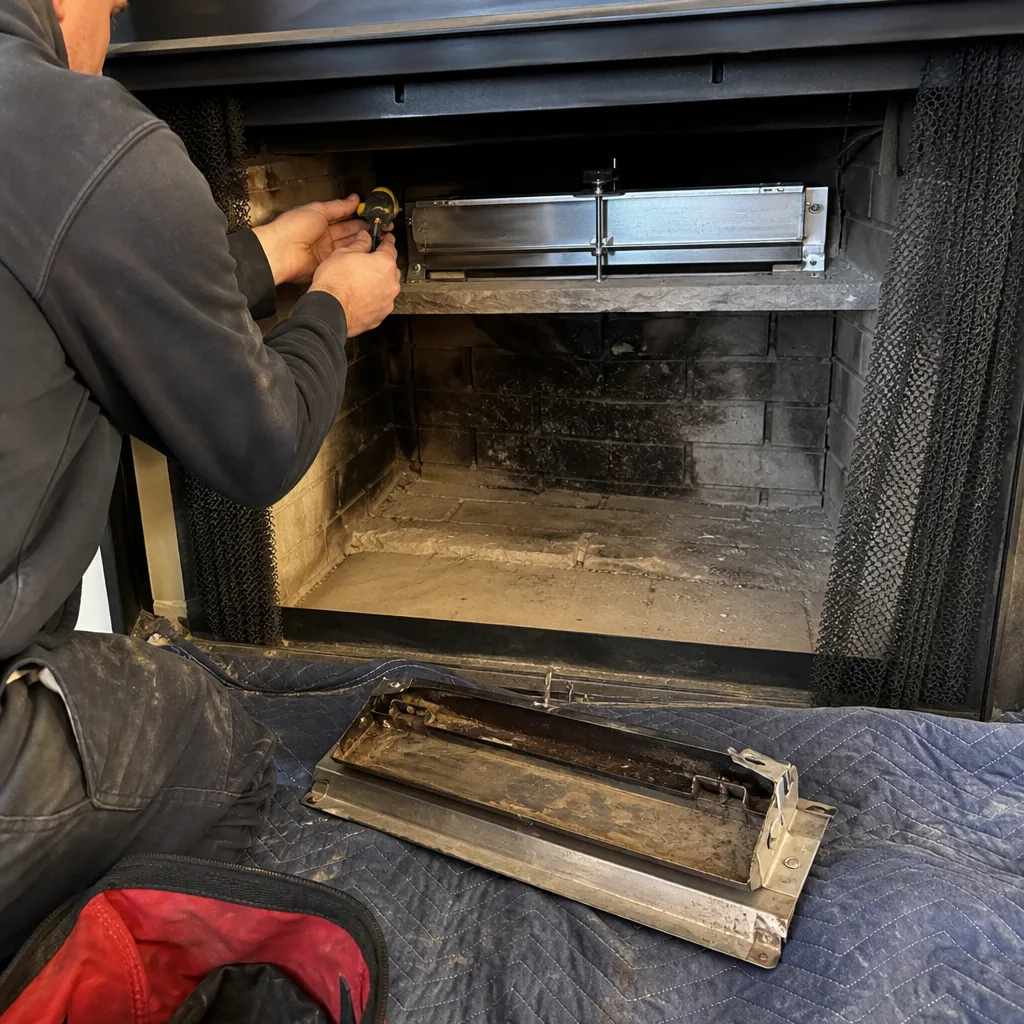
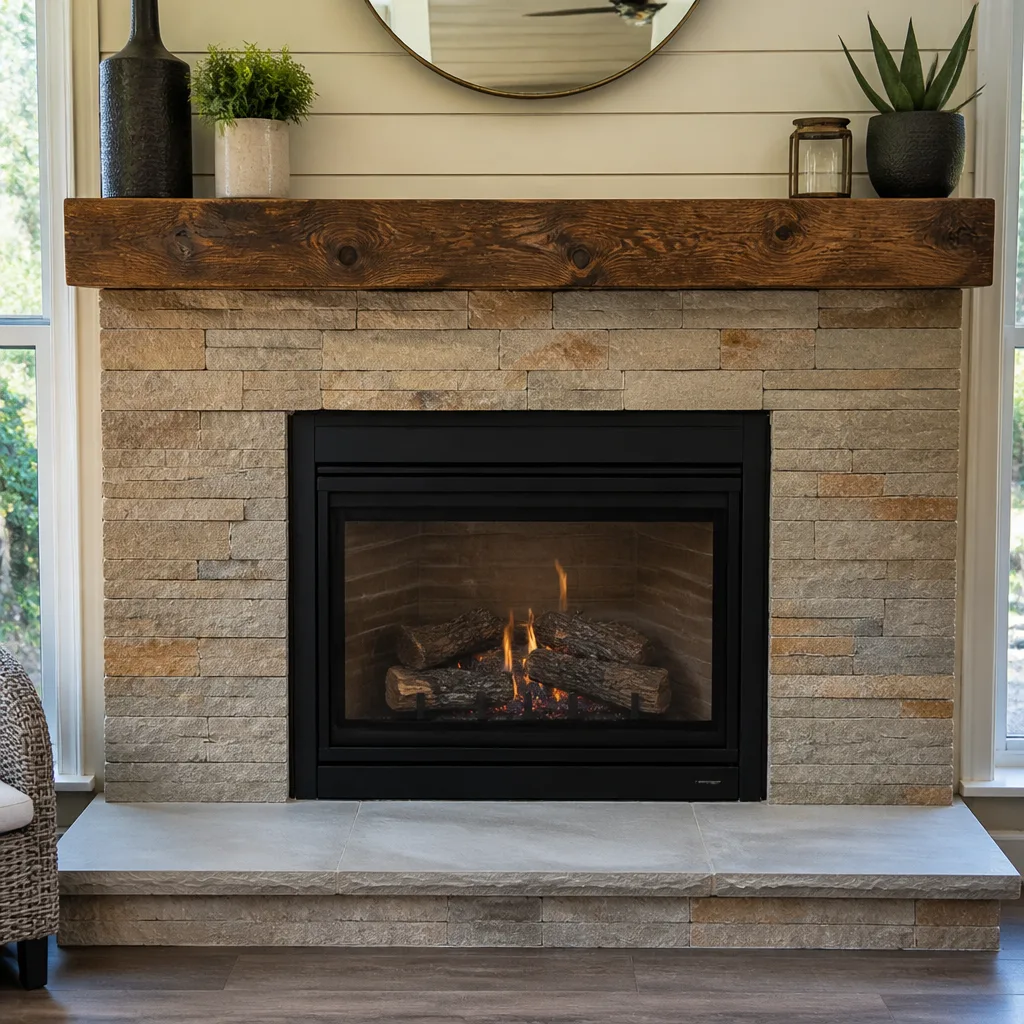 Gas fireplace service
Level 1 sweep and inspection to the NFPA 211 annual standard - flue, crown, cap, and flashing checked and photographed
Chimney sweep logs do not sweep chimneys. They loosen some creosote - which then falls where a brush and vacuum still have to collect it.
Seasonal Chimney Cleaning Care for East Boston: Year-Round Homeowner’s Guide
Most homeowners treat a chimney like a car that only needs attention in the fall. Sweep it once before the first fire, then forget it until next year. That schedule leaves a lot of damage on the table, and in East Boston the damage is specific and predictable. Spring is when your chimney does the most harm to itself. Winter freeze-thaw cycles open hairline cracks in masonry and the tile liner, and the first warm rain drives water straight through those cracks into the firebox and the framing around it. By the time you notice a stain on the ceiling in September, the problem has had a whole summer to grow. This guide walks through what a real four-season maintenance calendar looks like in East Boston, what to check each quarter, and why the annual-only routine misses the moments that matter most.
Quick Answer
Chimney care in East Boston runs on four distinct seasonal checkpoints, not one: a spring inspection to catch freeze-thaw damage before rain gets in, a summer pass on caps, crowns, and liner joints, a fall sweep and inspection timed before the first fire, and a mid-winter look for warning signs a homeowner can catch without a full appointment. Gas inserts and wood-burning fireplaces need different timing and different attention within that calendar. An annual-only sweep skips the spring and summer windows when water damage and cap failure do the most expensive harm.
Styles & brands we work with
- Sweep & inspection
- Caps & crowns
- Flue relining
- Masonry repair
- Gas fireplace service
Table of Contents
- Why East Boston Chimneys Need a Four-Season Calendar
- Spring: Catching Freeze-Thaw Damage Before Water Gets In
- Summer: Caps, Crowns, and Liner Joints in the Humid Months
- Fall: The Pre-Season Sweep and Inspection Sequence
- Winter: Mid-Season Warning Signs You Can See Yourself
- Gas Inserts vs. Wood-Burning Fireplaces: The Calendar Diverges
- How East Boston Housing Shapes the Schedule
- Common Mistakes to Avoid
- When to Call a Professional
- Frequently Asked Questions
Why East Boston Chimneys Need a Four-Season Calendar
An annual sweep treats the chimney like a combustion problem that resets every year. That’s only half the story. A chimney is a masonry and metal structure exposed to weather on the outside and to heat, moisture, and corrosive byproducts on the inside. In East Boston, the weather swings hard between seasons. Winter gives you repeated cycles of freezing and thawing that push mortar and brick apart. Spring brings steady rain. Summer brings weeks of humid air that works on liner joints and exterior metal. Fall is the reset before you start burning again. Each season stresses a different part of the system.
The result is that a chimney serviced only in October can carry a cracked crown or a separated liner joint through an entire spring and summer before anyone looks at it. That’s how a small repair becomes a liner replacement. Full-system thinking means matching the timing of the check to the timing of the stress. Here’s the broad map:
- Spring: structural inspection and masonry repair, before water infiltrates.
- Summer: cap and crown service, flashing and liner-joint review, off-season repairs.
- Fall: the sweep, the creosote check, the pre-season inspection, and a readiness sign-off.
- Winter: self-monitoring for warning signs that suggest a mid-season visit.
A Chimney Sweep East Boston appointment can cover any one of these checkpoints, or all four across a year. The key is to stop thinking of chimney work as a single annual event and start thinking of it as four short check-ins on different parts of the system. Our technicians have up to 8 years of experience and can walk you through the calendar specific to your house and your heating setup.
Why the spring window matters most. If you only do one thing differently this year, make it a spring inspection. The freeze-thaw damage from winter is invisible until water has already found it. Catching a crack in March is cheap. Catching it in October, after a summer of rain has soaked into the firebox, is not.
Spring: Catching Freeze-Thaw Damage Before Water Gets In
Spring is the most important inspection window of the year in East Boston, and it’s the one most homeowners skip. After a winter of freezing and thawing, masonry and mortar have expanded and contracted repeatedly. Hairline cracks open at the crown, along the flue shoulders, and around the mortar joints. Left alone, April rain travels straight down those cracks into the firebox and the framing around the chimney chase. Water damage compounds faster than almost any other chimney problem because it works on the structure from the inside out.
What a spring inspection should actually cover:
- The crown. The concrete cap on top of the chimney. Look for cracks, spalling, and separation from the flue. A cracked crown is the number-one entry point for spring water.
- The mortar joints. All of them, front and back. Receded or crumbling joints are the freeze-thaw signature and often predict where water will enter next winter.
- The tile liner. With a camera inspection, the technician can see the interior of the flue for cracked or displaced tiles. Cracks that grew over the winter are visible now, before they matter.
- Flashing and the chimney chase. Where the chimney meets the roof, spring is the season for failures. Look for lifted or cracked flashing and water stains on the framing.
- The firebox and smoke chamber. Spring water can pool inside if the crown is failing, and the firebox is where you’d first see it.
Here’s what a lot of homeowners don’t realize: this is also the season when a small repair can extend the life of the whole liner. Chimney resurfacing is designed exactly for this scenario. When the interior tile is deteriorated but not gone, a ceramic resurfacing system like HeatShield (an EPA-recognized repair method for deteriorating tile liners) can seal and smooth the flue without a full reliner replacement. It’s a cost-aware option that keeps the original masonry in service longer. We use HeatShield specifically because it lets us tell you honestly that a full liner replacement isn’t needed yet.
Spring is also the right time to schedule the repair itself. If the crown is cracked or a joint is failing, the repair can be done well before the fall rush and before summer humidity has a chance to work on the exposed surface. One crew, start to finish, means the same person who inspects in March can do the repair in April and confirm it in the fall.
Summer: Caps, Crowns, and Liner Joints in the Humid Months
Summer in East Boston is the season most people assume nothing is happening to their chimney. In fact, summer is when two forces do the most quiet damage: extended humidity and lack of use. A chimney that sits idle for months while the air is damp develops problems that a hard-working winter chimney never does. And it’s the best window of the year to fix them, because you’re not burning.
Why caps and crowns deserve their own summer appointment
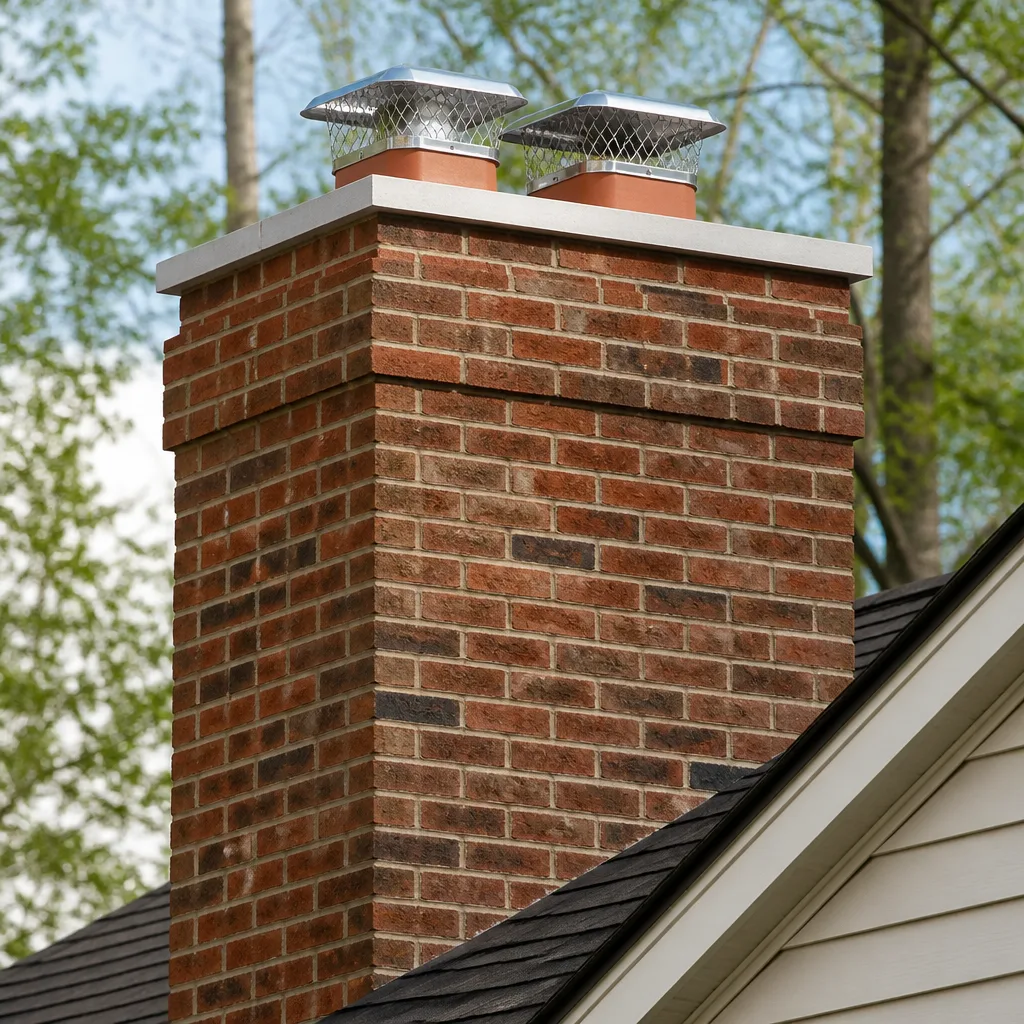
The chimney cap is the small roof over the top of the flue. It’s the front line of defense against rain, debris, and animals, and it’s also the part most exposed to summer weather. A cap that has corroded, shifted, or lost its screen lets water in, slows the draft, and invites birds and squirrels to nest in the flue. Crown cracks that started in spring will also get worse over the summer, especially if the concrete absorbs moisture. Cap and crown work is a distinct specialty, not an afterthought. We fit Gelco and Famco caps selected for draft compatibility and long-term weather resistance, not just coverage. Our chimney cap & crown work is often the smallest, most cost-effective call of the year, and it prevents the biggest water problems.
What humidity does to liner joints
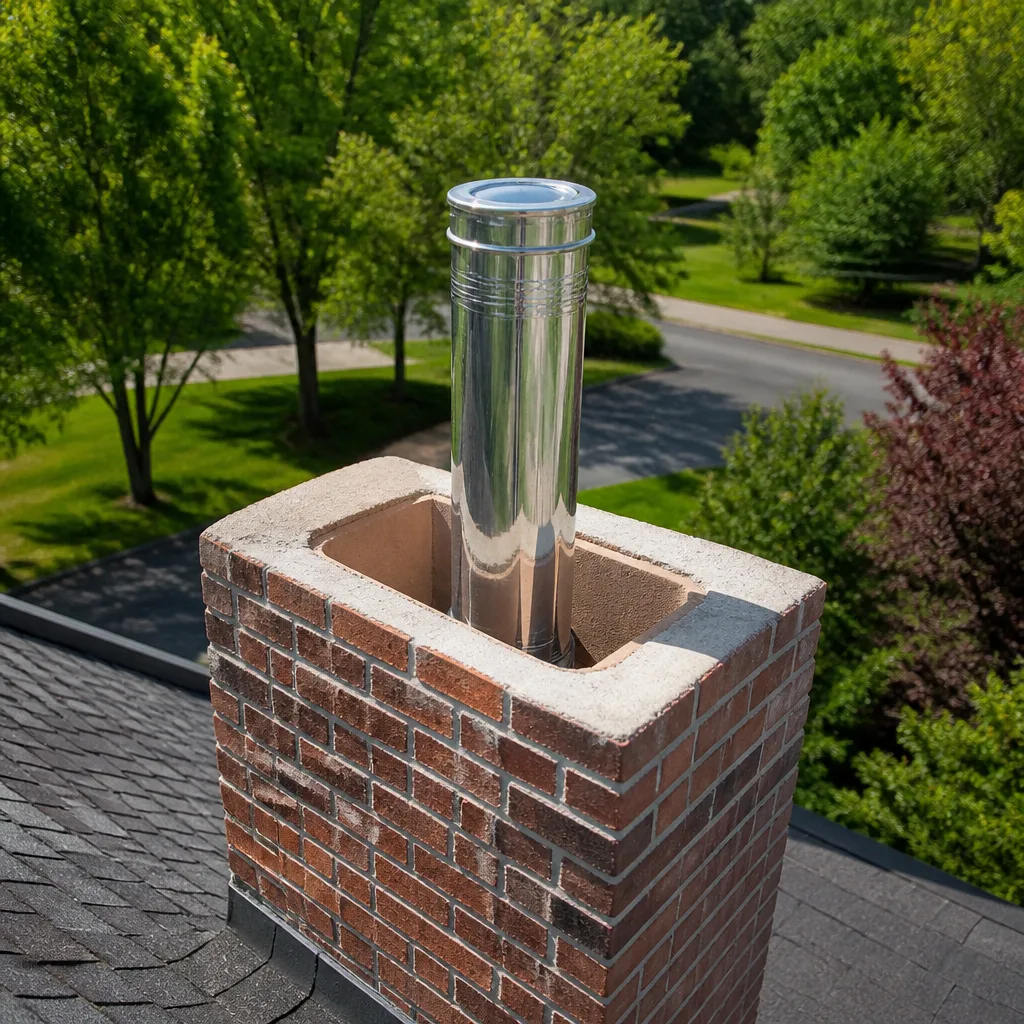
Most modern flues are lined, and the liner has joints, whether it’s a clay tile stack or a flexible stainless system like DuraFlex. Over a summer of humid air, the mortar around clay tiles softens, and metal liner joints can work loose if they weren’t properly seated. None of that shows up as a problem until you light the first fire in the fall and smell it. A summer liner-joint check catches it while the weather still lets us do the fix comfortably. If your flue has an aging clay tile stack, this is also the season to consider whether a DuraFlex liner is now the right call. We install DuraFlex flexible liner systems directly, which means no waiting on third-party sourcing if a reline turns out to be the right answer. If it isn’t, the same appointment can resurface an intact liner with HeatShield and buy you more years.
Why off-season repairs are easier
Summer is the most comfortable time of year for a repair. There’s no fire risk, no rush to get the chimney back in service, and no competition for scheduling. A cap replacement, a crown rebuild, a flashing repair, or a liner intervention can be done with the chimney cold and the weather cooperating. It’s the opposite of the first cold snap in October, when every homeowner in East Boston is suddenly calling at once.
Fall: The Pre-Season Sweep and Inspection Sequence
Fall is the season everyone remembers, and it’s still the most important single appointment of the year for a wood-burning chimney. The point of the fall visit isn’t just to sweep. It’s to sweep and inspect in the right order, so the sweep clears the flue and the inspection confirms the flue is actually safe to use. Done in the wrong order, you sweep a flue that has a crack you can’t see.
Here’s the sequence that matters:
- Inspect first. A camera inspection before the sweep shows the condition of the liner, the smoke chamber, and the firebox. It also shows how much and what kind of creosote is present.
- Sweep. A professional chimney sweep removes soot, ash, and creosote from the flue and smoke chamber. The kind of creosote matters here: glazed, hard creosote is a fire hazard and requires more than a brush.
- Re-check after sweeping. The technician confirms the flue is fully clear and inspects the liner and joints again with the soot gone. Cracks hide under soot and ash.
- Trim and clearance check. Confirm that tree limbs and roof features don’t interfere with draft and that the chimney top is clear of debris.
- Cap and crown confirmation. Verify the cap is in place and the crown is intact going into the wet season.
- Sign-off. A written summary of what was found and what (if anything) needs attention before the first fire.
Why timing the fall sweep matters
A sweep done in June is wasted by October, because the chimney has sat unused since. A sweep done in the first week of November is often done in a hurry. The sweet spot in East Boston is a sweep in late September or early October, before the first really cold night but late enough that any summer humidity damage has already shown itself. That timing gives you the inspection result while there’s still time to do a repair before the first fire. If a liner joint is compromised, you want to know that in early October, not on the night you want to light your first fire.
This is also when we like to make the case for the full-system check. A fall appointment with us covers the sweep and inspection together, so you’re not sourcing a separate inspector after the sweep. Reach out early in the season and we can book you into the sequence without rushing.
Winter: Mid-Season Warning Signs You Can See Yourself
Once the burning season starts, you don’t need a full inspection to know something may be off. Winter is the season for self-monitoring. If you see any of the signs below, call for a mid-season visit rather than waiting for spring. None of them is a guarantee of a problem, but each one is worth a conversation.
- Smoke that rolls back into the room. A draft failure can be a suddenly blocked flue, a shifted cap, or a liner problem. Don’t keep burning while it happens.
- A stronger smell than usual from the firebox. A creosote or soot smell that lingers after the fire is out can mean the flue needs a mid-season sweep.
- Creosote forming on the damper or firebox walls. If you can see shiny or flaky buildup, it’s a sign the flue is loading faster than normal. Wood type and burn habits affect this.
- Water stains or dampness on the chimney chase or ceiling. In winter, this usually means ice has forced a crown or flashing failure open. Stop and get it looked at.
- A change in draft. A fire that used to draw well and now doesn’t is a chimney telling you something changed.
- Animals or nesting material in the firebox. A missing or damaged cap screen lets in birds and squirrels, which can block the flue.
Safety note. A chimney fire is not always loud and obvious. It can burn quietly inside the flue, and a slow-burning chimney fire is still a serious event. If you hear a low roaring sound, see flames or sparks from the top, or notice the chimney pipe glowing, get out of the house and call 911. Carbon monoxide is also worth taking seriously. If your carbon monoxide alarm sounds, leave the house and call 911 first, then call us. Every one of these signs is a reason for a professional to look, not to keep burning “one more night.”
Mid-winter calls are the ones where the phone matters most. We answer 24/7 and fast dispatch runs from 7am to 7pm, Sunday through Friday. We’re closed on Saturday.
Gas Inserts vs. Wood-Burning Fireplaces: The Calendar Diverges
Most seasonal care advice assumes a wood-burning fireplace. A meaningful share of homes in East Boston now run a gas insert or an oil-flue system instead, and the seasonal calendar for those is genuinely different. Knowing which one you have changes when and why you schedule service.
Wood-burning fireplaces
A wood-burning fireplace is the calendar this guide has been describing. Fall sweep, spring inspection, summer cap and crown check, winter self-monitoring. The main threat is creosote from burning wood, plus water damage to masonry and liner. Wood-burning homes should treat the fall sweep as non-negotiable. The liner needs to be verified, the firebox needs to be clean, and the cap and crown need to be confirmed before the first fire.
Gas inserts
A gas insert burns cleanly, so creosote isn’t the concern. Instead, the calendar turns on three things: the flue, the venting, and the appliance itself. Gas inserts still need annual service, and they still need the flue checked, because moisture and condensation can corrode the venting and the liner over time. Gas inserts are often run without a chimney sweep in the classic sense, but the liner and vent path still need eyes on them. The summer months are the right time for that check, because the insert can be serviced cold and the appliance can be shut down without disrupting a fire. Fireplace repair on a gas insert is generally about the appliance and its venting, not the wood-flue creosote routine, but the flue itself stays part of the system.
Oil-flue systems
An oil-flue system produces different byproducts from wood, and the routine is different again. Oil flues tend to need attention on soot and sulfur-related deposits rather than creosote. The fall appointment is still the right timing, but the inspection focus is on the flue interior condition and on any sign of moisture infiltration from a bad crown or flashing. If you have an oil-flue system and you’ve been treating it like a wood fireplace, the timing stays roughly the same but the diagnosis changes. Our technicians have up to 8 years of experience across wood, gas, and oil flue systems and can tell you which calendar you’re actually on.
Either way, the principle holds: match the service to the fuel. A sweep that’s right for a wood-burning fireplace isn’t the right service for a gas insert, and an annual-only schedule isn’t a substitute for the seasonal windows.
How East Boston Housing Shapes the Schedule
East Boston is not a single housing type. The seasonal calendar shifts depending on where in East Boston you live and what kind of chimney your home has.
- Older triple-deckers and multi-family homes. Shared chimney structures and older masonry mean freeze-thaw damage shows up earlier. Spring inspections are especially valuable here because one failing crown can affect more than one unit.
- Homes near the water in East Boston. The East Boston shoreline and the neighborhoods near the harbor see more moisture in the air through summer, which makes the summer cap and liner-joint check more important.
- Homes close to Logan Airport and the main East Boston corridors. Roof exposure, wind, and debris from trees matter here. Fall clearance checks catch the material that wind drops into the flue.
- Renovated and newer homes. A homeowner who added a gas insert to an older East Boston home often has a mixed system. The insert calendar and the original chimney’s calendar need to be reconciled, and that’s a conversation worth having with someone who sees the whole system.
The point isn’t that every East Boston home is unique. It’s that the calendar should reflect the actual structure on the roof, not a generic annual check.
Common Mistakes to Avoid
- Skipping the spring inspection. Most East Boston homeowners only think about the chimney in fall. That single decision lets freeze-thaw damage sit under a summer of rain, and it’s the most common way a small repair becomes a large one.
- Sweeping without inspecting first. A brush pushes soot around, but it doesn’t reveal a cracked tile. Always inspect before and after the sweep, so you know what’s underneath.
- Treating the cap as optional. A missing or broken cap is the most common entry point for water, animals, and debris. It’s a small piece of the system with the biggest weather impact. Cap and crown work is a specialty, not a checkbox.
- Choosing shelf-grade parts over trade-grade. A generic big-box cap or a cheap liner component tends to fail faster and draft worse. We name the brands we use (Gelco, Famco, DuraFlex, Copperfield, Olympia Chimney) because the trade-grade parts exist for a reason and we’d rather you know what’s going on your house.
- Running a gas insert on the wood-fireplace schedule. A gas insert doesn’t need a creosote sweep, but it does need the vent and liner checked. Skipping it because “it’s gas” leaves the most weather-exposed part of the system unattended.
- Burning after a winter warning sign. Rollback smoke, a change in draft, and water stains all deserve a professional look. Burning through them is how a fixable issue becomes a real hazard.
- Ignoring the crown because the cap looks fine. The cap protects the flue, but the crown protects the masonry. A cracked crown can be invisible from the ground and be doing real damage all summer.
When to Call a Professional
You should call a professional any time you can’t verify the answer yourself. That includes the routine checkpoints (spring inspection, fall sweep) and every warning sign (rollback smoke, a fresh water stain, a change in draft, a chimney fire, or a carbon monoxide alarm). Call us for cap and crown damage, a suspected liner crack, a firebox that needs repair, or a home purchase that requires a standalone chimney inspection. Our inspections are available as a standalone service, useful for buyers, insurance requirements, and seasonal readiness checks. We answer 24/7, and fast dispatch runs from 7am to 7pm, Sunday through Friday, closed Saturday. Chimney Sweep East Boston offers free estimates in East Boston. Call (888) 898-1071.
Frequently Asked Questions
A wood-burning chimney should be swept and inspected at least once a year, and in East Boston we recommend treating it as a fall pre-season appointment plus a spring inspection. That gives you two eyes on the system each year: one before the burning season to confirm it’s safe, and one after winter to catch freeze-thaw damage before spring rain gets in. Gas inserts and oil-flue systems need annual service too, on a schedule suited to that fuel. A full inspection is the right first step. Call (888) 898-1071 for an exact quote. Estimates are free.
Yes, and it’s the single highest-value change most East Boston homeowners can make to their chimney routine. Winter freeze-thaw cycles open cracks in the crown, mortar, and liner, and those cracks are invisible from the ground. A spring inspection finds them before April rain has a whole season to travel down into the firebox and framing. If you only do the fall sweep, you’ll find the water damage months later, usually at the point it’s the most expensive to fix. Call (888) 898-1071 to book a spring inspection. Estimates are free.
Not always. A liner that’s cracked or spalling may be a candidate for resurfacing with HeatShield rather than a full reliner replacement. That’s the honest option we recommend where it fits: it extends the life of the existing liner and avoids the cost of a full DuraFlex reline when the tile isn’t gone. A liner that’s structurally failing or has large displaced tiles is a different conversation, and that’s where a DuraFlex liner system comes in. The right call depends on what a camera inspection actually shows inside your flue, not on a guess. Call (888) 898-1071 for an inspection with a written report. Estimates are free.
Mostly nothing visible, until it does. The risks of skipping are creosote buildup in a wood flue (a fire hazard), a cracked crown or flashing that lets water into the frame, a liner joint that works loose, and a cap failure that lets in animals or debris. None of these announce themselves early. The one you can’t skip is the safety check: a chimney fire and carbon monoxide risk are real, and a professional inspection is the only way to know the flue is clear and intact. Call (888) 898-1071 to schedule the next checkpoint. Estimates are free.
A wood-burning fireplace needs a fall sweep and inspection focused on creosote, soot, and liner condition. A gas insert doesn’t produce creosote, but it still needs the venting and liner checked for moisture, condensation, and corrosion, and the appliance serviced. Gas inserts are usually better scheduled in summer, when the appliance can be shut down cold. Oil-flue systems are a third routine, focused on soot and flue condition. The takeaway: know which fuel you’re on and match the service to it. Call (888) 898-1071 if you’re not sure which calendar applies to your East Boston home. Estimates are free.
Smoke rolling back into the room, a chimney fire (loud roar, visible flames at the top, glowing pipe), a carbon monoxide alarm, water stains on the chimney chase or ceiling, and a sudden change in draft. Any of those is a reason to stop burning and call. A carbon monoxide alarm and any sign of a chimney fire mean leave the house and call 911 first. We answer 24/7, and fast dispatch runs from 7am to 7pm, Sunday through Friday. Call (888) 898-1071.
The Bottom Line
The seasonal calendar is the whole point. Spring is the inspection window that catches freeze-thaw damage before water gets in, and skipping it is the most common mistake we see in East Boston. Summer is the time for cap and crown work and liner-joint checks, done cold and without rush. Fall is the pre-season sweep and inspection sequence, timed early enough that a repair can still happen before the first fire. Winter is for watching your own chimney and calling on the warning signs. Gas inserts and wood-burning fireplaces diverge at every step, so know which one you have. Match the timing to the stress, and the chimney stays safer for less money than the annual-only routine.
Ready to set up your East Boston chimney calendar? Call (888) 898-1071 for a free estimate. We answer 24/7 and fast dispatch runs from 7am to 7pm, Sunday through Friday. One crew handles the sweep, the inspection, the cap and crown, and the repair, start to finish. We name the materials we use and why.
We install and service DuraFlex flexible liner systems, apply HeatShield resurfacing where it fits, and fit Gelco and Famco caps selected for draft and weather performance. Our technicians have up to 8 years of experience across wood, gas, and oil flue systems. We’re closed on Saturday. Reach out today and let’s get your East Boston chimney on a schedule that actually fits the year.
Written by the team at Chimney Sweep East Boston.
See the difference
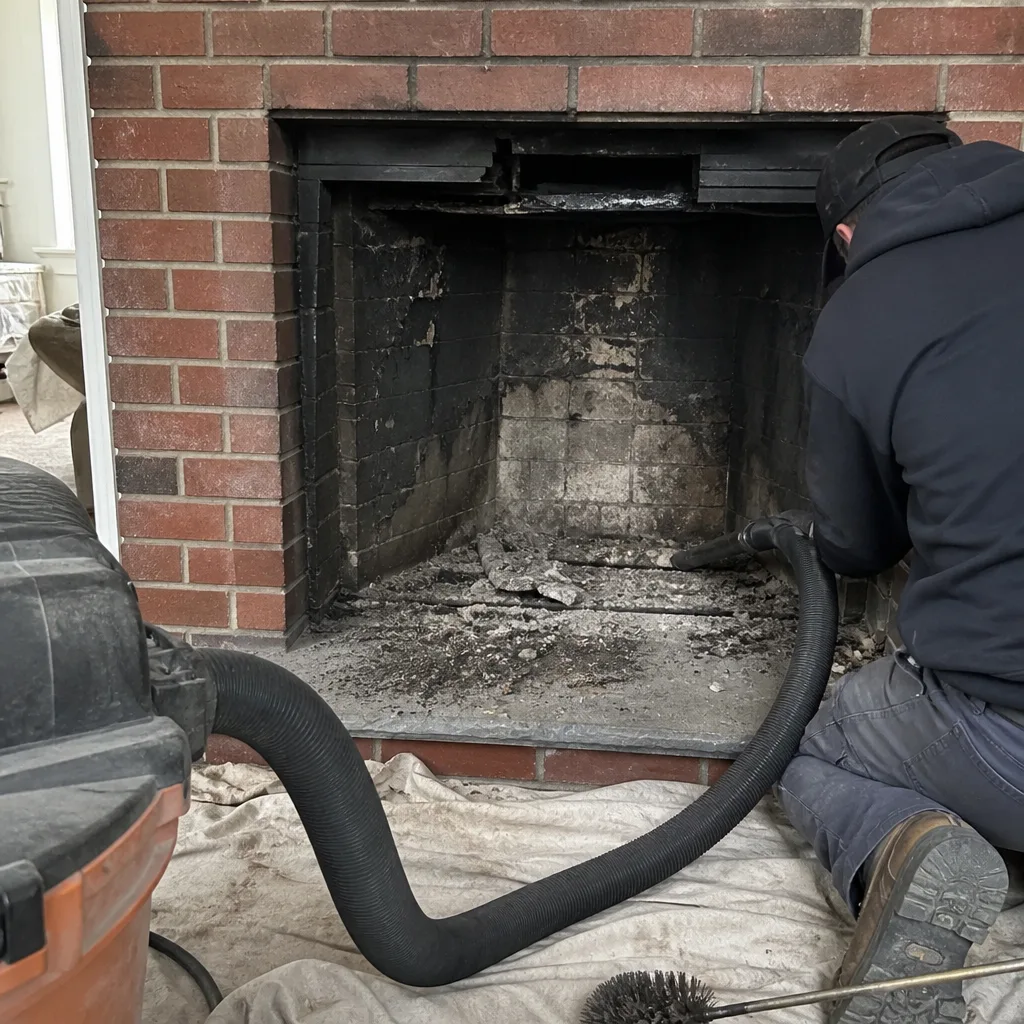 Before
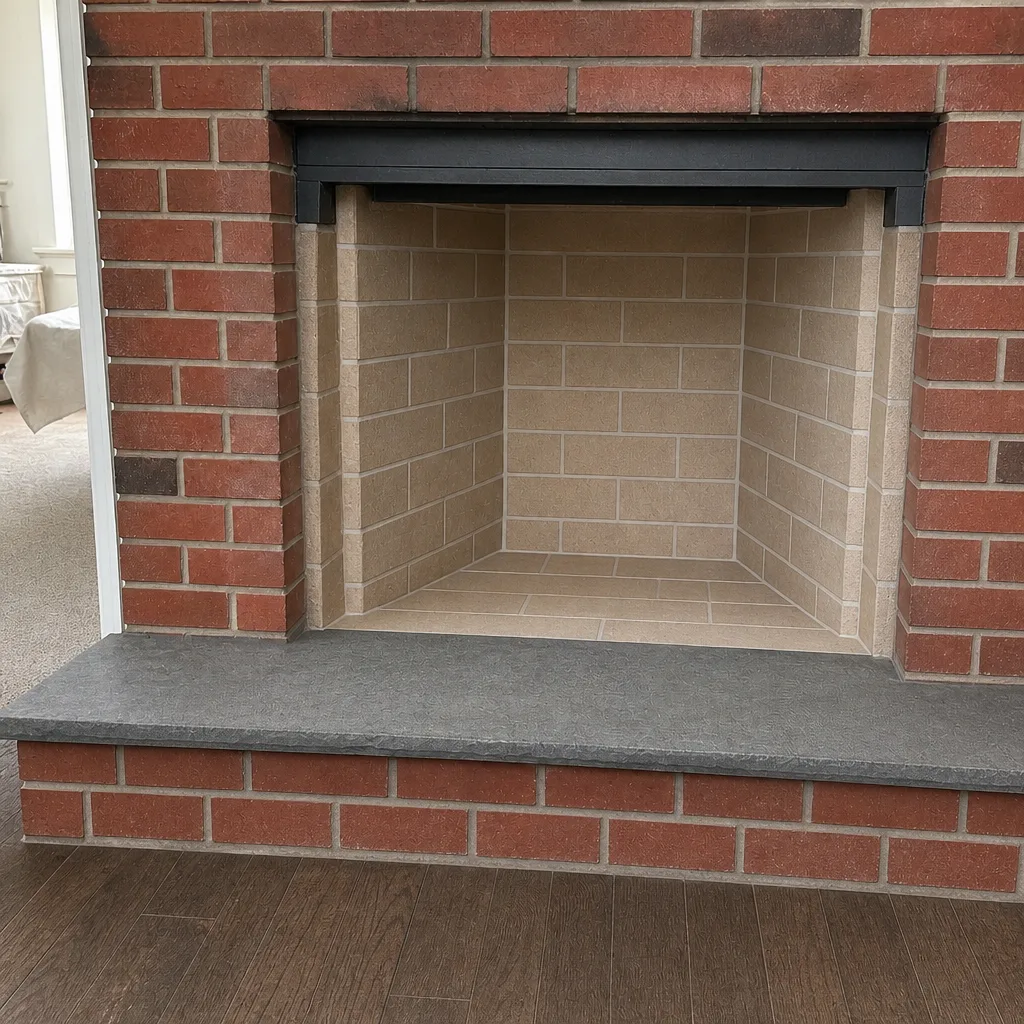 After
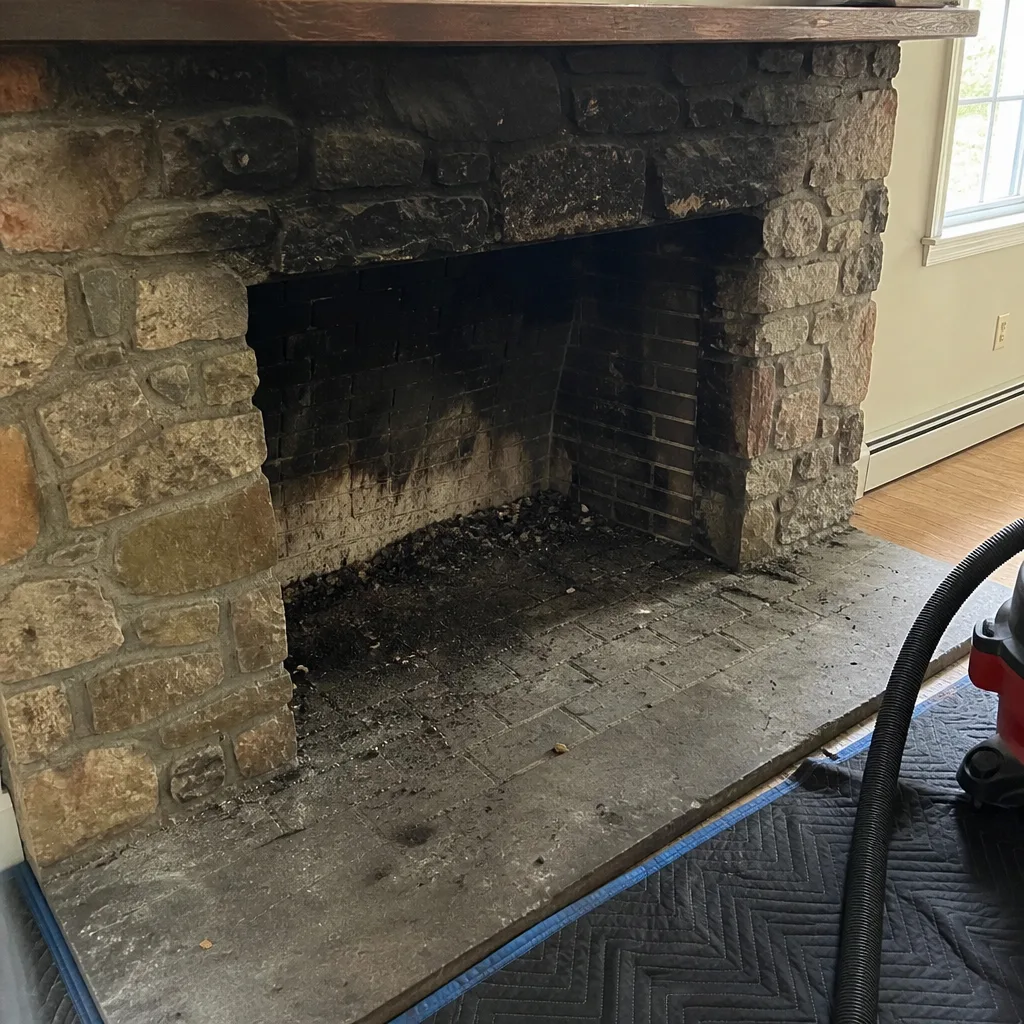 Before
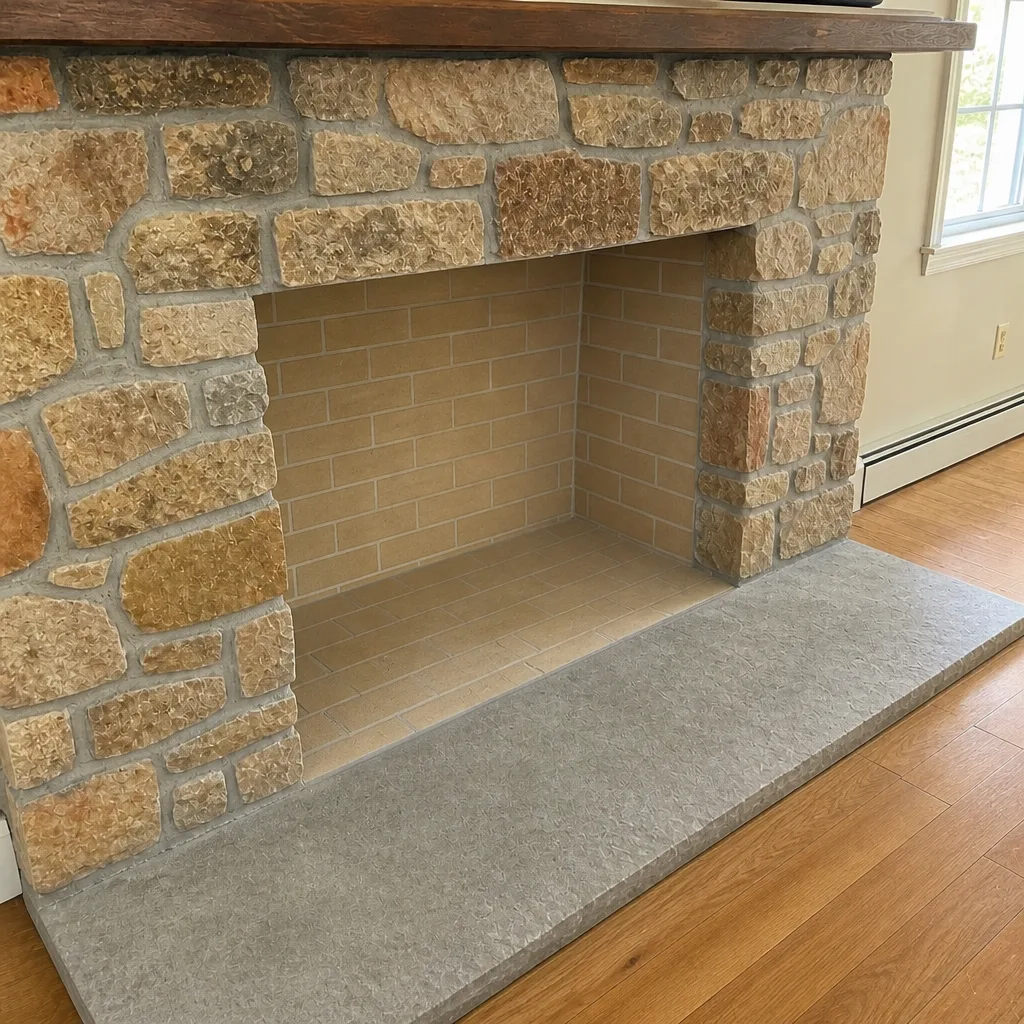 After
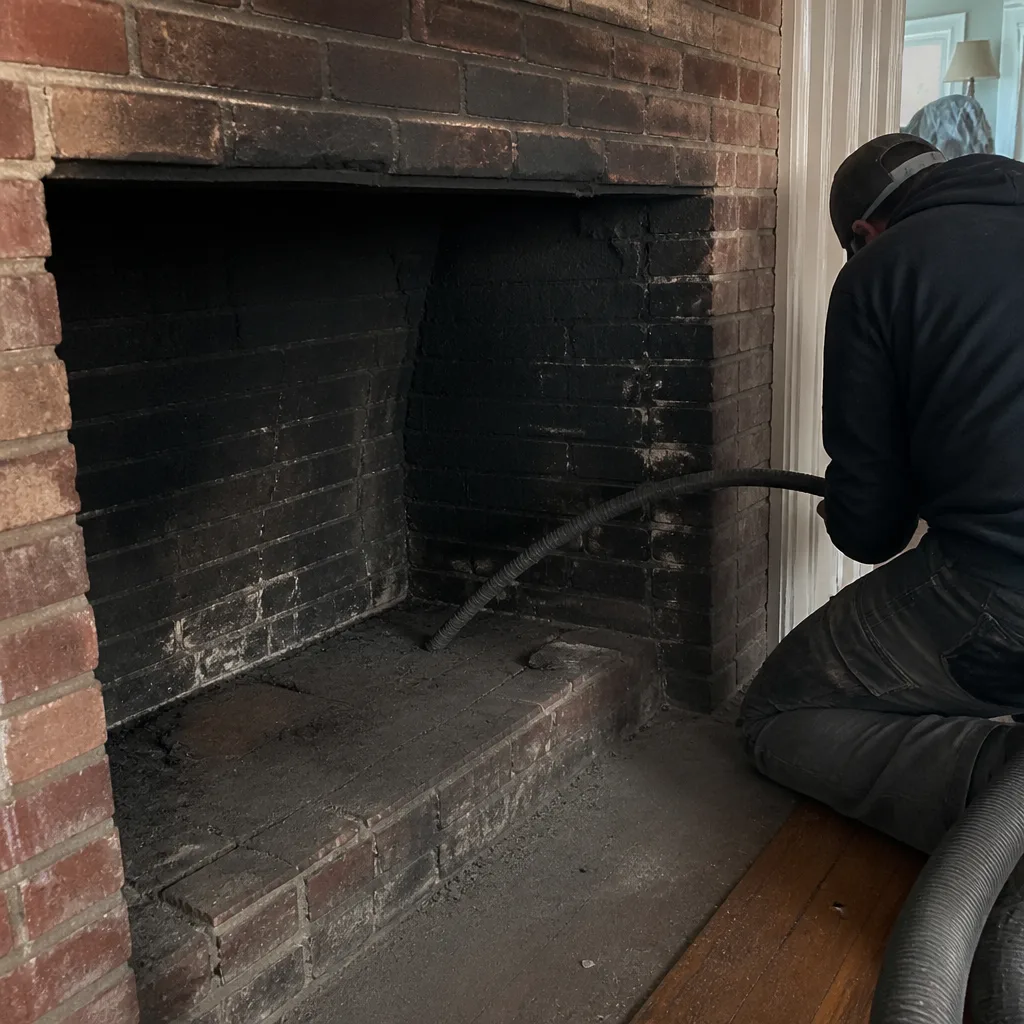 Before
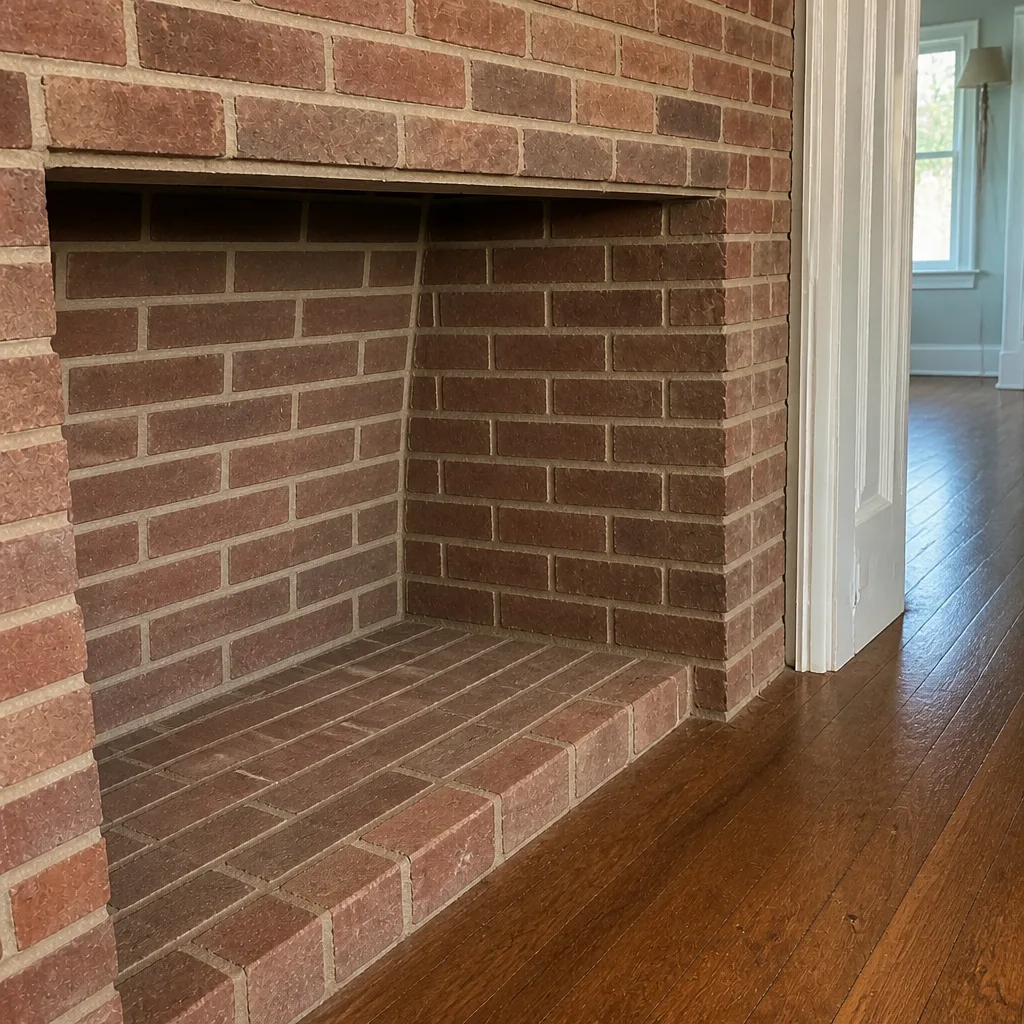 After