
Last updated November 25, 2026
 Sweep & inspection
 Caps & crowns
 Flue relining
 Masonry repair
 Gas fireplace service
Level 1 sweep and inspection to the NFPA 211 annual standard - flue, crown, cap, and flashing checked and photographed
Chimney sweep logs do not sweep chimneys. They loosen some creosote - which then falls where a brush and vacuum still have to collect it.
Chimney Cleaning Warning Signs: An East Boston Homeowner’s Reference Guide
A smoky smell in a room where no fire has burned is easy to dismiss as old-house character. In East Boston’s triple-deckers, it can be the first sign that a cracked liner is letting combustion gases escape into a neighboring flue or living space. The signals that a chimney needs cleaning or repair rarely arrive as smoke pouring into a room. They come as a rust streak on the firebox wall, a musty smell in July, a fire that won’t draw on a cold morning, or a chunk of brick on the roof. This guide translates those vague complaints into specific, observable indicators and maps each one to a likely cause, so you know what you’re looking at and whether it can wait.
Quick Answer
Chimney cleaning warning signs include rust streaks or white staining inside the firebox, a smoky or sulfur smell when the fireplace is cold, weak draft on cold starts, crumbling mortar or spalling brick on the exterior, and visible creosote buildup in the flue. In East Boston, the most urgent signs are odors in a neighboring unit that point to a cracked liner and exterior masonry damage on exposed brick rowhouses. Anything involving a compromised flue or gas smell needs a professional inspection before the next fire.
Styles & brands we work with
- Sweep & inspection
- Caps & crowns
- Flue relining
- Masonry repair
- Gas fireplace service
Table of Contents
- What rust streaks, efflorescence, and spalling inside the firebox are telling you
- Decoding draft problems: liner, cap, or house pressure
- Odor patterns and what each type points to
- Exterior masonry warning signs on East Boston rowhouses
- Creosote buildup: the sign you can’t see from the living room
- Which warning signs need immediate service and which can be scheduled
- What a proper chimney inspection actually checks
- Common mistakes to avoid
What rust streaks, efflorescence, and spalling inside the firebox are telling you
The inside of the firebox and the smoke chamber above it are where the clearest evidence lives. When you open the damper and look up with a flashlight, you’re reading a record of water, heat, and chemical exposure that has been building over many seasons. None of these signs are cosmetic.
Rust streaks
Rust on the damper frame, the firebox walls, or the metal components of a gas insert means moisture is present where it shouldn’t be. In an East Boston chimney, that moisture usually originates from a failing cap, a cracked crown, or a missing rain cover at the top of the flue. Follow the rust up: the source is almost always above the point where you see it.
Efflorescence (white staining)
That chalky white powder on the brick or firebox is salt drawn out of the masonry as water evaporates through it. Efflorescence is a reliable indicator of recurring water intrusion. Left alone, the same process that leaves the stain pushes salt crystals through the brick itself, weakening it from the inside. In East Boston’s older brick buildings, this is one of the most common water-damage signatures we look for.
Spalling
Spalling is when the face of the brick peels, flakes, or crumbles away because trapped moisture freezes and expands inside the masonry. East Boston’s freeze-thaw cycles in late winter accelerate this faster than in milder climates, and once spalling starts on a chimney crown or shoulder, it doesn’t reverse. Rust, efflorescence, and spalling form a chain: water gets in, masonry fails, the liner is exposed, and combustion gases have a path they weren’t supposed to have. Addressing the sign early, while it’s a cap or crown repair, is far less work than waiting for the liner to be the problem.
Decoding draft problems: liner, cap, or house pressure
Weak draft is the symptom homeowners describe most vaguely and diagnose most often incorrectly. A fire that smokes into the room, a fire that won’t stay lit, or a cold-start backdraft can come from three very different causes, and the fix for one won’t help the other two.
Cause one: liner problems
An unlined flue, a liner with gaps at the joints, or a flue that’s too large or too small for the appliance it serves will draft poorly regardless of anything else. Tile liners that have cracked or spalled no longer provide smooth, sealed passage for smoke, and the turbulence that results can send smoke sideways instead of up. This is the category that most affects air quality in a shared building, because a compromised liner can pull combustion gases into an adjacent flue.
Cause two: cap and crown problems
The cap at the top of the chimney sits at the mouth of the flue, and a cap that’s the wrong size, damaged, or missing entirely changes how air moves across the flue opening. Wind hitting a poorly fitted cap can push air down the chimney instead of drawing it up. A cracked crown has the same effect by letting water in and disrupting the flue’s performance as it deteriorates. Cap and crown problems are among the most fixable causes of draft trouble, which is why a thorough inspection reads the top of the chimney and not just the firebox.
Cause three: house pressure
Modern insulation and tight windows have made many East Boston homes more airtight than their chimneys were designed for. When a house is too tight, the chimney has nothing to draw its replacement air from, and it competes with bathroom vents, kitchen exhaust fans, and the furnace. This category shows up as a draft problem that’s intermittent, worse when appliances run, or worse in certain rooms of a triple-decker. The fix isn’t always on the chimney side; a technician who understands house pressure can tell you what to test.
How to narrow it down
- Notice the pattern. A draft problem that happens on every fire is more likely a liner or geometry problem; one that happens only in specific conditions is more likely a pressure or cap issue.
- Check the cap visually. A missing, bent, or oversized cap is a fast diagnostic starting point.
- Have the flue examined with a camera. A camera inspection shows liner condition directly, which settles the question in one visit instead of three.
- Test pressure last. If the flue and cap look fine and the fire still underperforms, ask about pressure testing.
Odor patterns and what each type points to
Not every chimney smell means the same thing. The type of odor you’re noticing, and when you notice it, is one of the most useful pieces of diagnostic information a homeowner can bring to an inspection. In East Boston’s closely packed triple-deckers and multi-unit buildings, a smell can also travel from a flue you don’t own into a room you do.
Sulfur or rotten-egg smell
A sulfur smell usually points to a gas appliance, a gas insert, or a gas fireplace in the picture rather than a firebox full of creosote. This one is not a “wait and see” sign. If you smell sulfur, the priority is confirming there’s no gas venting into the home. Shut the appliance off, ventilate, and have it checked before anything is relit.
Musty or “damp basement” smell
Musty odors point to moisture in the chimney system: a leaky crown, a failed cap, or water migrating through the masonry. In an East Boston rowhouse, that damp smell often shows up during spring rain and lingers through humid summer weeks, long after any fire has been burned. The fix is upstream of the smell: seal the water path, then let the masonry dry out.
Smoky smell when the fireplace is cold
This is the one homeowners explain away first, and in a triple-decker it’s also the one worth taking most seriously. Creosote deposits inside a flue smell strongest when the flue is warm and humid, or when pressure in the house shifts. But a smoky smell in a cold fireplace, especially one that’s worse in a room you don’t use, or one that appears in a room with no fireplace, can indicate that combustion gases from a neighboring flue are making their way in through a cracked liner or open joint. That’s a reason to get the flue inspected, not to open a window and forget about it.
Sharp creosote smell
The heavy, almost tar-like smell of creosote means there’s a substantial deposit in the flue. It’s the classic reason a sweep needs to happen before you burn again, and in an old East Boston chimney it’s a common find after a few winters of wood fires. The smell is a symptom; the creosote is the risk.
Exterior masonry warning signs on East Boston rowhouses
From the street, a chimney tells you more than you’d think. East Boston’s exposed brick rowhouses and triple-deckers put their chimneys on display, and the same proximity that makes the building charming means masonry problems on a chimney are visible on the next block. Here’s what to look for.
- Crumbling mortar joints. When mortar recedes from between the bricks or turns sandy and falls away, the chimney is losing its structural grip. Re-pointing early is a masonry job; ignoring it turns the same work into a rebuild.
- Spalling brick faces. Brick faces peeling or flaking means water is trapped in the masonry. This is common on south- and west-facing chimney walls that take the most sun-and-freeze cycling.
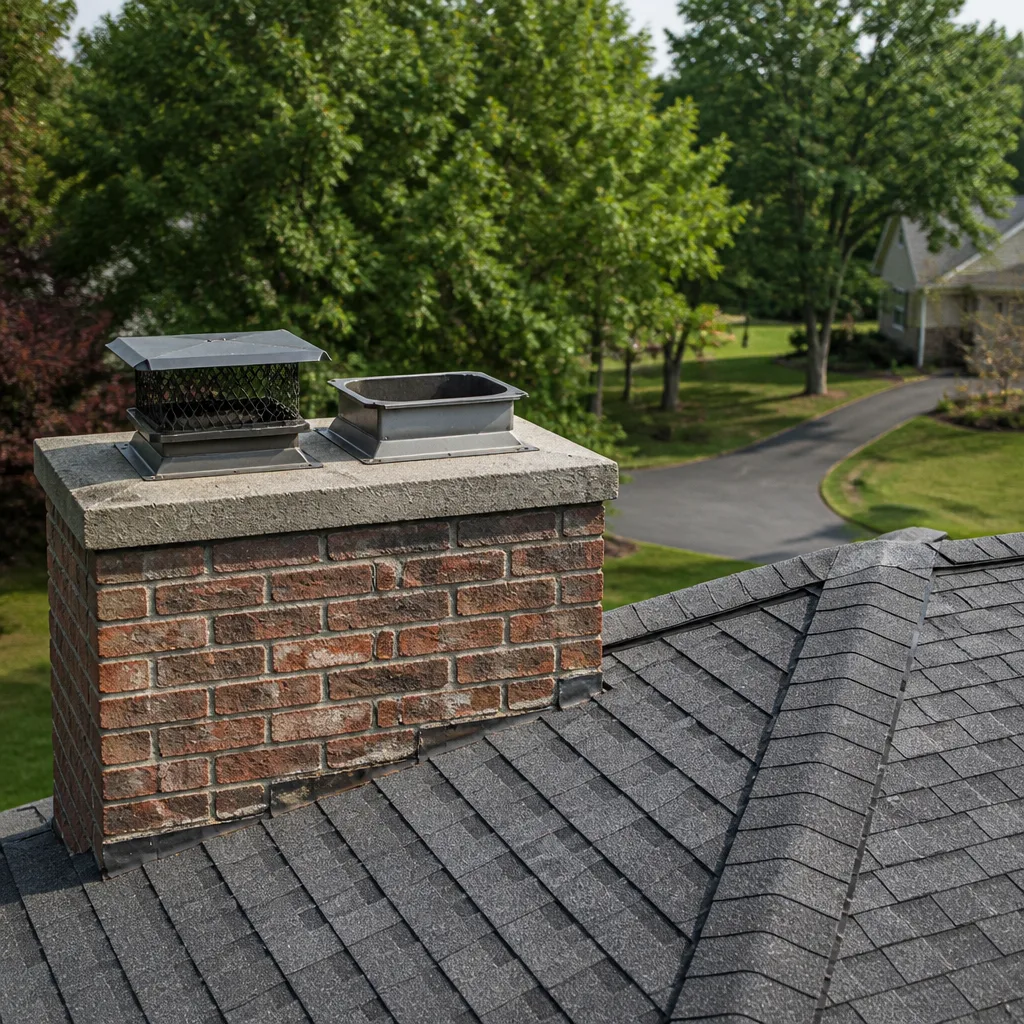
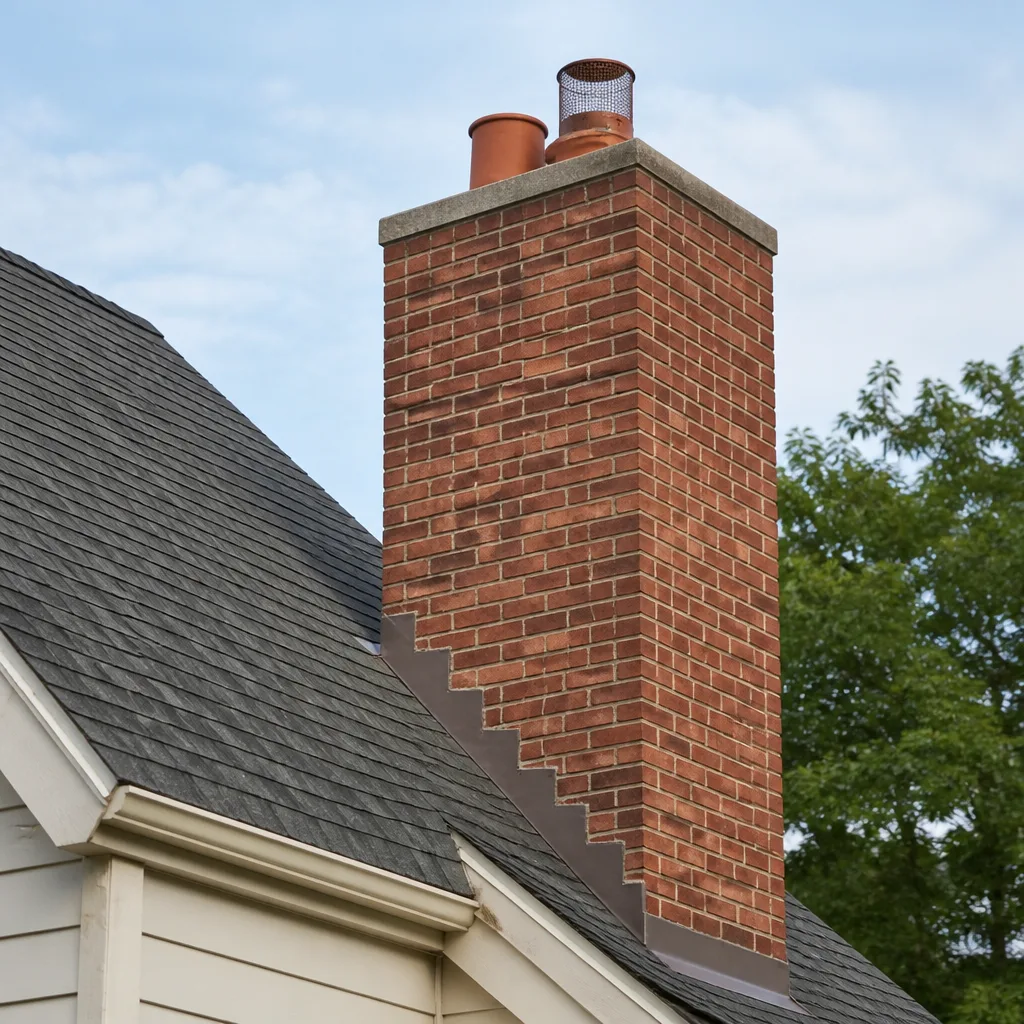
- A cracked or missing crown. The crown is the sloped cap at the very top of the chimney, and a hairline crack is the door water uses to get in. Look for visible cracks across the top and for any separation between the crown and the flue.
- Discoloration and white staining on the exterior. White powdery staining on the outside of the chimney tells the same story as efflorescence inside: water is moving through the masonry and drying out through the face.
- Brick dust on the roof. Grains of red dust around the chimney base or on the roof below are brick that used to be part of the chimney. They’re a sign that spalling is well along.
- Any lean or tilt. A chimney that’s developed a lean needs a structural look, and fast.
East Boston’s winters are hard on exposed brick. The freeze-thaw cycles that run from late in the year through early spring do more damage to a chimney crown and mortar than the rest of the year combined, and that’s the cycle a whole chimney inspection is designed to catch.
Creosote buildup: the sign you can’t see from the living room
Creosote is the substance wood smoke leaves behind inside the flue: a mix of unburned tar and residue that condenses on the walls as smoke cools. It comes in stages, from a light soot you can sweep away to a glazed, hardened layer that takes different tools to remove. What makes creosote a warning sign is that the worst of it lives where you can’t see it.
What you can observe indirectly
- How much smoke the fire produces. A fire that’s smoky or that produces a lot of unburned smoke leaves more creosote behind. Wet wood and firewood that hasn’t seasoned makes the problem worse.
- How quickly soot builds on the glass or the firebox. Fast soot accumulation is a sign the flue is loading up.
- The smell. A strong creosote smell during warm weather means there’s enough deposit in the flue to make itself known without a fire.
- Reduced airflow. A fire that behaves fine early in the season and worsens as the season goes on is a sign the flue opening is narrowing.
What only a professional can confirm
The actual thickness and condition of the creosote layer can only be confirmed by opening up the flue and looking at it directly. A camera inspection shows you the flue interior and gives you the evidence you’re paying to have swept or repaired. That matters: a homeowner being told they need a full reline should be able to see why. A proper sweep will include a camera inspection and a photo report you can review, so your written estimate is built on what was actually in the flue, not on what a quick glance from the firebox suggested.
When a flue’s interior is rough enough that creosote keeps re-sticking, resurfacing can restore the smooth surface without going straight to a full reline. That’s where HeatShield comes in: it’s a chimney resurfacing system that uses a ceramic material to repair and smooth out a deteriorating tile liner, and it’s a cost-aware option many generalist contractors don’t offer. The decision between resurfacing and relining comes down to the condition of the flue and the results of the inspection.
Which warning signs need immediate service and which can be scheduled
The hardest question for a homeowner is whether the thing on the roof is a “this week” problem or a “sometime before winter” problem. Here’s how we separate them.
Signs that need immediate safety review
- Sulfur or gas smell anywhere in the home. This is a safety call, not a chimney efficiency call. Stop using the appliance, ventilate, and get it checked.
- Smoke coming into a room, or an odor in a room with no fireplace. Both point at a possible crack or opening in a flue, and in a multi-unit building that can affect a neighbor’s air as much as yours.
- A chimney with any visible lean or significant spalling. Structural movement in a chimney is a reason to keep people away from the wall below it until it’s looked at.
- Visible creosote that looks glazed or tar-like. Heavy creosote is a chimney fire waiting for the right conditions; get it swept before you burn again.
Signs that can be scheduled
- A cold fireplace that smells slightly smoky but nothing else is wrong.
- Weak draft that’s predictable and hasn’t gotten worse.
- Efflorescence or rust streaks without a gas smell or visible smoke intrusion.
- A missing cap or a crown that needs repair but isn’t leaking into the house yet.
- Routine maintenance: a seasonal sweep before the burn season, or a standalone inspection for a home purchase or an insurance requirement.
What makes the difference is what the chimney is doing, not what it looks like from a distance. A rust streak that appeared this spring is usually a “scheduled” problem. A rust streak plus a smoky smell in the spare bedroom is immediate. If you’re not sure which side you’re on, call us, and we’ll help you sort it out before you decide.
What a proper chimney inspection actually checks
An inspection is how a vague warning sign turns into a specific diagnosis. A thorough one is organized around the whole flue and firebox system, from the top of the chimney down to the appliance. Here’s what’s covered, in the order it usually runs.
- The chimney exterior. Cap, crown, flashing at the roofline, mortar joints, the brick face, and the condition of the chimney shoulder and stack.
- The flue interior, by camera. The liner, its joints, and the condition of the smoke chamber above the damper. This is where a cracked liner shows up.
- The firebox and damper. Firebox brick, mortar, and any signs of water, rust, or heat warping.
- Creosote condition. The thickness and stage of any creosote deposit, which determines the sweep.
- The cap and the top of the flue. Cap fit, screen condition, and whether the cap is the right size for the flue.
- The appliance and the draft. For a wood-burning fireplace, the damper, the firebox connection, and how the fire draws. For a gas insert or gas appliance, the venting of that appliance.
An inspection is useful on its own, even if you don’t need any sweeping. That’s why we offer it as a standalone service, and it’s common for a home buyer, an insurance-required inspection, or a seasonal readiness check to come out of it with a clean bill of health. When there is something wrong, the camera evidence comes with the estimate so you know what you’re paying for.
Common Mistakes to Avoid
- Treating a smoky smell in a cold fireplace as normal. It’s normal for a cold firebox to smell a little smoky for a day after a fire, but a smoky smell that appears days later, or in a room you never burn in, is a flue condition that needs a look, not a candle.
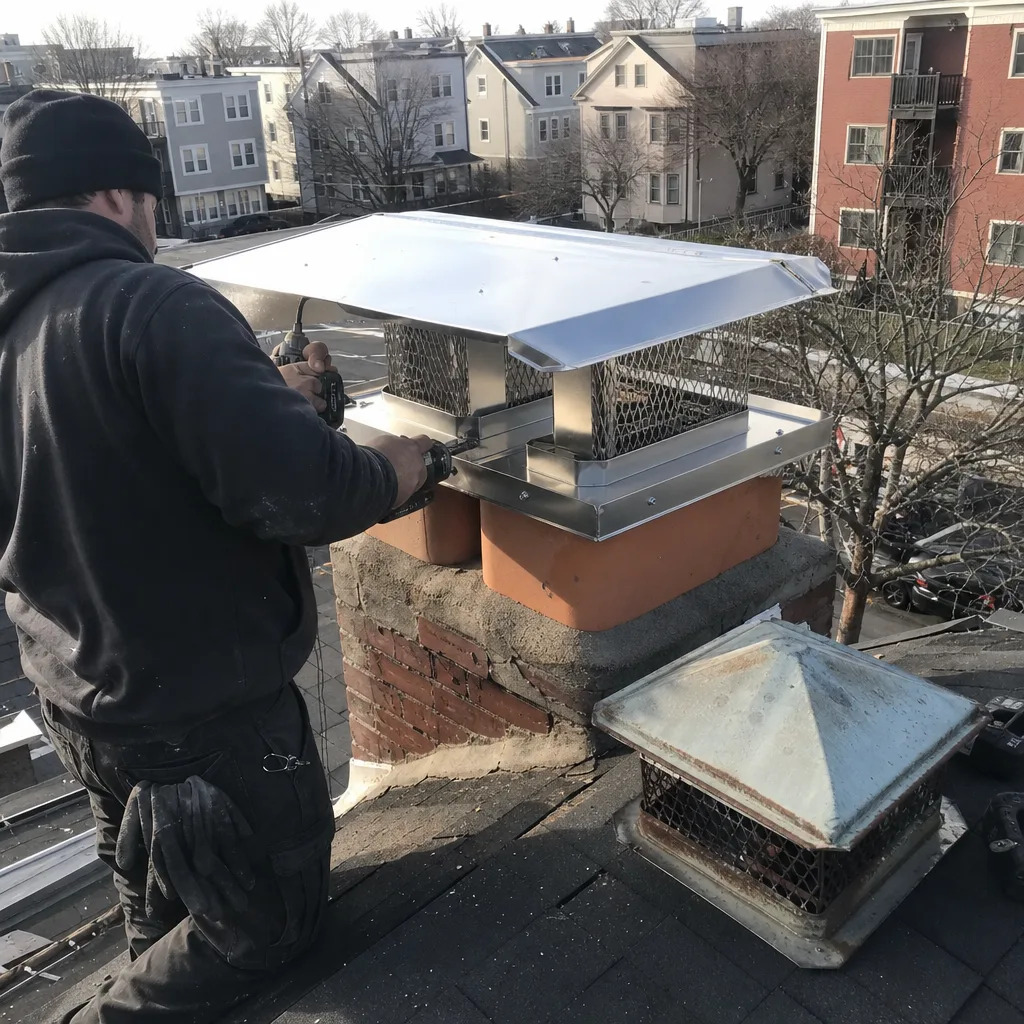
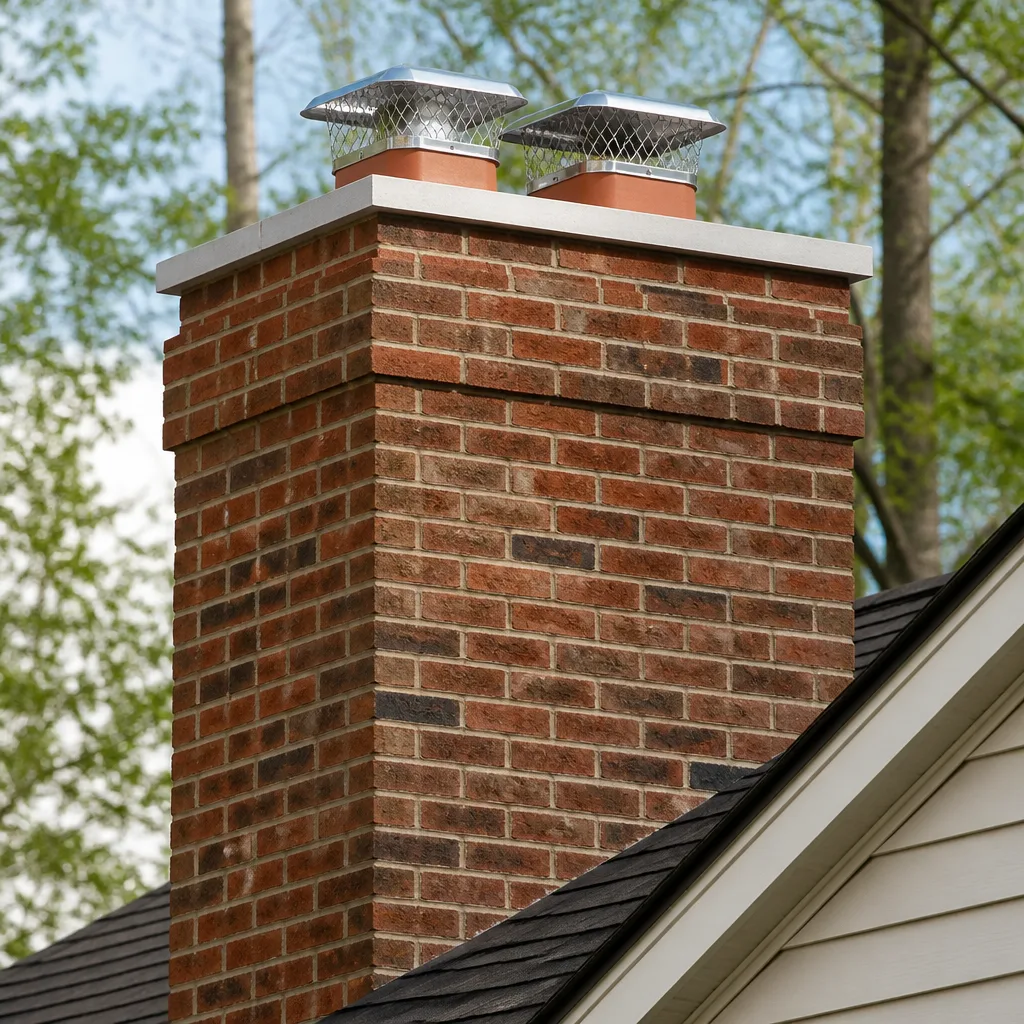
- Assuming a cap is a cap. Caps vary widely in fit and draft performance, and a wrong-sized cap on an old East Boston flue can cause the draft problem you were trying to solve. Caps should be selected for the specific flue, which is why we fit Gelco and Famco caps to each chimney rather than to a generic opening.
- Calling a masonry contractor before a chimney technician. Not every exterior masonry issue is a masonry job. A cracked crown or spalling shoulder often needs a chimney inspection first to know whether the liner behind it is affected, and that keeps the repair from growing into a rebuild.
- Re-lighting the fire to “test it.” If you’ve seen smoke coming into the room, a sulfur smell, or a cracked liner in the camera report, burning another fire doesn’t diagnose anything and risks pushing gases into a space that shouldn’t have them.
- Assuming a gas insert doesn’t need service. Gas inserts and gas appliance venting need inspection too, and gas smells are a safety concern rather than a maintenance task. An insert that hasn’t had the venting checked has the same flue behind it as a wood fireplace.
- Skipping the camera report. A sweep without a camera inspection and a photo record leaves you guessing about the flue. If a technician won’t show you what’s in the flue, ask for it before you approve any repair work.
- Waiting until the cold sets in. In East Boston, the first hard cold snap is the worst time to discover a draft problem or a failed crown. Getting an inspection before the burn season means the repair happens on a scheduled basis rather than in a house that’s already cold.
See the difference
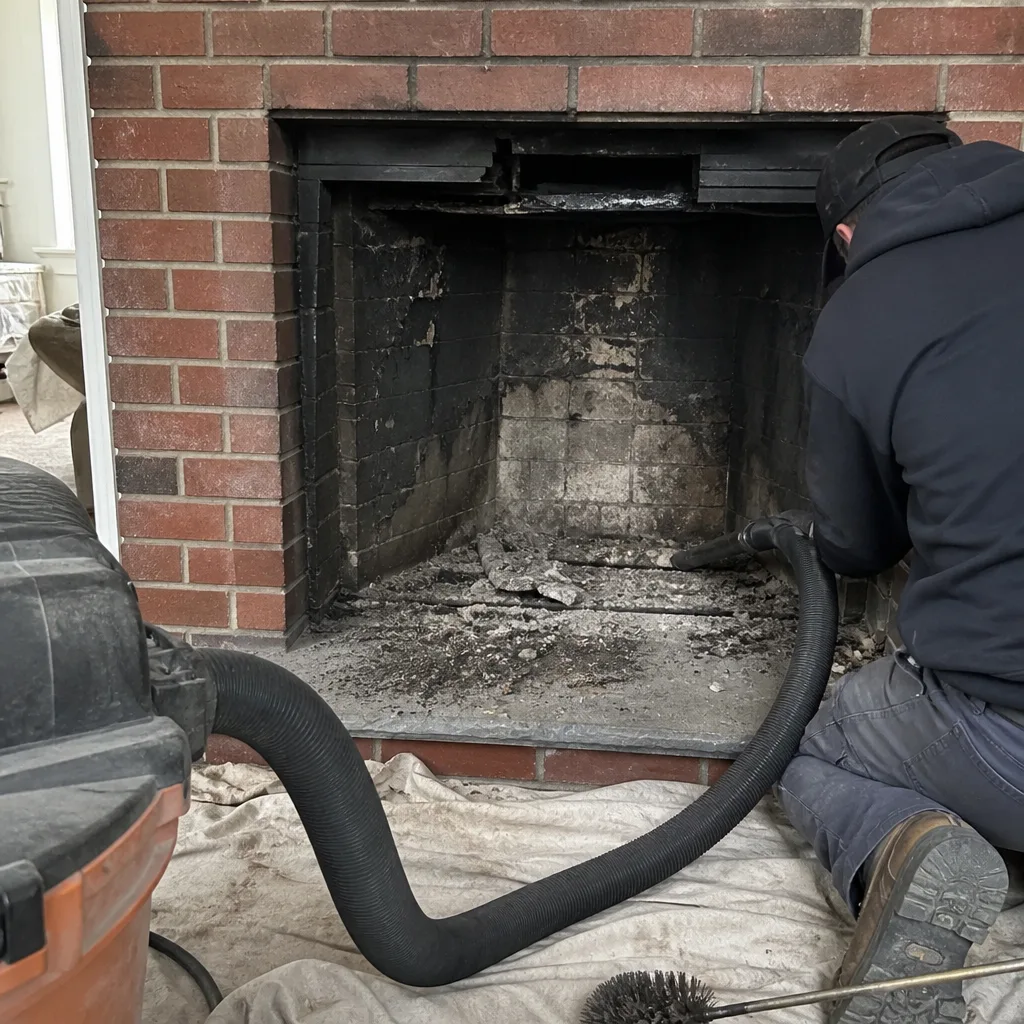 Before
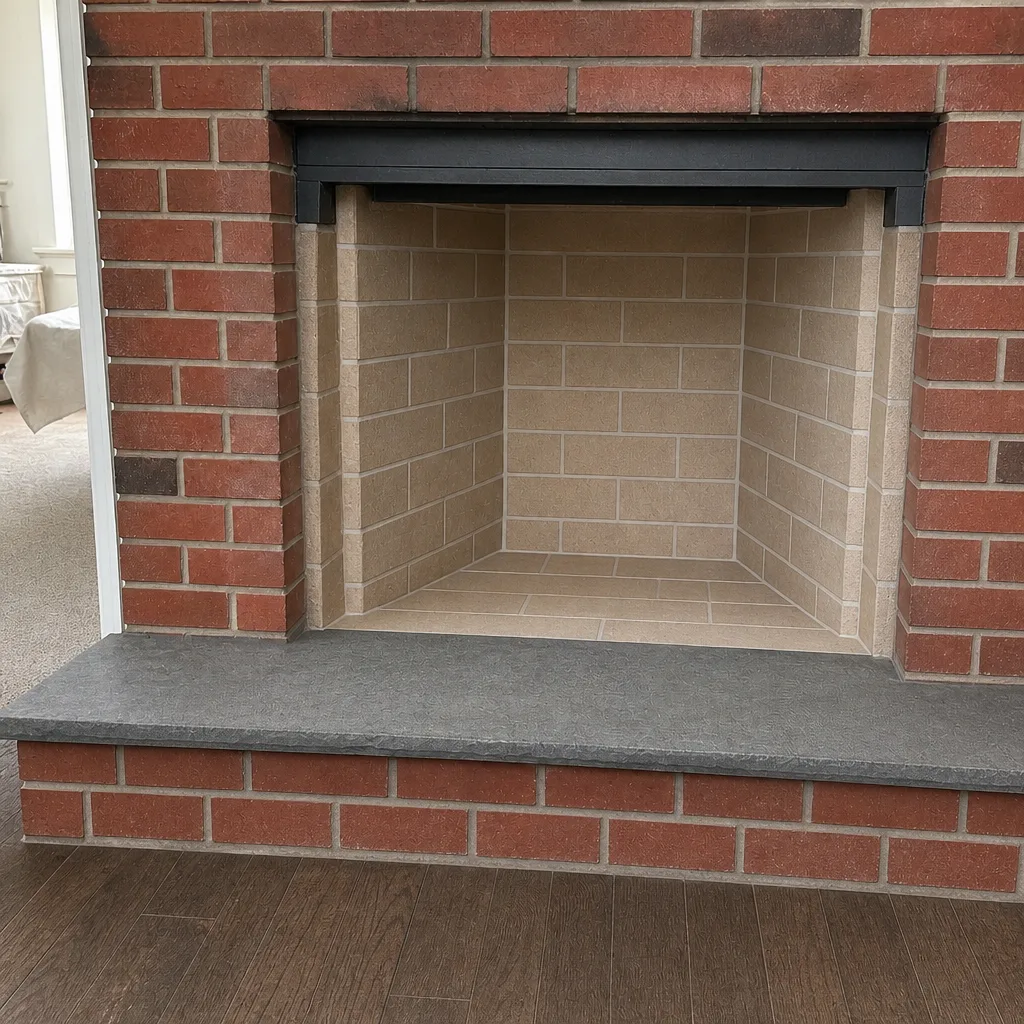 After
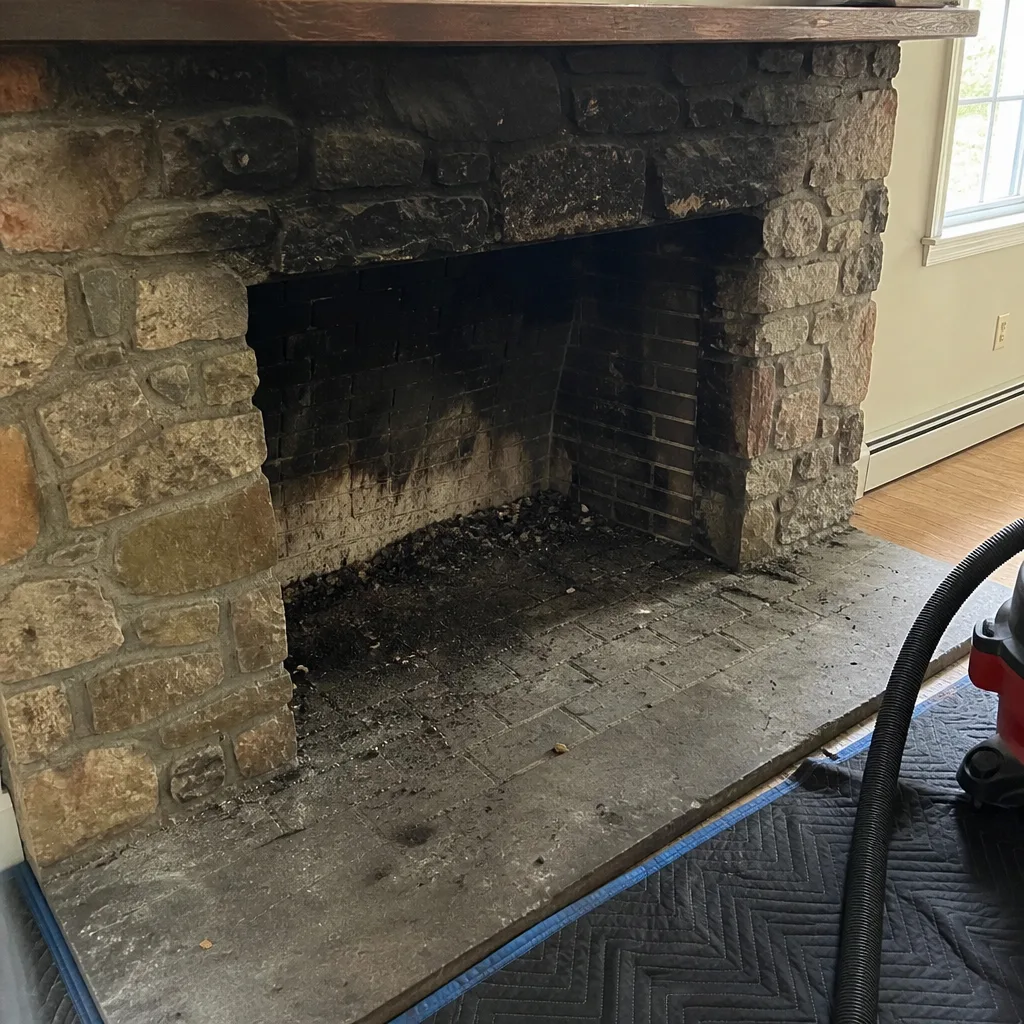 Before
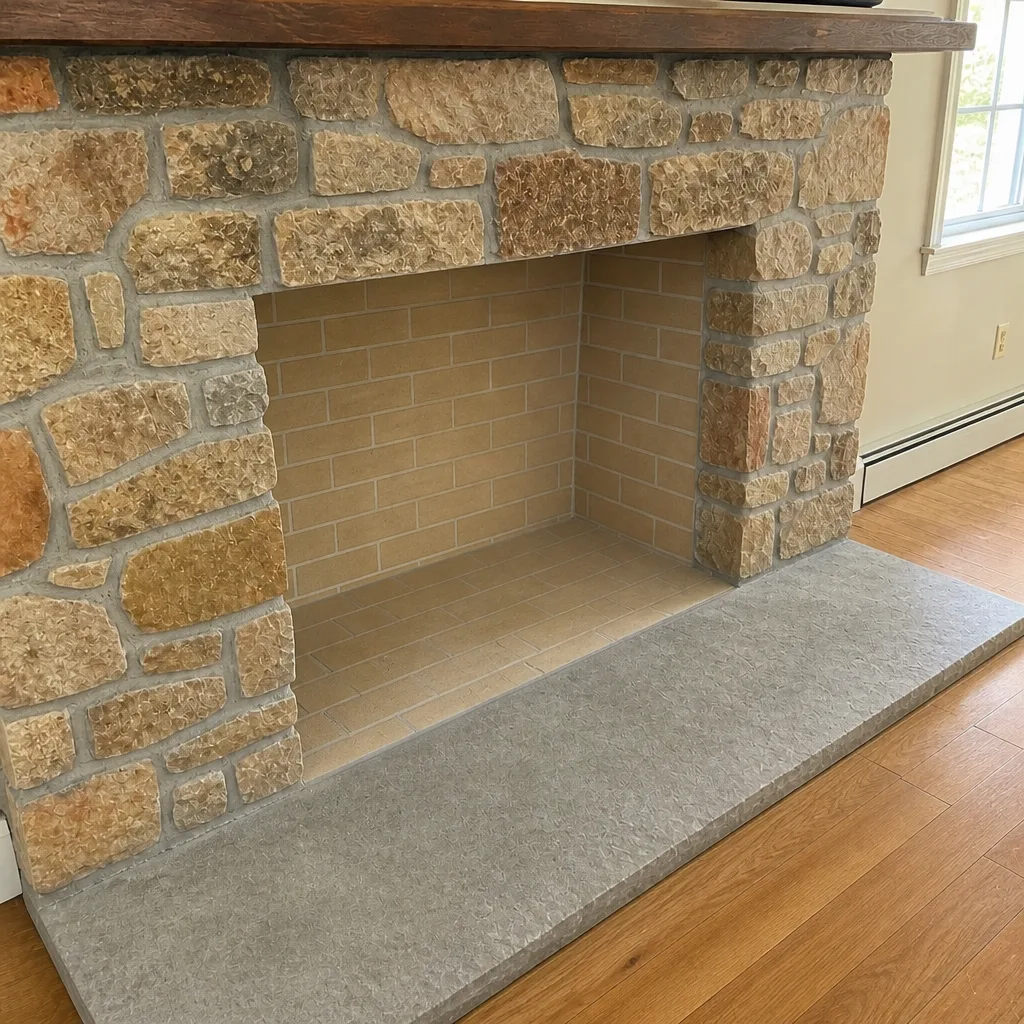 After
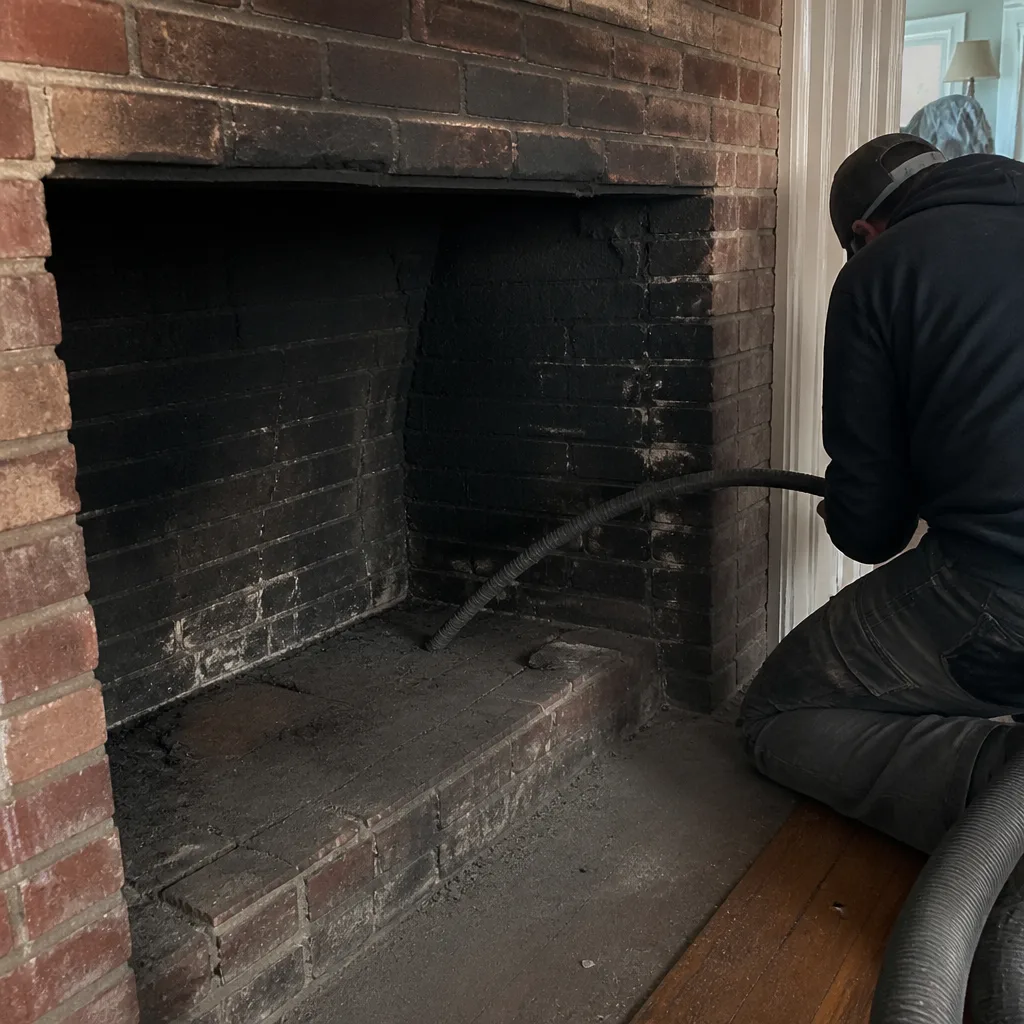 Before
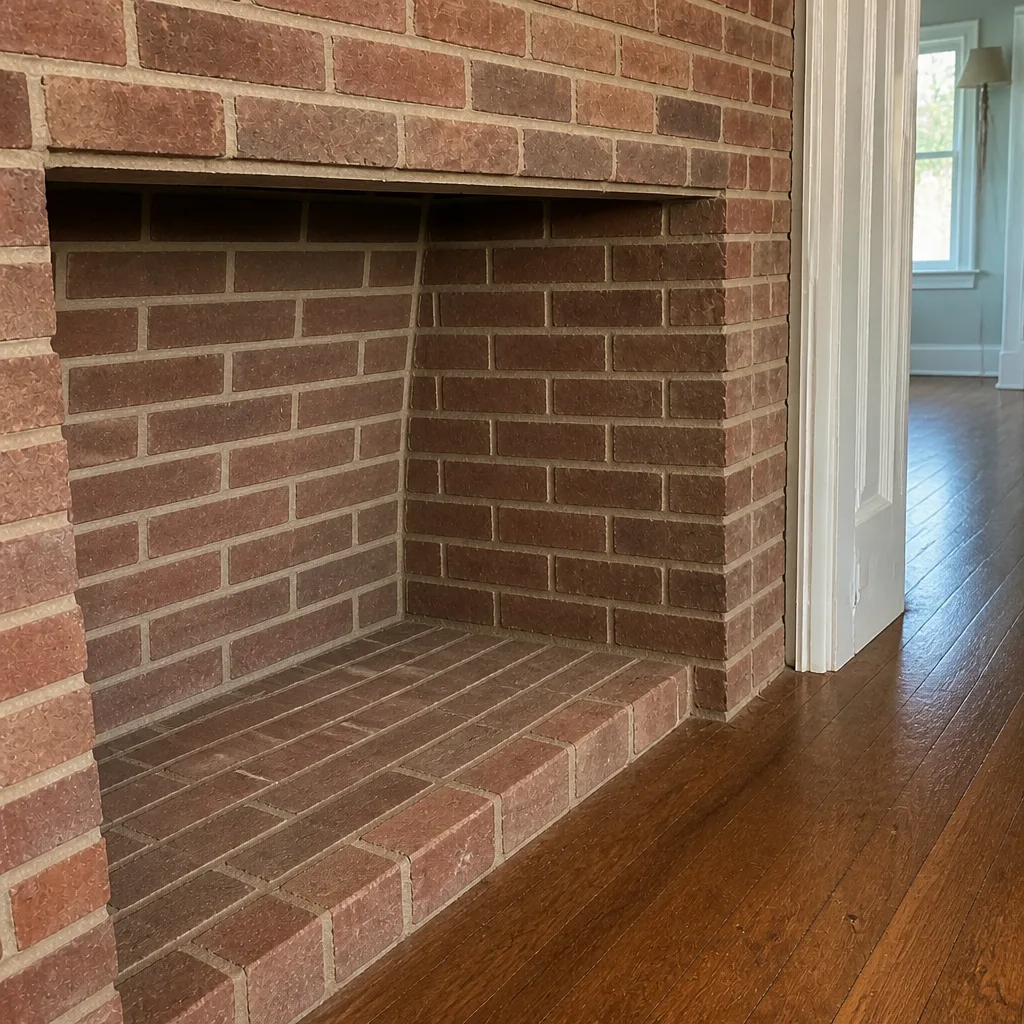 After
When to Call a Professional
Call a professional if you smell gas or sulfur, see smoke entering a room, notice a smoky odor in a room without a fireplace, or spot a lean, a large area of spalling, or heavy glazed creosote inside the flue. Those signs point at safety concerns that a trained technician needs to evaluate rather than a homeowner. For less urgent signs, call when you notice recurring draft trouble, exterior masonry that’s visibly changed over a season, or a fireplace that hasn’t been inspected in many seasons. Chimney Sweep East Boston offers free estimates in East Boston. Call (888) 898-1071. We answer 24/7. Fast dispatch from 7am to 7pm, Sunday through Friday.
Our technicians have up to 8 years of experience and work with the brands the trade trusts: DuraFlex liner systems for relining an aging flue, Copperfield professional tools and components for the sweep itself, and Gelco and Famco caps chosen for draft performance and weather resistance. Sweeping, cap and crown work, fireplace repair, and inspection are handled by one crew from diagnosis through fix, so a cap problem doesn’t turn into a second-contractor problem. A proper chimney sweep always includes the inspection, so you leave with more than a clean flue.
Our complete service range is chimney sweeping, chimney cap & crown work, fireplace repair, chimney repair, and chimney inspection. A free estimate starts with an inspection and camera evidence, so no recommendation is made without something you can see for yourself.
Frequently Asked Questions
Once a year, plus an inspection to go with it. If you burn woodfires heavily through a winter, you may want a sweep mid-season as well. East Boston’s freeze-thaw winters are hard on exterior masonry, so the annual inspection is a chance to catch crown and mortar issues before the next winter’s cycle. If you’ve bought a home or your insurer requires it, an inspection can be scheduled on its own. Call (888) 898-1071 for an exact quote; estimates are free.
A real problem is a smoky smell that shows up when no fire has burned recently, that’s worse in a room with no fireplace, or that appears in a neighboring unit of the same rowhouse or triple-decker. That pattern suggests a flue condition rather than old-house character and warrants a camera inspection. If the smell is faint and only shows up for a day after a fire, it may just be residual soot. When you’re not sure, an inspection is the cheap way to settle it. Call (888) 898-1071 for an exact quote; estimates are free.
Yes. A chimney inspection is available as a standalone service, and it’s the right call for a home purchase, an insurance requirement, or a seasonal readiness check. You get the inspection and the camera report, and you can decide about any follow-up work afterward. Call (888) 898-1071 for an exact quote; estimates are free.
A cracked liner means combustion gases have a path out of the flue that they shouldn’t have, and in a triple-decker that path can run into an adjacent flue or a neighboring living space. It’s not a cosmetic flaw. The repair depends on the flue’s condition: resurfacing with HeatShield can address a deteriorated tile liner while extending its life, and a full reline with a DuraFlex system is the choice for one that can’t be repaired. A camera inspection tells you which one your chimney needs. Call (888) 898-1071 for an exact quote; estimates are free.
It depends entirely on the cause. A draft problem traced to a cracked crown or a wrong-sized cap is often a contained repair. One traced to a compromised liner means relining. The only way to know which one you’re dealing with is an inspection of the flue and the cap together. Call (888) 898-1071 for an exact quote; estimates are free.
If the crown is intact and the cap is properly fitted and screened, no. The point of looking is to catch the ones that aren’t fine: hairline cracks across the crown, a cap that doesn’t fit the flue opening, or a screen that’s blocked or bent. A properly fitted cap protects the flue from rain and animals and supports draft performance, which is why we fit caps to the specific chimney rather than replacing them all with the same unit. Call (888) 898-1071 for an exact quote; estimates are free.
The Bottom Line
The warning signs on this list all point to the same conclusion: a chimney talks to you through its symptoms, and most of those symptoms are legible before anything fails. Rust and efflorescence mean water is getting in. Spalling and crumbling mortar mean the masonry is losing ground. Musty, smoky, or sharp smells point at a specific root cause and, in the case of sulfur, at a safety concern. Draft problems split into liner, cap, and pressure causes, and camera inspection tells you which one you have. The most useful thing you can do is get the flue inspected early, see the camera evidence for yourself, and act on what the report says before the burn season.
If you’ve seen any of these signs in your East Boston home, call Chimney Sweep East Boston at (888) 898-1071 for a free estimate. We answer 24/7. Fast dispatch from 7am to 7pm, Sunday through Friday.
Written by the team at Chimney Sweep East Boston.