
Last updated November 25, 2026
 Sweep & inspection
 Caps & crowns
 Flue relining
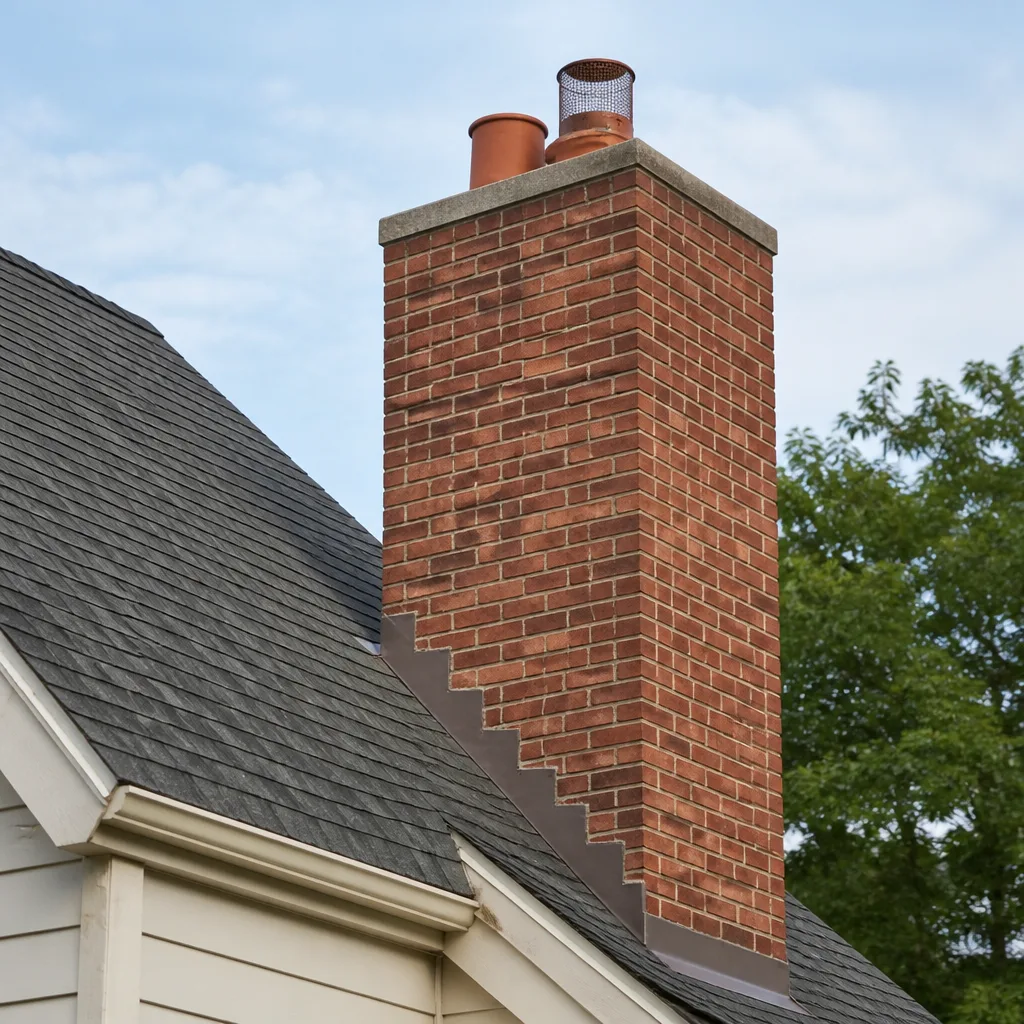 Masonry repair
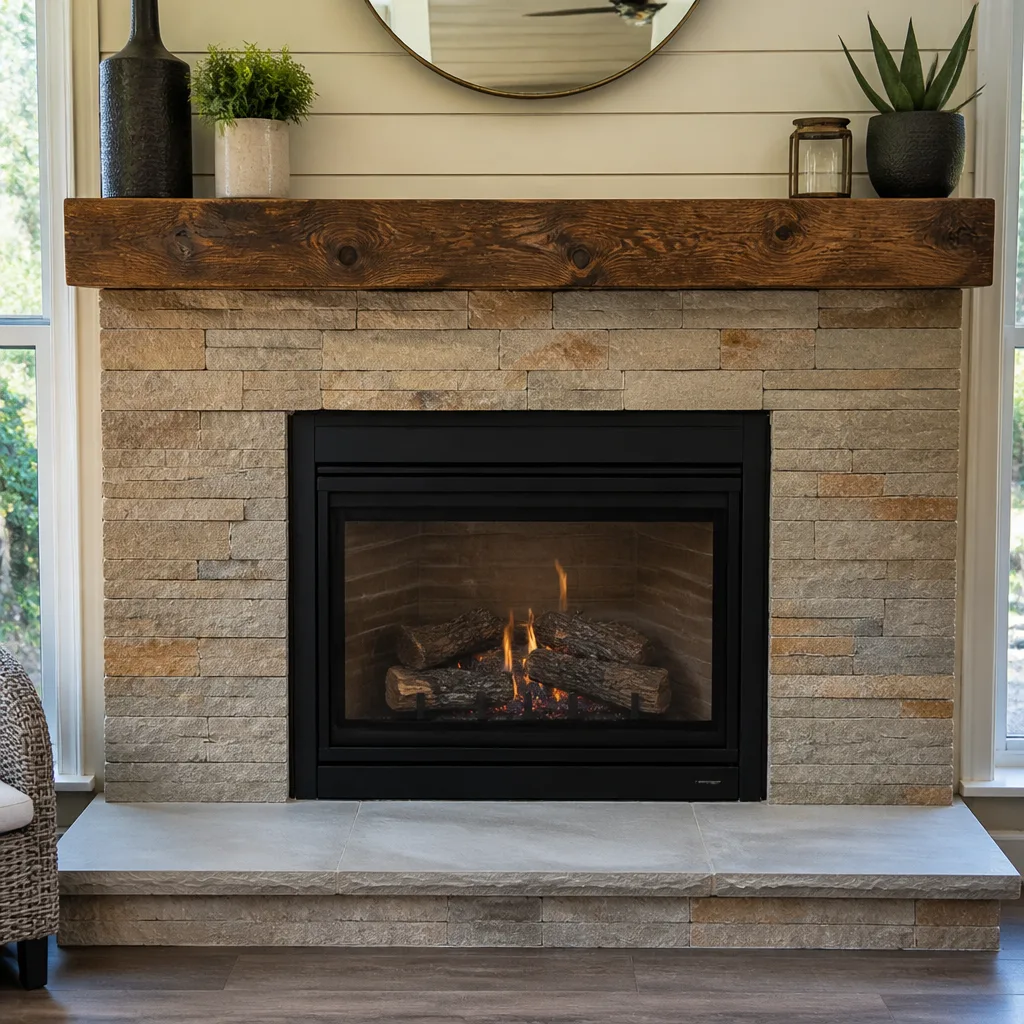 Gas fireplace service
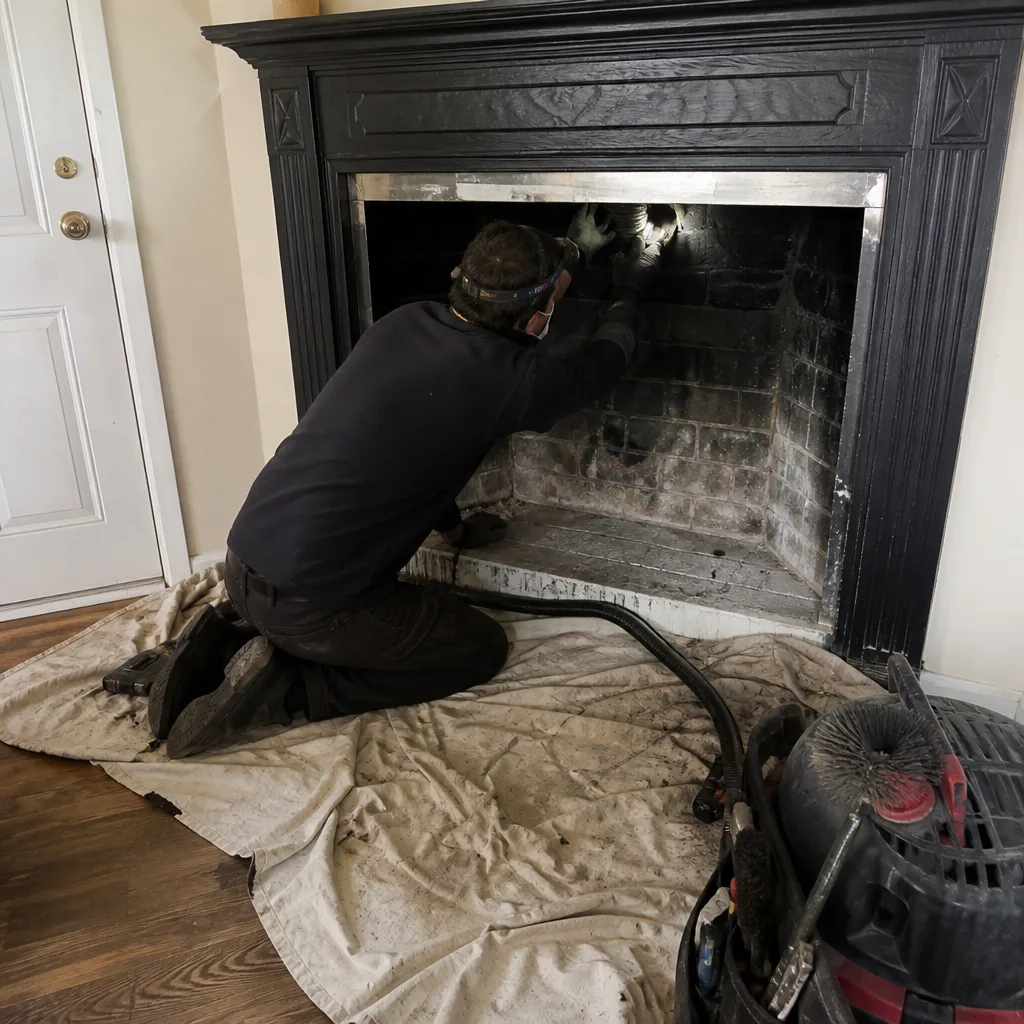
Level 1 sweep and inspection to the NFPA 211 annual standard - flue, crown, cap, and flashing checked and photographed
Chimney sweep logs do not sweep chimneys. They loosen some creosote - which then falls where a brush and vacuum still have to collect it.
Chimney Sweep Maintenance Checklist for East Boston Homeowners
Most chimney care advice you’ll find online was written for a detached suburban house with a modern insert and a straight shot of flue. East Boston isn’t that. Here, a wood-burning fireplace often sits inside a 1920s rowhouse, sharing a chimney stack with two or three neighbors, with the top of that stack exposed to harbor winds and a freeze-thaw cycle that works mortar joints loose year after year. A generic annual-sweep reminder misses half the failure points in that kind of building. This checklist is built around the housing stock you actually live in: what to check before the burning season, what to look at after winter, what the firebox is telling you about the liner, and which problems a homeowner can spot versus which ones need a camera. By the end you’ll know what to look for in your own East Boston home and when to bring in a technician.
Styles & brands we work with
- Sweep & inspection
- Caps & crowns
- Flue relining
- Masonry repair
- Gas fireplace service
Quick Answer
A good chimney maintenance checklist for an East Boston homeowner has two halves: a pre-season pass in fall (sweep, cap and crown check, damper, firebox inspection) and a post-winter pass in spring (mortar joints, spalling brick, water intrusion, liner condition). Owner-observable signs cover the firebox, damper, cap and exterior brick. Anything inside the flue itself, including cracked tile liners and gaps at flue joints, needs a Level 2 camera inspection to confirm.
Table of Contents
- Why a Generic Annual Sweep Checklist Falls Short in East Boston
- Pre-Season Checklist: What to Check Before the First Fire
- Post-Winter Checklist: Freeze-Thaw, Spalling, and Mortar Joints
- What the Firebox Tells You About Liner Damage
- Checklist for Multi-Unit Buildings With Shared Flues
- Owner-Observable Signs vs. What Needs a Level 2 Camera Inspection
- How to Build a Year-Round Maintenance Schedule
- Common Mistakes to Avoid
- When to Call a Professional
- Frequently Asked Questions
Why a Generic Annual Sweep Checklist Falls Short in East Boston
The standard advice, sweep once a year and you’re set, assumes a few things that don’t hold for a lot of East Boston homes. It assumes an interior chimney, protected from weather. It assumes one flue per house. And it assumes the masonry is in reasonable shape, because a sweep can only clean what it can reach and a badly deteriorated flue won’t hold a sweep anyway.
In East Boston, chimneys on rowhouses and triple-deckers frequently run up the exterior wall. That means the top of the stack sits in the weather, taking wind-driven rain and the freeze-thaw cycle that comes with a New England winter. Water gets into a hairline mortar joint, freezes overnight, expands, and widens that joint a fraction. Do that across enough winters and the joint opens, the brick face starts to spall, and the crown at the top begins to crack. None of that shows up in a sweep. It only shows up if someone actually looks at the exterior masonry and the crown.
Density is the other mismatch. A lot of East Boston housing is multifamily, and in some buildings two or three flues share a single chimney stack serving separate units. If one flue is cracked and another is fine, the person at the bottom can’t tell which is which. That’s a job for a camera, not a flashlight and a guess.
So the checklist below is deliberately split by season and by housing type. If you live in a single-family home with an interior chimney, you’ll use most of it. If you’re in a triple-decker with a shared exterior stack, you’ll use all of it.
Pre-Season Checklist: What to Check Before the First Fire
Do this in early fall, before you light the first fire of the season. The goal is to catch anything that would make a fire unsafe or inefficient before you’re relying on the fireplace for heat. If you want a technician to run this list with you, that’s what a seasonal chimney sweep visit covers.
- Sweep the flue. Creosote builds up every burn season. How much depends on how hot you burn and what you burn. A sweep removes it. This is the baseline item and everything else builds on a clean flue.
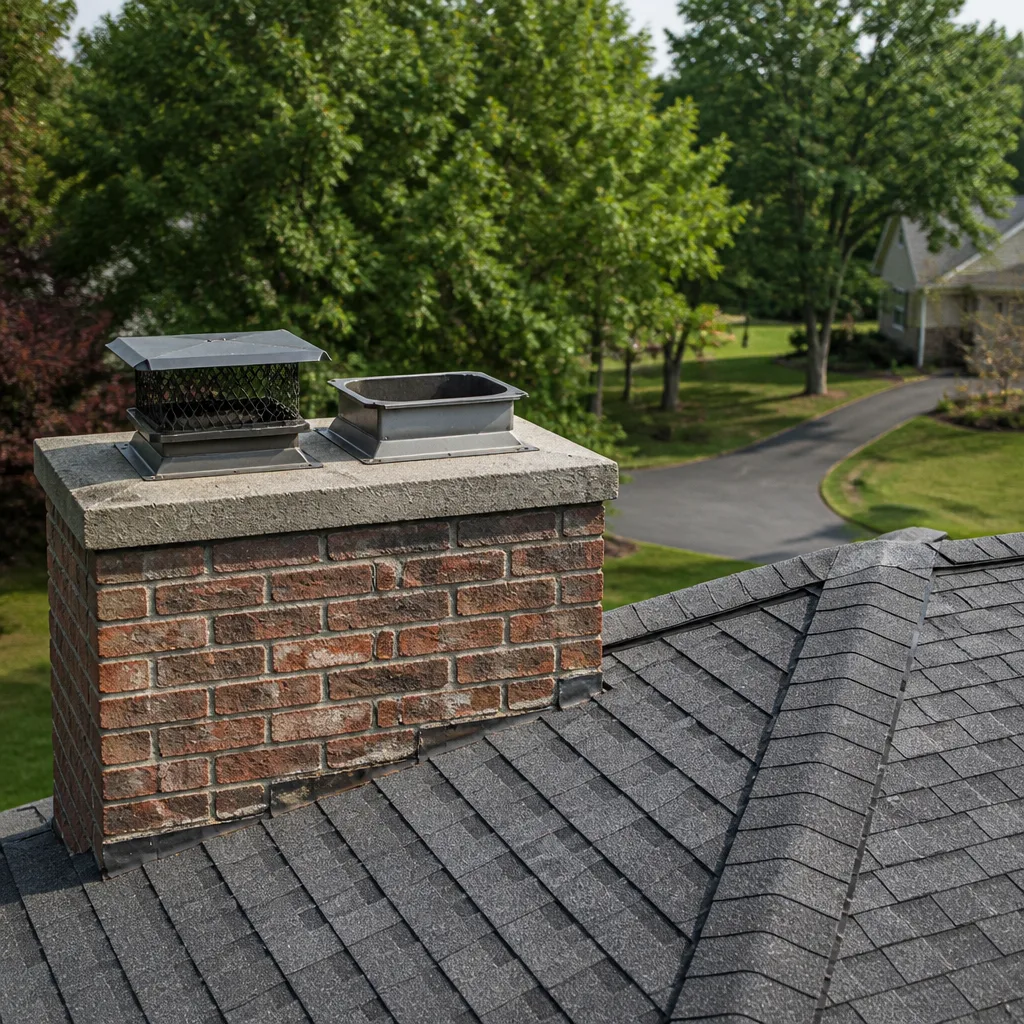
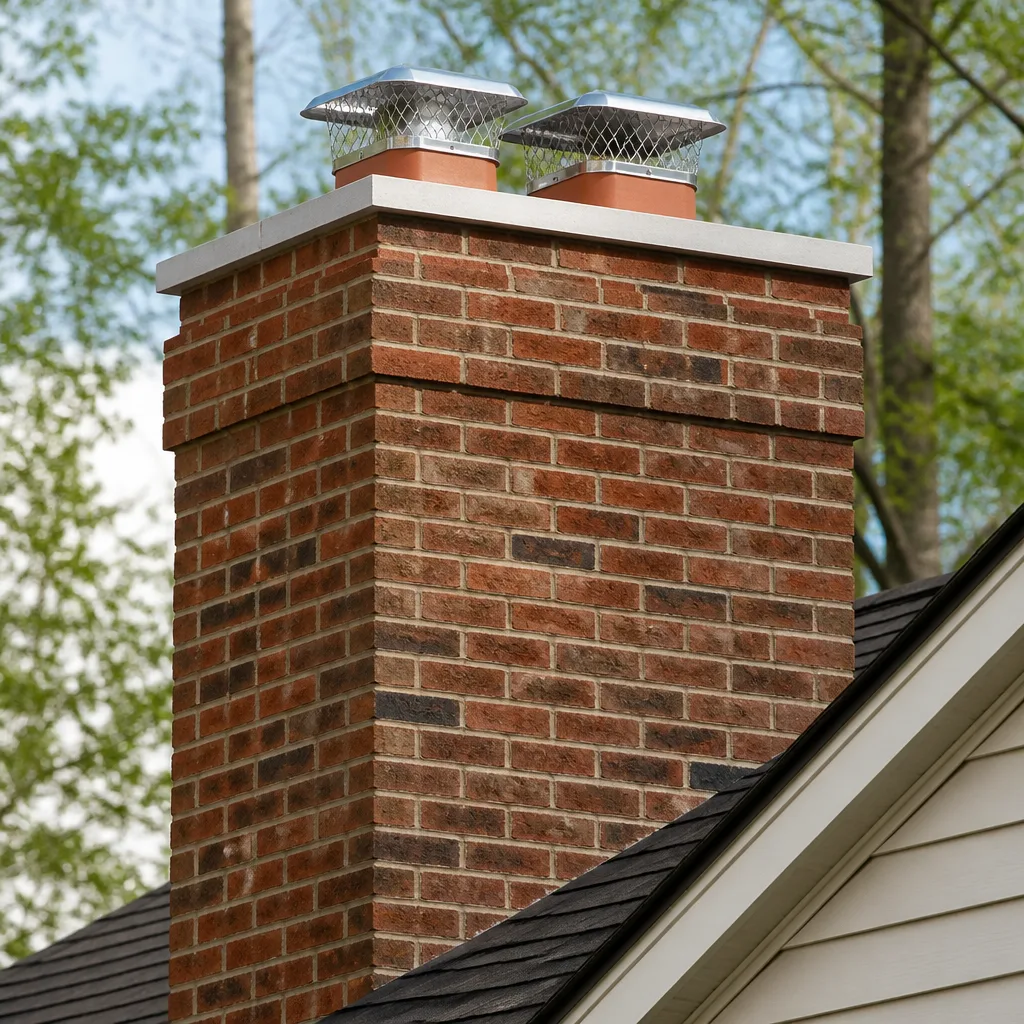
- Inspect the cap from the ground first. Use binoculars if you have them. The cap should be intact, sitting flat, and screening the flue opening. A missing or rusted-through cap is what lets rain and animals into the flue all winter.
- Check the crown. The crown is the sloped concrete or mortar cap on top of the masonry. Look for cracks, crumbling edges, or a crown that’s pulled away from the flue tile. A cracked crown channels water straight into the stack.
- Look at the exterior brick on any exposed stack. On an exterior chimney, check for efflorescence (white powdery staining), spalling faces, and open mortar joints. Efflorescence is a water sign, not a cosmetic one.
- Test the damper. It should open fully, close flush, and move without binding. A damper that won’t close fully loses heat all winter and lets cold air down the flue when the fireplace is off.
- Look inside the firebox. Check the brick and mortar for cracks, gaps, or loose pieces. Check that the firebox floor is intact. We cover what the firebox is telling you in its own section below.
- Confirm the smoke path. Light a small test fire or hold a lit incense stick near the open damper and watch the smoke. If it rolls back into the room instead of going up the flue, stop and get it looked at before you burn a real fire.
- Clear the area around the hearth. Nothing combustible within a few feet. No furniture pushed against the opening. No rugs creeping up to the hearth edge.
If you’re using a gas insert or an oil flue, the checklist shifts. You’re not dealing with creosote the same way, but you are dealing with venting, draft, and the condition of the flue itself. Gas and oil systems still need the flue inspected, and oil flues in particular can accumulate soot and sulfur residue that a wood-focused sweep won’t look for. Tell the technician what you’re burning when you book.
Post-Winter Checklist: Freeze-Thaw, Spalling, and Mortar Joints
Spring is when winter damage shows itself. A brick rowhouse takes a specific kind of beating over a New England winter, and the chimney stack is the most exposed part of the building. This pass is about catching structural weather damage before it becomes a repair.
- Mortar joints: Walk the exterior and look at the joints between bricks on the chimney. Any joint that’s recessed, crumbling, or has lost its surface has been worked by freeze-thaw. Repointing a few joints is a small job. Ignoring them until the brick starts to move is not.
- Spalling brick faces: A spalled brick has its face peeling or popping off, usually in layers. It happens when water gets behind the face and freezes. A few spalled bricks on a stack are worth noting. A field of them means the chimney is taking on water somewhere above.
- Crown cracks: Recheck the crown in spring, not just fall. Winter is when a hairline crack opens into a real one. If the crown is cracked, water is getting into the top of the stack every time it rains.
- Flashing at the roofline: The metal flashing where the chimney meets the roof is a common leak point. Look for rusted, lifted, or missing flashing and for staining on the roof sheathing around the chimney.
- Interior water signs: Look for water staining on the ceiling or walls near the chimney, especially after a heavy rain. That’s water coming down the flue or through the masonry, and it points to a cap, crown, or flashing problem.
- Efflorescence: White staining on exterior or interior brick is salt pushed out by moisture moving through the masonry. It’s a sign water is getting in, not a sign of a dirty chimney.
- Cap and screen condition: Recheck the cap after winter. Snow, ice, and wind take a toll. A cap that’s come loose or lost its screen needs replacing before the next burning season.
If any of this turns up real deterioration, the fix usually splits into two tracks: cap and crown work on the top of the stack, and masonry or liner work on the flue itself. Both are within our scope. Chimney cap & crown work is a specialty for us, not a side job, and we use Gelco and Famco caps selected for fit and draft, not just coverage. For a closer look at what cap and crown repairs involve, that page walks through it.
What the Firebox Tells You About Liner Damage
The firebox is the part of the system you can see, and it’s a useful early-warning surface. A firebox and a flue liner often deteriorate together, because they’re exposed to the same heat and the same moisture over the same years. If the firebox is showing its age, the liner behind it is worth a closer look.
What to check inside the firebox:
- Cracked firebox brick: Fine surface crazing is normal. A crack you can get a fingernail into, or a crack that runs through the brick, is not.
- Open or recessed mortar joints: If the mortar between firebox bricks has recessed or crumbled, the firebox is losing its heat shield. Heat moves into the surrounding masonry instead of up the flue.
- Loose or missing firebrick: Any firebrick that moves when you press it, or that has fallen out, leaves the masonry behind it exposed.
- Damper fit: A damper that doesn’t seat is a draft issue, and draft issues tend to get worse as the flue deteriorates.
- Rust on a damper or firebox components: Rust means moisture, and moisture in a firebox usually comes from above.
- Smoke staining above the opening: Staining on the face of the fireplace above the opening can point to a draft problem or a partially blocked flue.
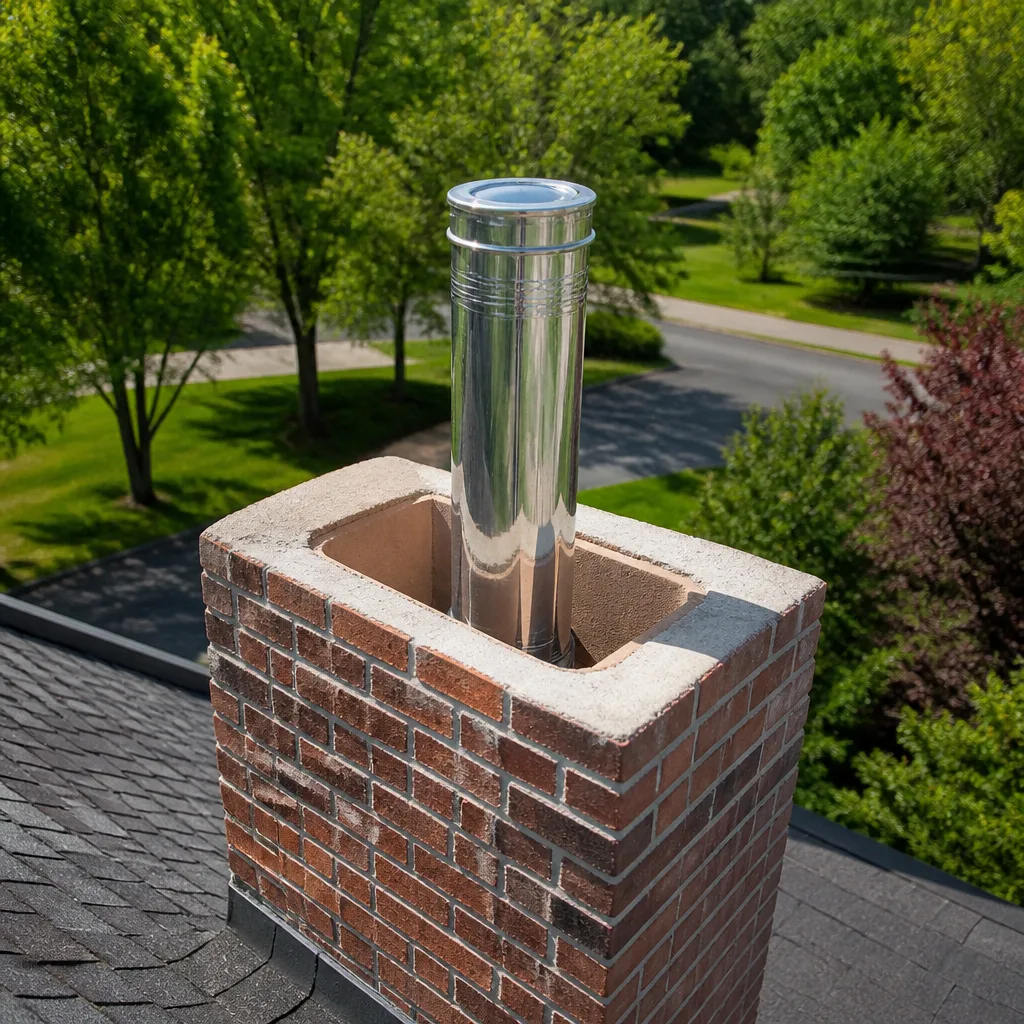
Here’s the honest limit: the firebox tells you the system is aging, but it can’t tell you whether the tile liner behind it is cracked or intact. That’s where the camera comes in. In our experience, a firebox that’s showing open joints is a good reason to have the whole flue looked at before deciding on a fix. When a liner does need attention, we install DuraFlex flexible liner systems, which handle relining an aging masonry flue without tearing the whole thing out. When the issue is the liner surface rather than a full reline, we use HeatShield chimney resurfacing, a ceramic repair system designed to extend liner life and a cost-aware option a lot of general contractors don’t offer. Which one your chimney needs depends on what the camera shows, and that’s the point of looking before you commit.
Checklist for Multi-Unit Buildings With Shared Flues
A lot of East Boston housing is multifamily, and in buildings where one chimney stack serves multiple units, the checklist changes. The person at the bottom of one flue can’t see what’s happening two flues over. Here’s what to add to the list if you’re in a shared-stack building.
- Map the flues. Before any work, know how many flues the stack serves and which unit each one serves. If you’re a landlord or an owner-occupant in a multi-unit building, having that map on record saves a lot of confusion when a problem comes up.
- Check each flue separately. A sweep of the flue serving your unit doesn’t touch the flue serving the unit next door. Each occupied flue needs its own inspection and, when needed, its own sweep.
- Look for cross-contamination. In a shared stack, a crack in one flue can vent smoke or carbon monoxide into a neighboring flue. If anyone in the building is getting smoke smell in a unit with no fire lit, that’s a red flag that needs a camera inspection of all flues in the stack.
- Check the cap once for all flues. A single multi-flue cap covers the whole stack. If that cap has failed, every flue underneath it is taking water. This is a shared problem that needs a shared fix.
- Coordinate on the crown. The crown serves the whole stack. If it’s cracked, patching it is a building-level job, not a per-unit one.
- Get the inspection in writing. For a multi-unit building, a written report per flue is worth having, especially for insurance or for a buyer’s due diligence if the building is being sold.
For landlords and multi-unit owners, an inspection as a standalone service is often the right starting point, before committing to any work. You get a report of what each flue actually needs, and you can decide what to fix now and what can safely wait. Nothing gets recommended without camera evidence you can see for yourself.
Owner-Observable Signs vs. What Needs a Level 2 Camera Inspection
Knowing which things you can check yourself and which need a camera is the most useful part of this checklist. Getting it wrong in either direction causes trouble. Either you miss a real problem, or you pay for work you don’t need.
What a homeowner can reasonably observe:
- Exterior mortar joint condition and spalling brick faces
- Crown cracks and cap condition from the ground with binoculars
- Damper operation and fit
- Firebox brick and mortar condition
- Interior water staining and efflorescence
- Smoke backing into the room on a test fire
- Smoke smell in a unit with no fire lit, in a shared-stack building
What needs a Level 2 camera inspection to confirm:
- Whether a tile liner is cracked, and how badly
- Whether gaps exist at flue joints between tiles
- Whether the flue is properly sized for the appliance it serves
- Whether a shared stack has cross-contamination between flues
- Whether a firebox problem has already affected the liner behind it
- Whether visible deterioration is structural or surface-level
A Level 2 inspection puts a camera down the flue and shows you what it sees. That matters because a homeowner can’t verify a “you need a new liner” recommendation from the ground, and a good technician shouldn’t expect you to take it on faith. We include camera inspection and a photo report so you can see the same thing we see. If the camera shows the flue is fine, we tell you that and you can skip the repair. If it shows a crack or a joint gap, we show you where and explain what the fix involves. Our technicians have up to 8 years of experience reading exactly this kind of evidence, and the report is the basis for every recommendation we make.
How to Build a Year-Round Maintenance Schedule
Two passes a year, one in fall and one in spring, covers the seasonal items. A camera inspection depends on the chimney, not the calendar, but most chimneys want one after a major repair, after a chimney fire, when a property changes hands, or any time the firebox or the visible masonry starts to show real deterioration. Here’s how to put it together into a schedule that works for your East Boston home.
- Early fall: full pre-season pass. Sweep, cap and crown check, damper test, firebox inspection. Book it before the first cold snap when everyone else is booking, so you’re not squeezing in.
- Right after the burning season ends: post-winter pass. Exterior masonry, mortar joints, crown, cap, water signs. This is when freeze-thaw damage from the winter is visible and before it gets a full summer to worsen.
- Every few years, or after any repair: camera inspection. A Level 2 camera inspection gives you a record of the flue’s condition and catches gradual deterioration the eye can’t see.
- Any time the firebox shows new damage: get the flue looked at. Firebox and liner deteriorate together, so a change in one is a reason to look at the other.
- Before buying or selling a home: standalone inspection. A written inspection report is useful for a buyer, for insurance, or for a seasonal readiness check before you take possession.
- After any chimney fire, even a small one: full inspection. A chimney fire can crack a liner in ways that aren’t visible from the firebox.
One more thing on timing. Burning seasoned, dry wood and burning hot fires reduces creosote buildup, which stretches the interval between sweeps. So does keeping the flue clear of rain and animals with a properly fitted cap. These aren’t replacements for a sweep, but they change how much a sweep has to remove. If you’re doing the fall pass yourself and something turns up, that’s the point to call rather than guess. Call (888) 898-1071. We answer 24/7. Fast dispatch from 7am to 7pm, Sunday through Friday.
Common Mistakes to Avoid
- Treating the annual sweep as the whole checklist. A sweep cleans the flue. It doesn’t address the crown, the cap, the exterior masonry, or a cracked liner. East Boston rowhouses with exterior stacks need the full list, not just the sweep.
- Ignoring the firebox because the fire “still works fine.” A fireplace can draw well while the firebox behind it is losing its heat shield. Open mortar joints in the firebox are a reason to look at the liner, not a cosmetic issue to live with.
- Letting a cracked crown go through a winter. A hairline crack in fall can open into a real one by spring when water gets in and freezes. The crown is one of the cheapest things on the chimney to fix early and one of the most expensive to ignore.
- Assuming a shared stack means one inspection covers the building. In a multifamily East Boston building, each flue serves a separate unit and each one needs its own look. A sweep of one flue tells you nothing about the others.
- Taking a “you need a new liner” recommendation without seeing the evidence. You can’t verify a liner problem from the firebox, and neither can a general contractor who hasn’t run a camera. Ask to see the camera footage before committing.
- Letting a generalist handle cap and crown work. Cap and crown work looks simple but affects draft and weather performance. A cap that doesn’t fit right causes draft problems, and a crown that isn’t properly built channels water into the stack. We use Gelco and Famco caps chosen for the flue they’re going on.
- Putting off a post-winter inspection because the fireplace is off for the season. Spring is the best time to catch freeze-thaw and spalling damage, because it’s visible and there’s time to fix it before the next burning season starts.
When to Call a Professional
Some of this checklist you can run yourself. Some of it needs a technician. Call a professional if the firebox has open or recessed mortar joints, if the firebox brick is cracked through, if the damper won’t seat, if exterior mortar joints are crumbling or brick faces are spalling, if the crown is cracked, or if the cap is missing or damaged. Call if you see water staining near the chimney after rain, or if smoke backs into the room on a test fire. In a shared-stack building, call if anyone is getting smoke smell in a unit with no fire lit. And call if you’ve never had the flue inspected and you don’t know its condition. Chimney Sweep East Boston offers free estimates in East Boston. Call (888) 898-1071.
Frequently Asked Questions
Once a year during the burning season is the standard starting point, and a camera inspection every few years or after any repair. How much creosote builds up depends on how hot you burn, what you burn, and how much the chimney is used. An exterior stack on an East Boston rowhouse often wants the sweep and the exterior check on the same visit so nothing gets missed. If you’re not sure the flue has ever been looked at, book an inspection first. Call (888) 898-1071 for an exact quote, estimates are free.
A new liner is only needed when the camera shows the existing liner is cracked, has open joints, or is undersized for the appliance. You can’t verify that from the firebox, and neither can anyone else who hasn’t run a camera down the flue. We show you the footage before recommending any liner work, and we tell you plainly when the flue is fine and can safely wait. When a liner does need replacing, we install DuraFlex flexible liner systems, and when the liner surface just needs resurfacing, we use HeatShield. Call (888) 898-1071 for an exact quote, estimates are free.
Creosote keeps building up, and a heavy creosote load is what fuels a chimney fire. Separately, skipping the sweep means skipping the inspection that goes with it, so a cracked crown, a failed cap, or a firebox problem that’s been quietly worsening goes unnoticed through another winter. Neither risk is something to assume away. A sweep and an inspection are cheap compared with a liner replacement. Call (888) 898-1071 for an exact quote, estimates are free.
Yes, each flue serving a separate unit needs its own inspection. A sweep of one flue tells you nothing about a flue two walls over, and in a shared stack a crack in one flue can vent into a neighboring one. Owners and landlords usually want a written report per flue, especially for insurance or a sale. We offer inspections as a standalone service, useful for buyers, insurance, or a seasonal readiness check. Call (888) 898-1071 for an exact quote, estimates are free.
You can check the firebox, damper, cap and crown from the ground with binoculars, and the exterior masonry. You cannot check the inside of the flue yourself, and that’s where the tile liner lives. A Level 2 camera inspection is the only way to know whether the liner is cracked or the flue joints are open. See the camera inspection section above for the specific signs that mean it’s time for one. Call (888) 898-1071 for an exact quote, estimates are free.
Open or recessed mortar joints, brick that moves when pressed, a firebrick that’s fallen out, a crack you can get a fingernail into, and rust on a damper or firebox component. Any of those means the firebox is showing wear, and because the firebox and liner deteriorate together, it’s a reason to have the whole flue inspected. Fine surface crazing alone isn’t a reason to panic, but a real crack is. For fireplace and firebox repairs, we handle that alongside the sweep. Call (888) 898-1071 for an exact quote, estimates are free.
The Bottom Line
A maintenance checklist is only useful if it matches the building it’s for. In East Boston that means two passes a year, one in fall before the burning season and one in spring after the freeze-thaw damage is visible, plus a camera inspection every few years and after any repair. The firebox, damper, cap, crown, and exterior masonry are things you can check yourself. The liner inside the flue is not, and that’s where the camera earns its keep. Our technicians have up to 8 years of experience reading flue evidence, and we show you what we find before recommending anything. If a repair can safely wait, we say so. When it can’t, you see why. For a full-system look at your chimney, visit Chimney Sweep East Boston, and for firebox and hearth repairs see fireplace repair.
Ready to run this checklist with a technician who’ll show you the evidence? Call (888) 898-1071 for a free estimate.
Written by the team at Chimney Sweep East Boston.
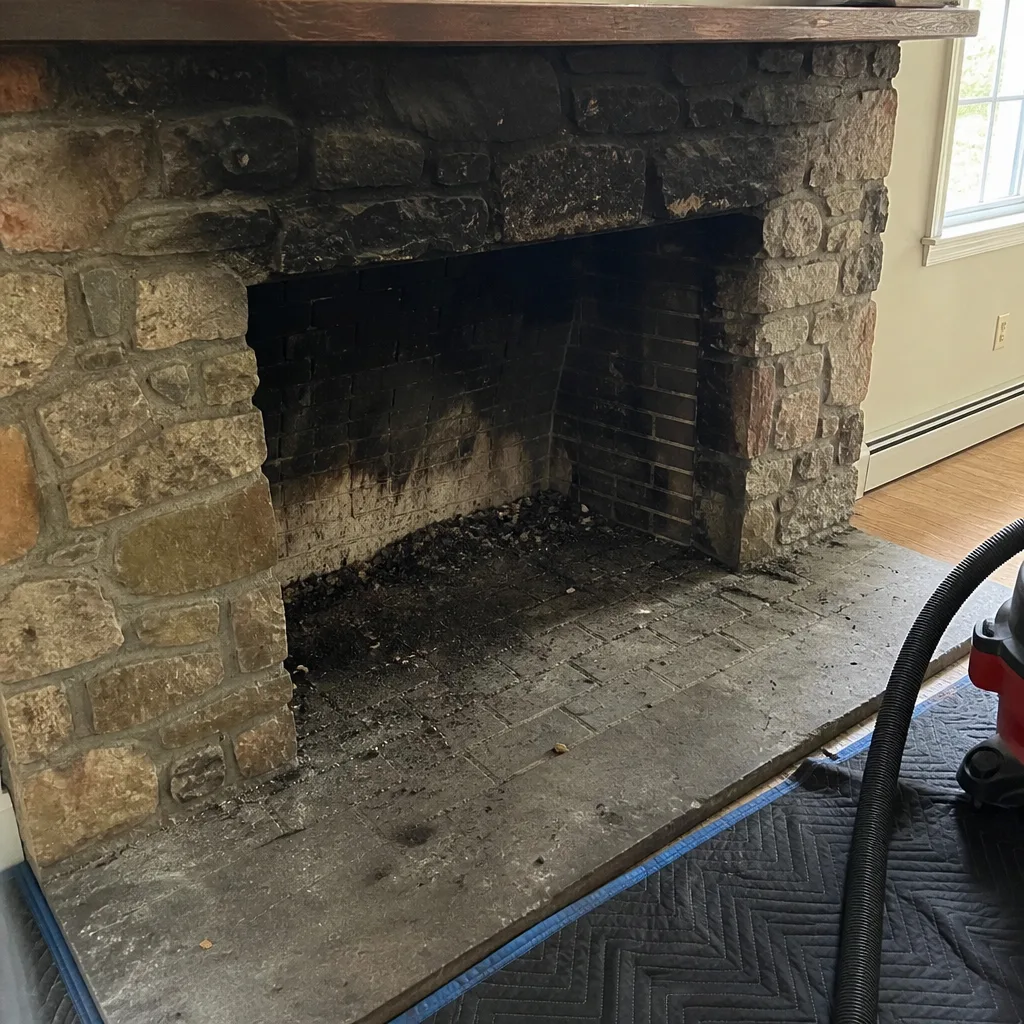
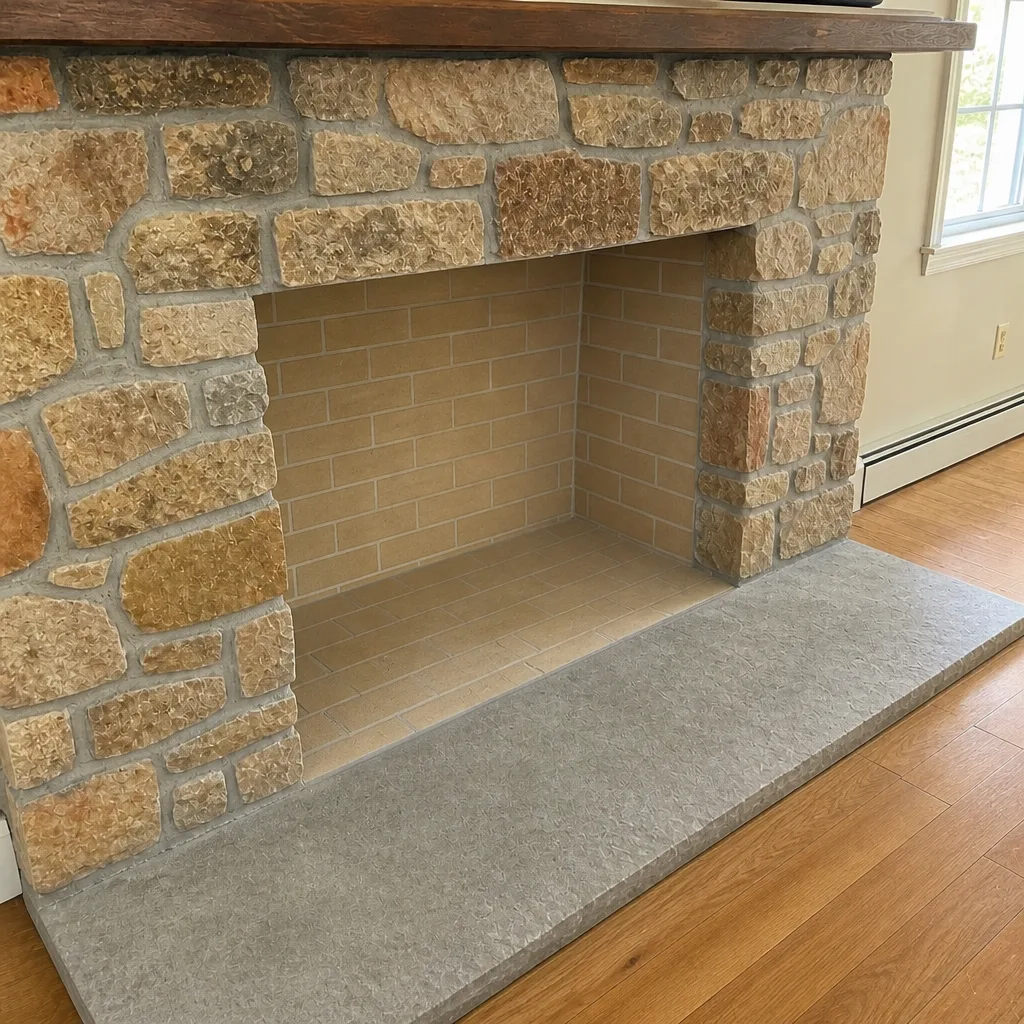
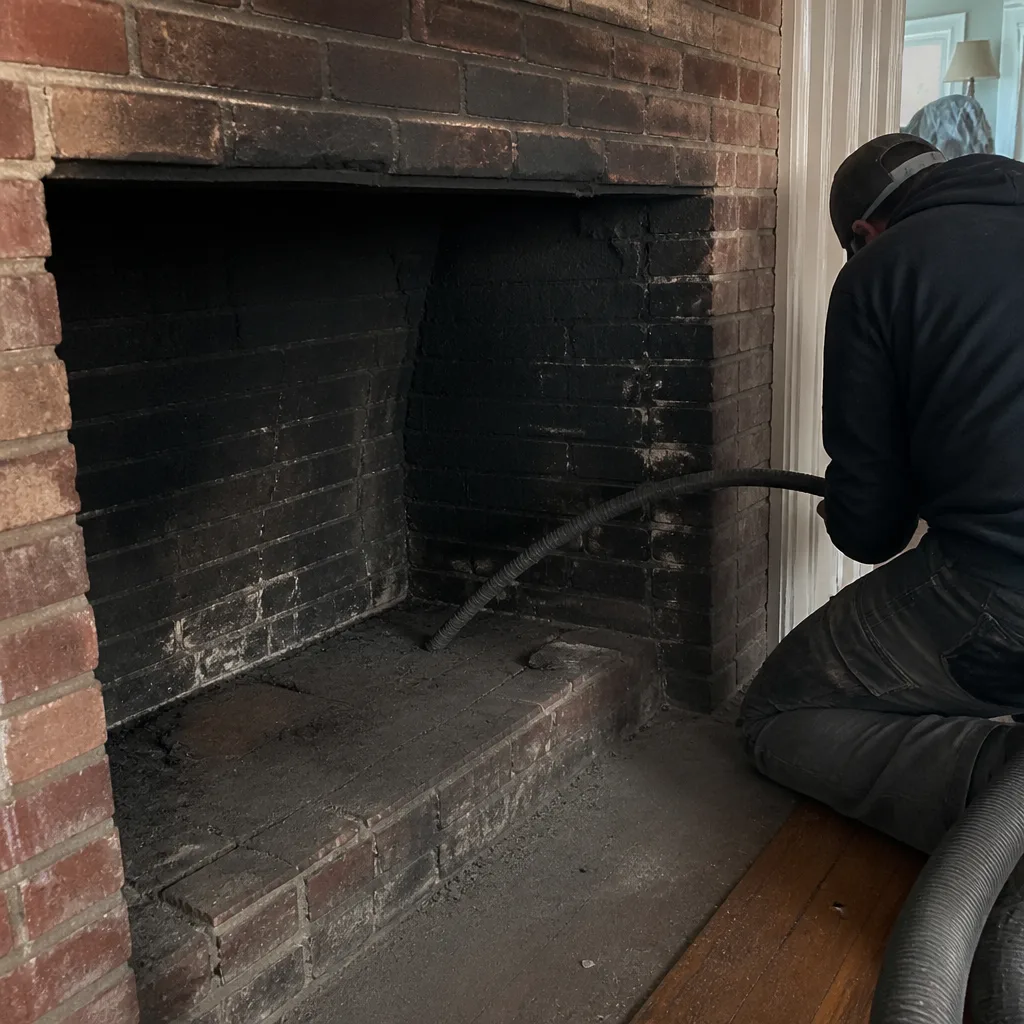
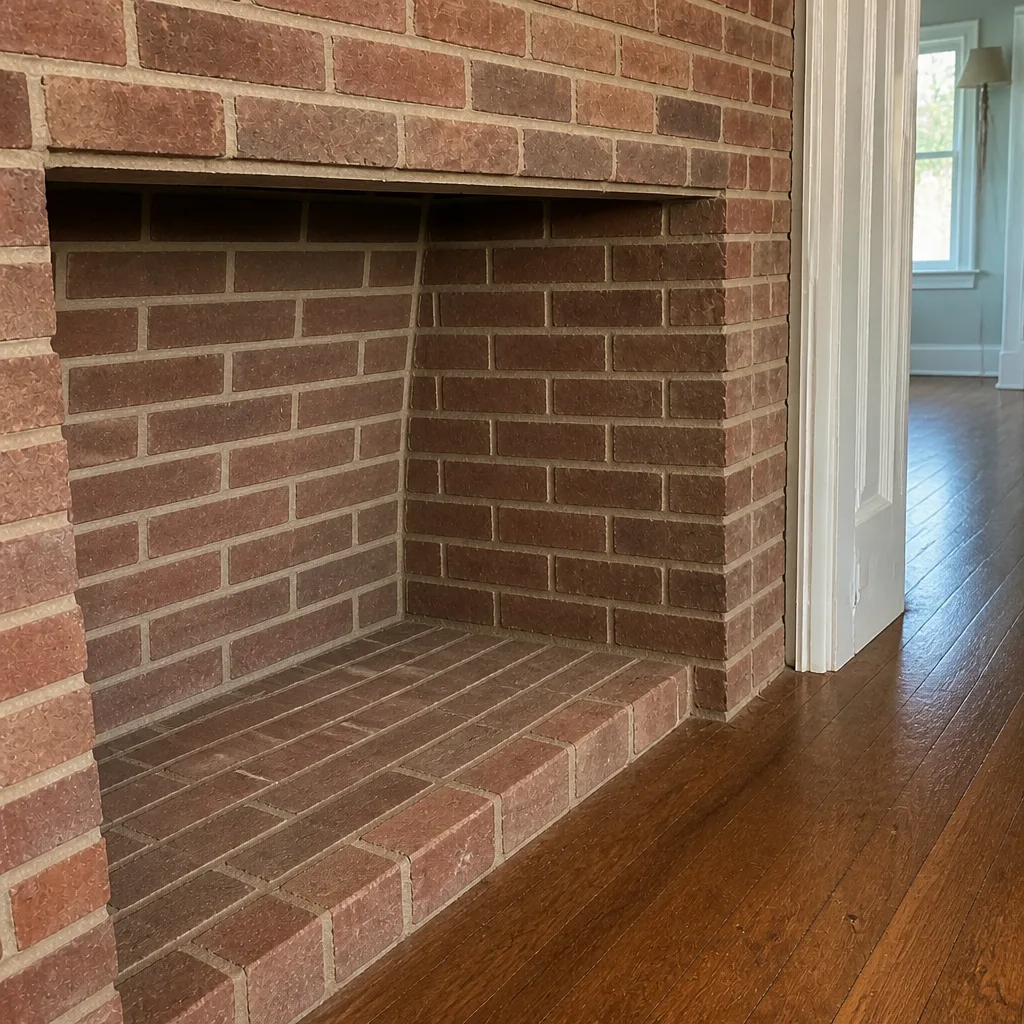
See the difference
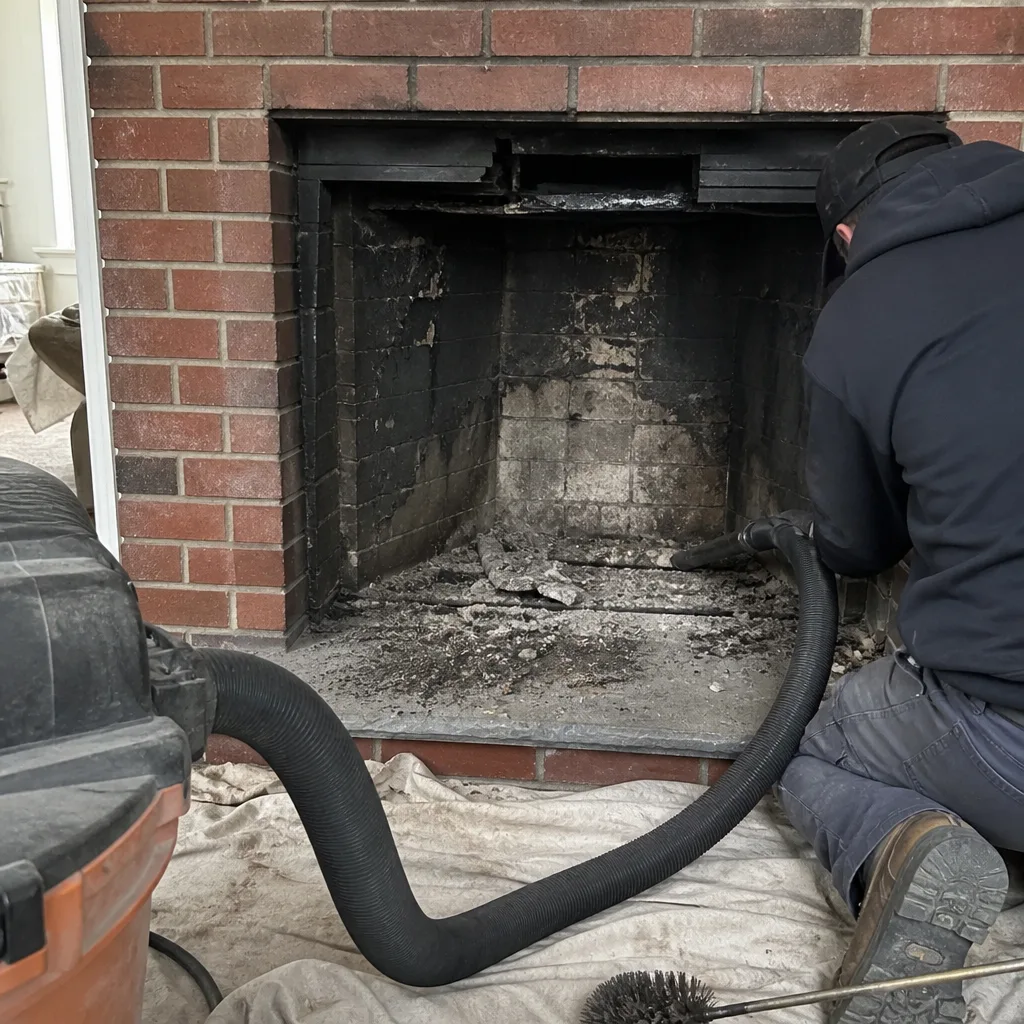 Before
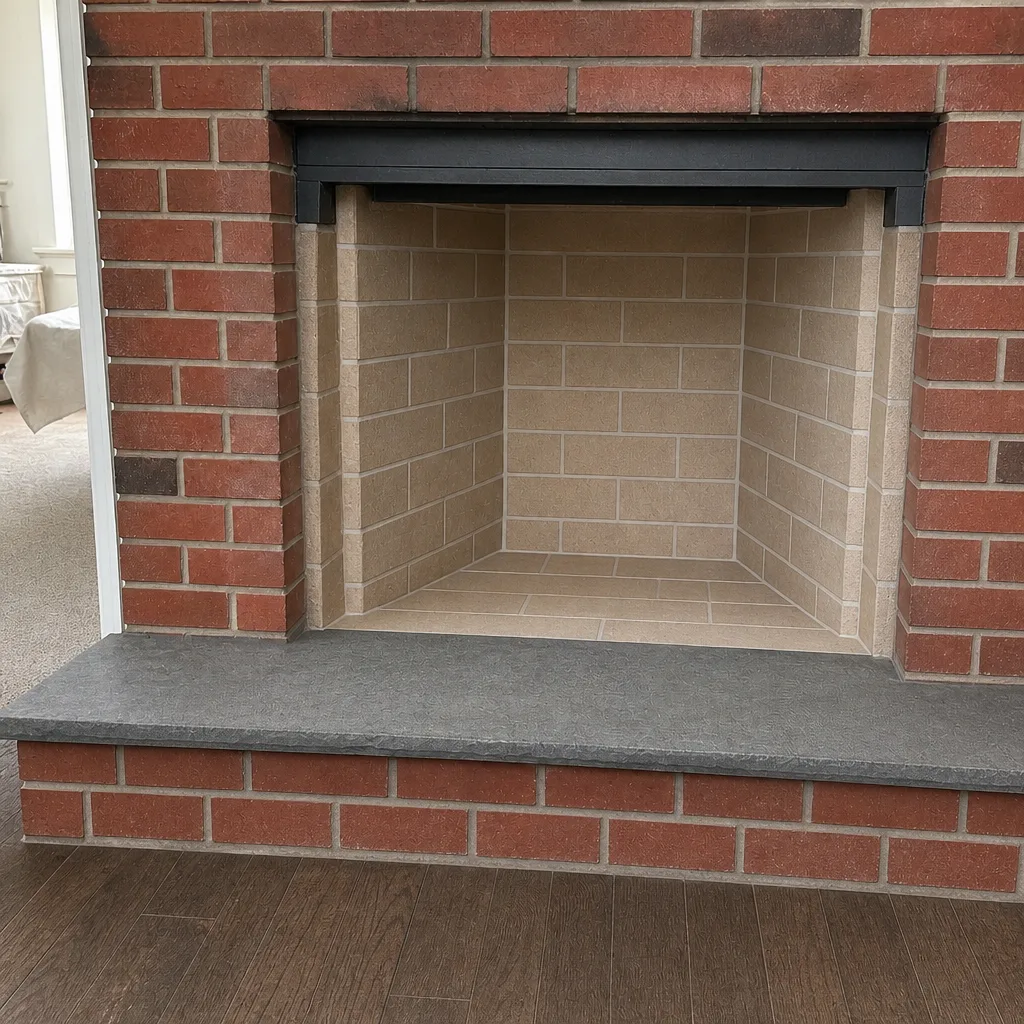 After
 Before
 After
 Before
 After