
Last updated November 25, 2026
 Sweep & inspection
 Caps & crowns
 Flue relining
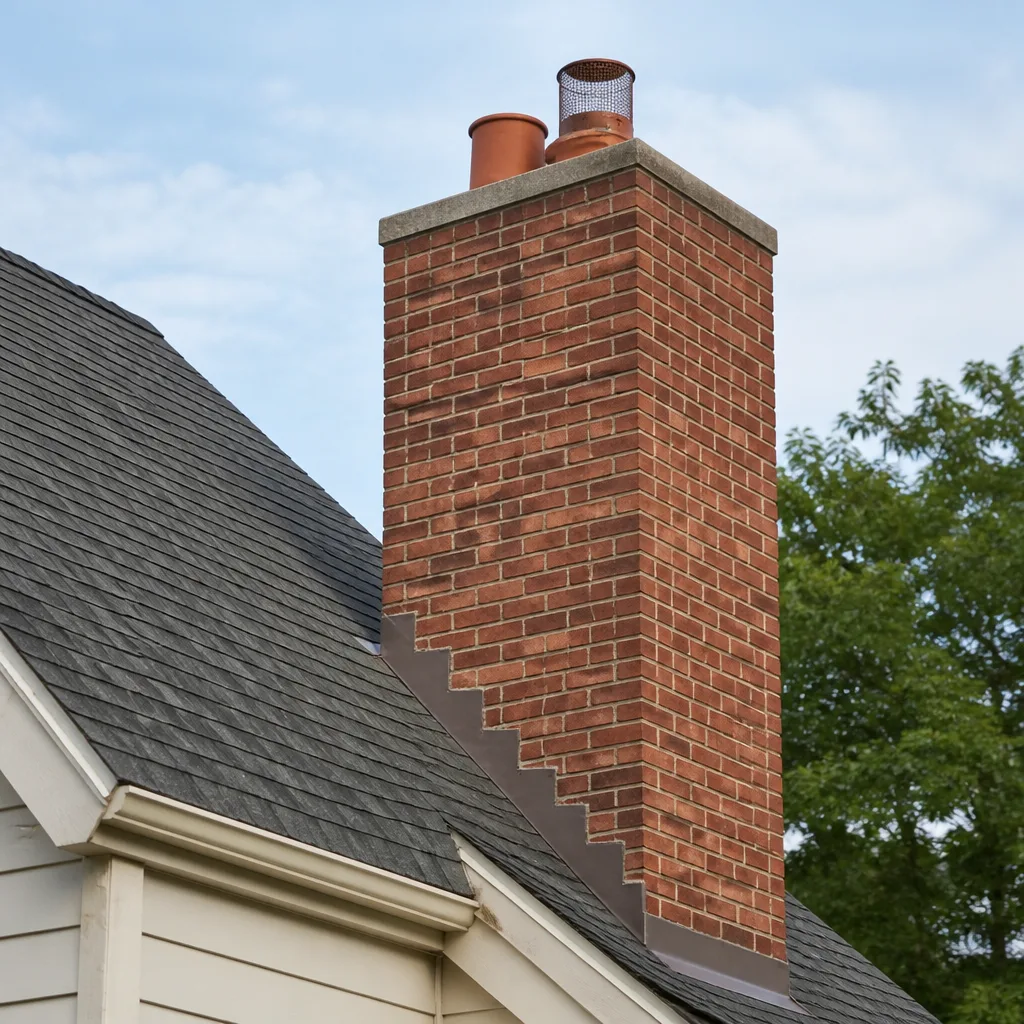 Masonry repair
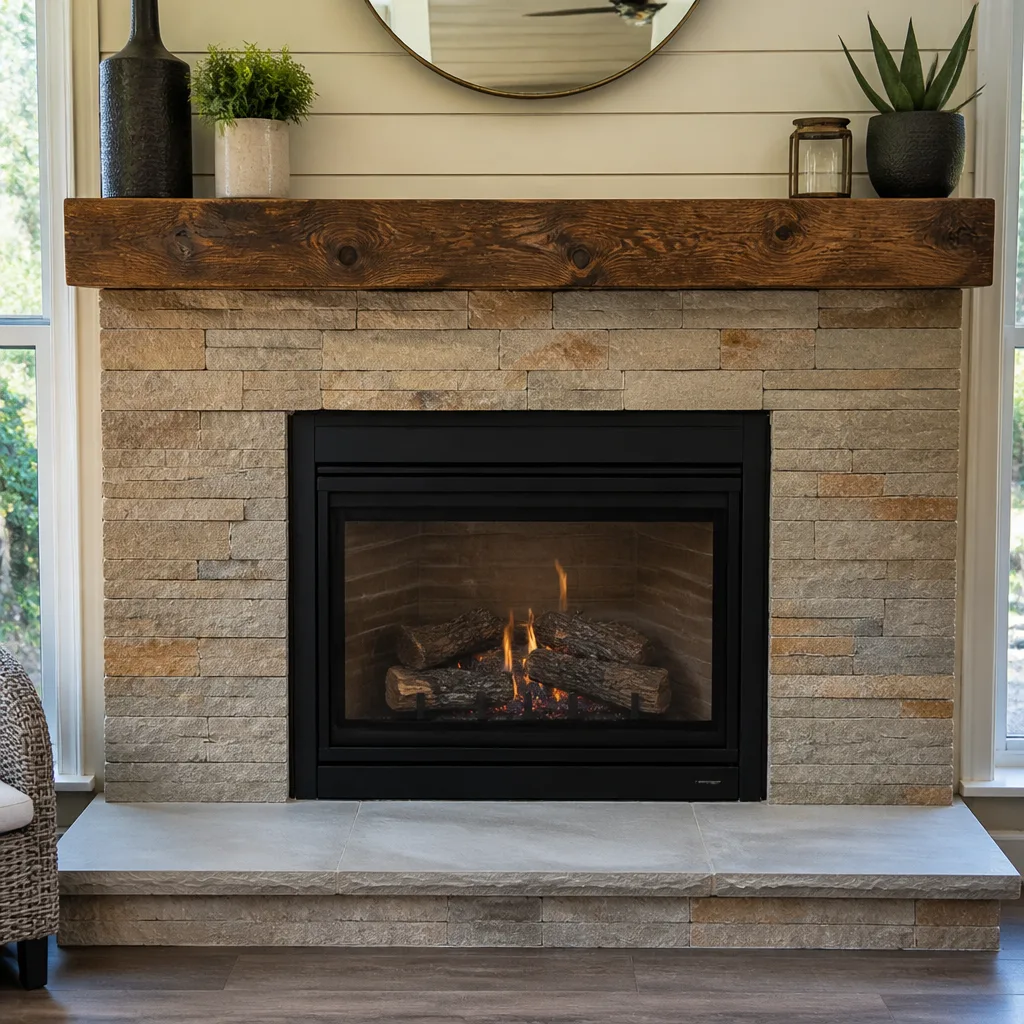 Gas fireplace service
Level 1 sweep and inspection to the NFPA 211 annual standard - flue, crown, cap, and flashing checked and photographed
Chimney sweep logs do not sweep chimneys. They loosen some creosote - which then falls where a brush and vacuum still have to collect it.
Chimney Cleaning Emergency Preparedness Guide for East Boston Homes
A chimney fire in a triple-decker doesn’t stay in one unit. That’s the part most homeowners miss. When a glazed creosote deposit ignites inside a clay tile liner, temperatures can climb high enough to crack that tile, and the gap between a cracked liner and the wood framing of a shared chase is measured in inches, not feet. In East Boston’s dense housing stock, where buildings touch or sit close together and flues run up through occupied units, the sequence of what you do in the first five minutes matters more than in a detached single-family house. This guide covers how to recognize a chimney fire while it’s happening, what to do first in a multi-unit building, how carbon monoxide sneaks into living space through chimney faults, what to tell firefighters about an older East Boston chimney, and what has to happen before you light that fireplace again.
Quick Answer
If you suspect a chimney fire in an East Boston home, call 911 first, get everyone out of the building, and only then alert neighbors in attached units. Signs include a roaring sound like a low-flying jet, a smell of hot metal or burning creosote, and visible sparks or flames at the chimney top. After any suspected chimney fire, the flue must be inspected by a trained professional before the fireplace is used again, and in Massachusetts that usually means a documented Level II inspection with photos of the liner condition.
Styles & brands we work with
- Sweep & inspection
- Caps & crowns
- Flue relining
- Masonry repair
- Gas fireplace service
Table of Contents
- How do you know a chimney fire is happening right now?
- What’s the right response sequence in an East Boston triple-decker?
- How does carbon monoxide travel through a chimney system?
- What should you tell the fire department about an older East Boston chimney?
- What happens after a chimney fire: inspection and documentation
- How to prevent chimney emergencies before heating season
- East Boston’s heating-season patterns and what they tell us
- Single-family homes, gas inserts, and oil flues
How do you know a chimney fire is happening right now?
Most chimney fires in East Boston don’t look like a fire. They sound like one. A chimney fire is burning behind a wall of masonry or steel, and what reaches the room is noise, smell, and heat rather than visible flame. Here’s what actually signals one in progress:
- A low roar or rumbling that sounds like a freight train or a jet passing overhead. Normal fireplaces crackle and hiss. A sustained roar is the sound of a large creosote deposit burning fast.
- A smell of hot metal or burning tar. Creosote burning smells like a chimney fire, not like wood smoke. If the flue suddenly shifts from “wood smoke” to “hot and acrid,” stop adding wood.
- Dense smoke or sparks from the chimney top. A working chimney drafts smoke up and away. A chimney fire can push visible flame, sparks, or thick smoke out the crown.
- A pop or puff of smoke into the room. That’s backdraft. The fire is starving for oxygen or the flue is obstructed. The fire can climb faster once a door opens.
- A hot damper or hot chimney breast. If the brick or drywall near the chimney gets too hot to touch, the fire is touching the masonry it shouldn’t be touching.
Secondary chimney fires are quieter and can smolder for hours without a roar. That’s why a sweep and a Level II inspection every season matter more in East Boston’s older row-house stock than in a newer build. A quiet fire that cracks a tile can smolder inside the chase before anyone notices. If you’re unsure whether the sound you heard was a chimney fire or just a creosote pop, the answer should come from an inspection, not from guessing.
What’s the right response sequence in an East Boston triple-decker?
In a single-family house, the response is simple: call, get out, meet the fire department. In a triple-decker or an attached row house, you also need to notify adjacent households, and the order matters because smoke and heat can travel through shared chases before anyone upstairs notices a problem. Here is the sequence we recommend to East Boston homeowners:
- Get everyone out of your own unit first. Don’t stop for belongings. Don’t stop to add water to the fire. Get out.
- Call 911 from outside, not inside. Tell the dispatcher your address and say “chimney fire, suspected, in a multi-unit building.” That single sentence changes what equipment the fire department sends.
- Pull the building alarm if there is one. If your triple-decker has a shared alarm pull station, use it. If it doesn’t, knock on doors loudly and shout “chimney fire, get out.”
- Don’t close the flue. This is counterintuitive. Closing the damper cuts the air supply the fire has, and starving a hot fire can cause it to burn hotter once air returns. Leave the damper where it is and let the fire department handle the firebox.
- Move away from the building’s exterior side where the chimney runs. If a tile cracks under fire, hot gases and smoke vent out the chase. Standing under a chimney that’s on fire is not where you want to be.
- Wait for the fire department on the street. When they arrive, tell them three things: what you heard or saw, when it started, and how old the chimney is likely to be (see the next section).
The reason we walk East Boston homeowners through this in advance is that nobody makes good decisions in the first five minutes after a fire starts. If you can rehearse a version of these steps once with the people in your building, you’ll have them when you need them. We hand this sequence out at the end of chimney inspections so it lives on the fridge, not just in a guide.
How does carbon monoxide travel through a chimney system?
Carbon monoxide from a chimney system doesn’t usually come from a fire. It comes from a blocked flue, a cracked liner, a backdrafting flue, or an oil burner that vents through a chimney with a damaged flue. In each case, CO pulls back into living space instead of venting outside the house. The conditions that create real CO exposure risk in an East Boston chimney include:
- A partially blocked flue from creosote, soot, or a bird nest. Even a partial obstruction sends some exhaust into the room.
- A cracked or spalled clay tile liner. Exhaust passes through the crack and into the space between the liner and the outer masonry.
- A cold flue that dumps smoke down the chimney. East Boston’s older houses have flues in exterior masonry chases that get very cold in January and February. The first fire of a cold morning can briefly backdraft.
- A negative-pressure house. A tightly sealed house with a kitchen exhaust fan running can pull chimney gases backward into the room. This is common in East Boston homes that have been updated without adding combustion air.
- An oil furnace flue that shares the chimney with a wood flue. Sealing or blocking a wood flue while an oil flue is still live is a common cause of CO events in this neighborhood’s older houses.
Where you place a CO detector matters more than most homeowners realize. CO is close to the density of room air. The gas mixes with the air rather than pooling, which means the detector catches it best where a person breathes it, not at the ceiling. In practice, that’s why we recommend:
- A CO detector on every level of the home, including at least one within hearing range of sleeping areas.
- A detector in the room where the fireplace or the oil appliance sits, especially if it’s an older chimney that shares a wall with a bedroom.
- A detector near the mouth of the chimney at floor level, not at the top of the room.
If a CO detector goes off, treat it as a real event until proven otherwise. Open windows, get everyone outside, and call from outside. Don’t wait to decide whether the alarm is “just a false alarm.” A CO alarm is doing its job or it’s failing; assume the first until the second is confirmed.
What should you tell the fire department about an older East Boston chimney?
When firefighters arrive at a working chimney fire, the information that helps them most is the state of the chimney itself. A chimney fire in a 1920s East Boston triple-decker with a clay tile liner and a shared wood chase is a very different problem from a fire in a modern insert with a stainless steel liner. Tell them:
- How old the house is, roughly. Buildings from the 1880s through the 1950s used clay tile liners with mortar joints. That construction can crack under heat.
- Whether the chimney is inside or outside the building envelope. Exterior chases get hotter in a fire because they don’t have the shared interior wall acting as a heat sink, and if the fire cracks the tile, the gap opens to the exterior wall cavity.
- Whether the chimney is shared with an oil or gas appliance. A live oil flue next to a burning wood flue changes what the fire department needs to shut off.
- Whether you’ve had a sweep and inspection in the last 12 months. If a licensed technician has recently examined the flue and knows the tile condition, that report goes to the fire department quickly.
- Where the clean-out door is. Fire departments sometimes need to open the clean-out to check for hot material at the bottom of the chimney.
In our experience, the questions firefighters ask first are about liner construction and whether anyone has been inside the flue recently. If you’ve had an inspection from Chimney Sweep East Boston that documents your liner condition with photos, that inspection report is the fastest thing you can hand them. It tells them whether the tile was intact last season, which bears directly on whether the fire is likely to have cracked it.
What happens after a chimney fire: inspection and documentation
After a suspected or confirmed chimney fire, the fireplace is out of service until a trained professional has inspected the flue and given it an all-clear. That’s not a scare tactic. It’s the standard sequence in Massachusetts, and it exists because a cracked liner that looks fine from inside the firebox can leak smoke and heat into the house the first time you light the next fire. Here’s what happens in the weeks after:
- Let the chimney cool completely. A professional inspection at temperature is unsafe and inaccurate. Wait at least 24 hours.
- Book a Level II inspection. Level II means the technician uses a camera to look at the liner from the inside, not just the firebox. A Level I check is not enough after a fire. Our inspections are available as a standalone service with a camera and photo report included.
- Review the report with the technician. You should get clear photos of the liner condition, the crown, the cap, and the firebox. Anything that isn’t documented with a camera image should be flagged as “unknown” rather than asserted. That’s the standard we hold our reports to, and it’s the standard you should demand from any chimney company after a fire.
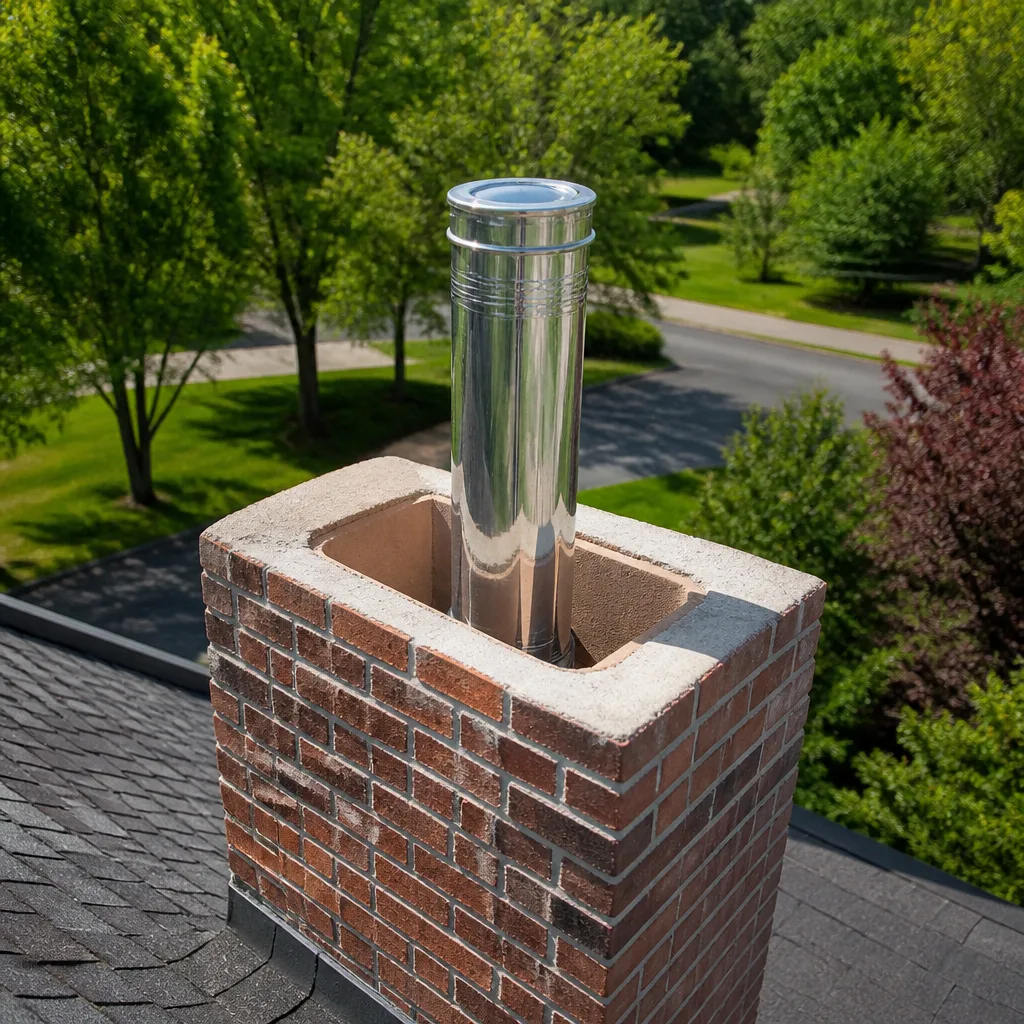
- Get a written scope for any repair. If the liner needs resurfacing or replacement, you should see a written estimate that names the method and the materials. We use HeatShield for resurfacing and DuraFlex liner systems for relining; when a repair is needed, the estimate will say which one and why.
- Deal with insurance separately. Photograph the damage to the firebox, the chimney breast, and any room near the chase before the fire department clears the scene. Your insurer will want that documentation. We can work with your insurer, but we can’t tell them what your policy covers.
- Get a written clearance before using the fireplace. Whether the fire department or your insurance requires it, the fireplace shouldn’t be relit until a chimney professional has put in writing that the flue is serviceable.
For more on what an inspection covers and when to schedule one, our chimney sweep and inspection service is the same service line item – we don’t outsource the camera work to another contractor.
How to prevent chimney emergencies before heating season
Most of the chimney fires we see in East Boston are preventable, and the prevention window is early fall, before the first real cold snap. Creosote builds up in a chimney in a predictable way: every fire deposits a thin layer of smoke residue on the inner liner, and if the chimney is never swept, that layer thickens into a glaze that can ignite at much lower temperatures than most people expect. The preventive steps:
- Book a sweep before the season starts. A sweep removes the soot and creosote deposits that fuel a chimney fire. It’s the single most effective preventive step and should happen before the first fire of the season, not after.
- Have a Level II inspection if the liner condition is unknown. If you’ve never had your liner looked at with a camera, do it before this season.
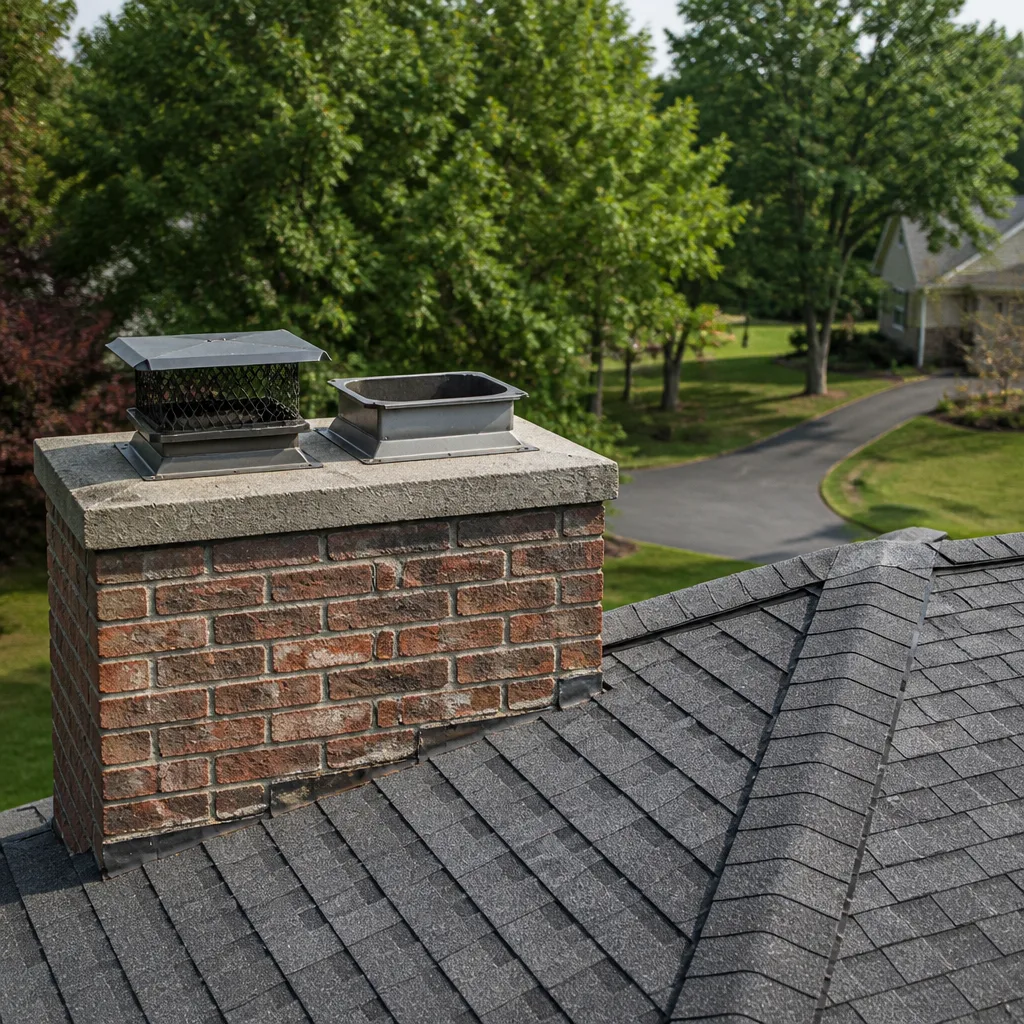
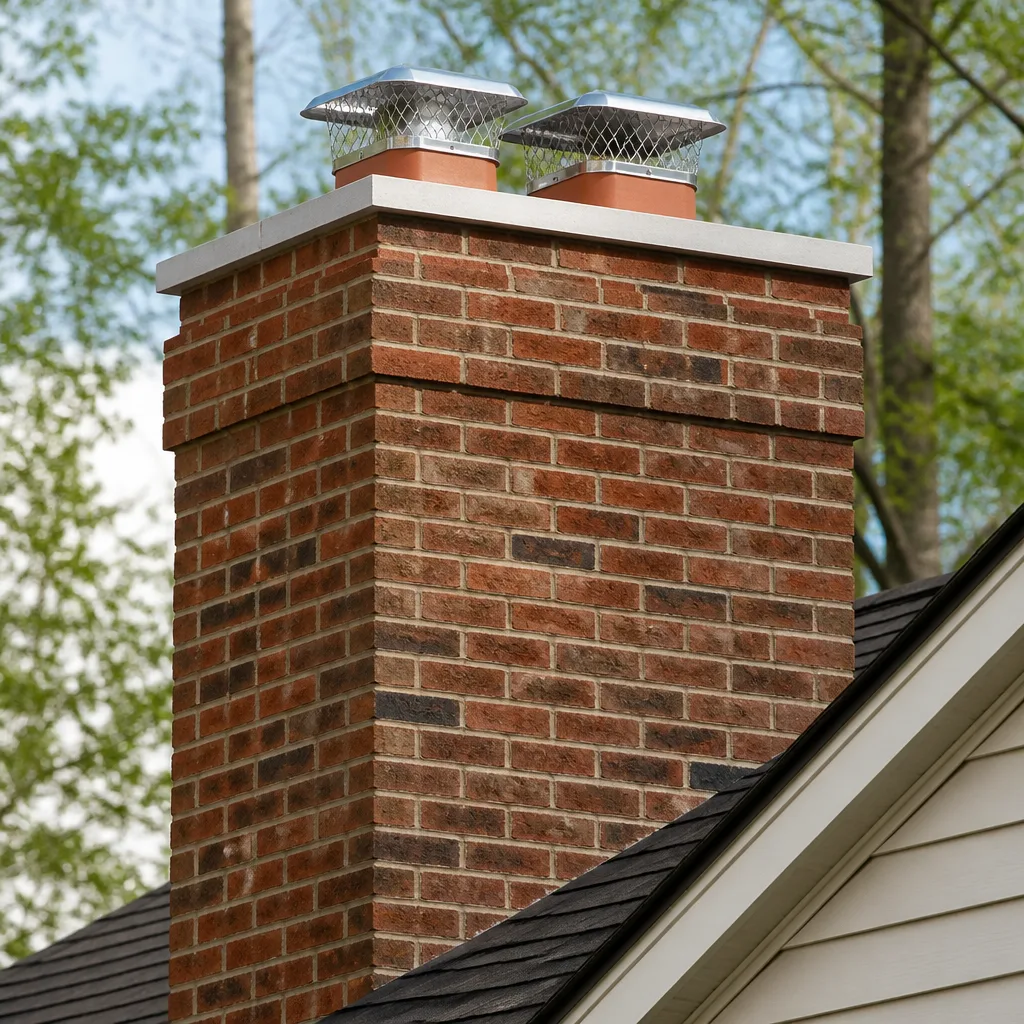
- Check the chimney cap. A missing or damaged cap lets water, birds, and debris into the flue. That’s a common cause of obstructions and a common cause of CO events in late fall and early winter. A proper chimney cap & crown does more than cover the top – it protects draft performance.
- Burn dry wood. Seasoned firewood burns hotter and cleaner, which reduces creosote load.
- Don’t overload the firebox. Long, hot fires with under-dry wood build creosote faster than moderate fires.
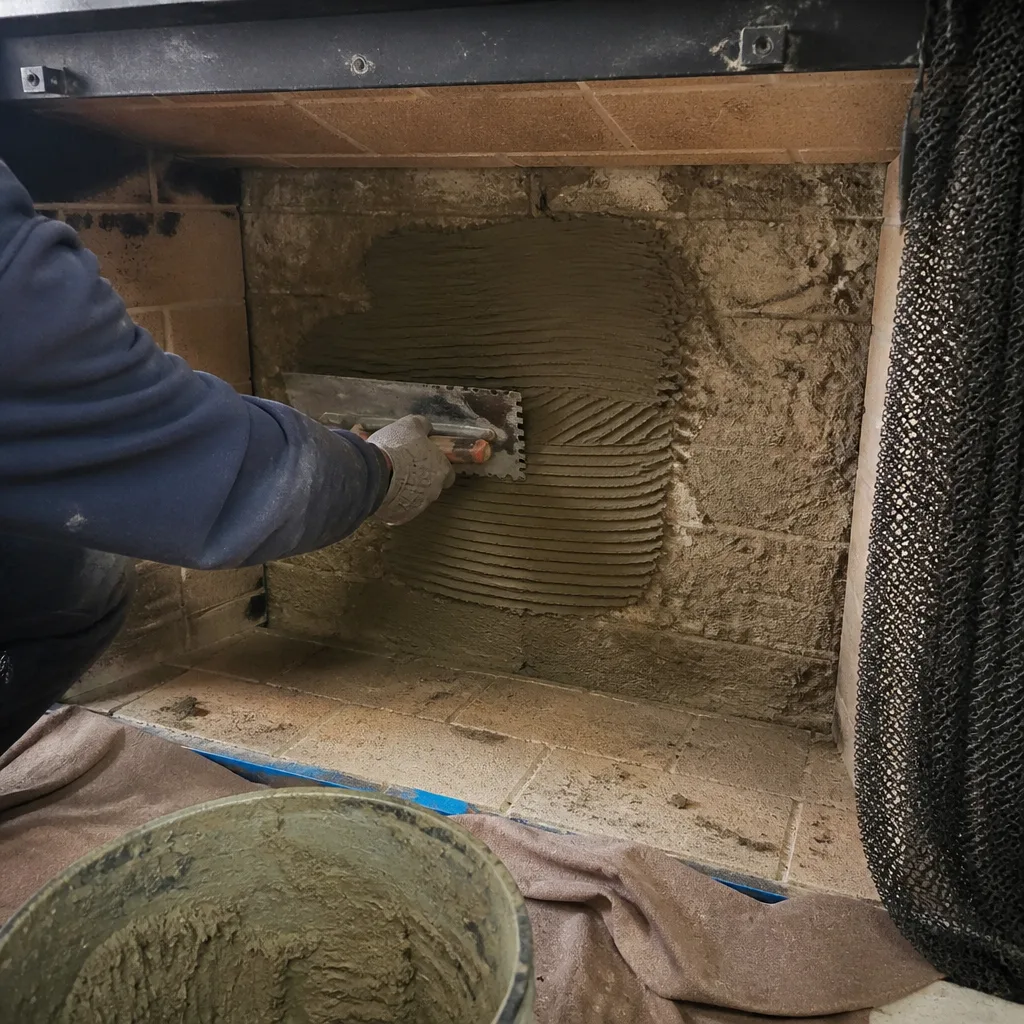
- Watch for a damaged firebox. Loose or crumbling firebrick lets heat reach the masonry beyond it. If you see cracks or missing mortar in the firebox, get it looked at before you light the next fire.
If the firebox itself is a concern, our fireplace repair starts with the same camera-and-photo diagnosis as the rest of our work – we don’t recommend rebuilding a firebox without showing you what’s actually failing.
East Boston’s heating-season patterns and what they tell us
East Boston’s housing stock runs older than much of the city’s newer construction, and the heating season runs long here. Buildings that were built in the late 1800s through the mid-1900s used clay tile liners with mortar joints, and those liners are still doing their job in a lot of East Boston homes. But clay tile has a finite service life under repeated heating and cooling, and the failures don’t show up evenly across the neighborhood. Exterior chases (the ones on the exposed side of a triple-decker) see the widest temperature swings, so tile cracking tends to concentrate there first. Buildings on the more sheltered side of a block often hold up longer.
We also see a pattern around the first hard cold snap of the year. A flue that drafted fine all through November can backdraft the first morning the temperature drops below freezing, because the flue is cold and the house is warm, and the pressure difference pulls smoke down before the flue warms up. That’s not a chimney fire – it’s a CO event risk. The fix is usually a properly designed cap and a liner that drafts reliably, not a new heating system. If you’ve had the smoke-puff-into-the-room experience in East Boston, that’s a real symptom worth an inspection, not a quirk of the building.
We use professional-grade materials because they hold up to this pattern. DuraFlex liner systems are the standard reline for aging masonry flues in this housing stock, and we install them directly. HeatShield resurfacing is an option when the liner is failing at the joints but the tile structure is otherwise sound – it extends liner life without a full reline, and it’s a method a lot of generalist contractors don’t offer because they don’t carry it. When the crown or cap is the failing component, Gelco and Famco caps are what we install because they’re selected for draft compatibility and weather resistance, not just coverage.
Single-family homes, gas inserts, and oil flues
Not every East Boston chimney emergency looks the same, and the type of appliance on the other end of the flue determines what you should watch for. The three main cases:
- A wood-burning fireplace in a single-family home. The risk profile is creosote buildup and a cracked clay tile liner. Prevention is a sweep and inspection each season. The emergency is a chimney fire or a CO event from a blocked flue.
- A gas insert or gas log set in any home type. The risk profile is different. Gas burns clean, so creosote isn’t the issue, but a blocked flue or a collapsed liner can still vent CO into the room. Gas fireplaces in East Boston’s older houses often sit on flues that were designed for wood, and the mismatch between appliance and liner is worth a professional look.
- An oil furnace or boiler venting through a chimney. The risk profile is the most serious of the three because oil produces significant CO and the flue is in almost constant use through the winter. A blocked or cracked oil flue is a real CO event waiting to happen. Have the flue checked before the heating season starts, every year.
The service we recommend for any of these is the same – a sweep, a Level II inspection, and a written report with photos. What changes is the emphasis. For a wood fireplace, the sweep comes first. For an oil flue, the inspection comes first because you can’t sweep what you haven’t looked at. For a gas insert, the camera inspection is the whole game.
Common Mistakes to Avoid
- Closing the damper on a chimney fire. This feels intuitive and it’s wrong. Starving a creosote fire of oxygen can make it hotter when air returns, and it sends more smoke into the room in the meantime. Leave the damper alone and call for help.
- Assuming the fireplace is fine because the firebox looks fine. In East Boston’s older triple-deckers, the firebox can look intact while the liner above it has already cracked. The firebox is the last place you’d see a failure.
- Relighting after a fire without an inspection. The most common post-fire mistake we see. A chimney that survives a fire without visible damage can still have a cracked tile that leaks into the wall cavity on the next fire. Get the inspection in writing before you light up.
- Relying on a CO detector alone. A CO detector is a backstop, not a substitute for a chimney inspection. It catches the problem after it’s already in the room.
- Skipping the sweep because the chimney “doesn’t smoke.” A chimney with a heavy creosote load often drafts fine right up until the moment it doesn’t. Draft performance doesn’t tell you the liner condition.
- Hiring a sweep with no camera. A sweep without a camera is a partial service in an East Boston triple-decker. The camera is what tells you whether the liner is intact above the firebox, and if a company doesn’t offer it, ask why.
- Letting a bird nest or a squirrel nest sit in the flue all winter. An obstruction is one of the most common causes of a CO event, and it usually starts with a missing or damaged cap. Have the cap checked when the flue is swept.
See the difference
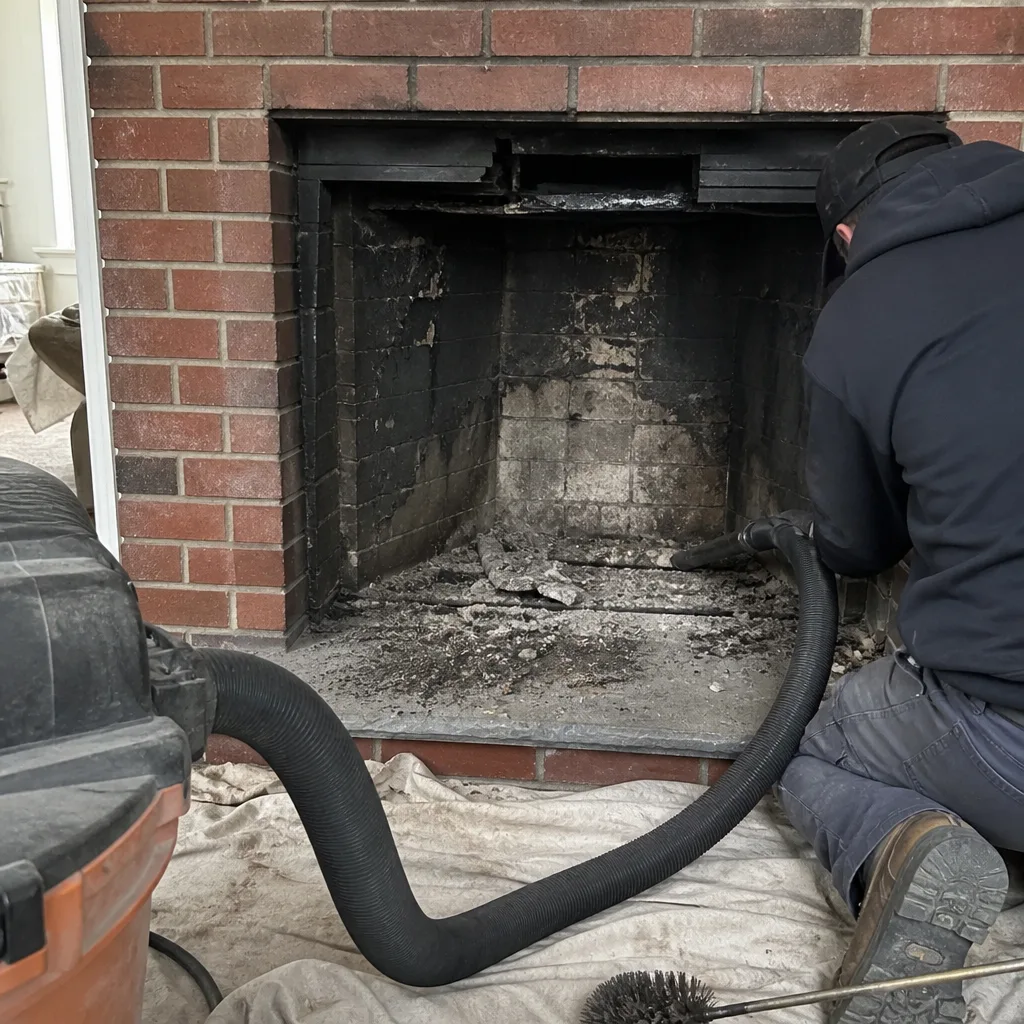 Before
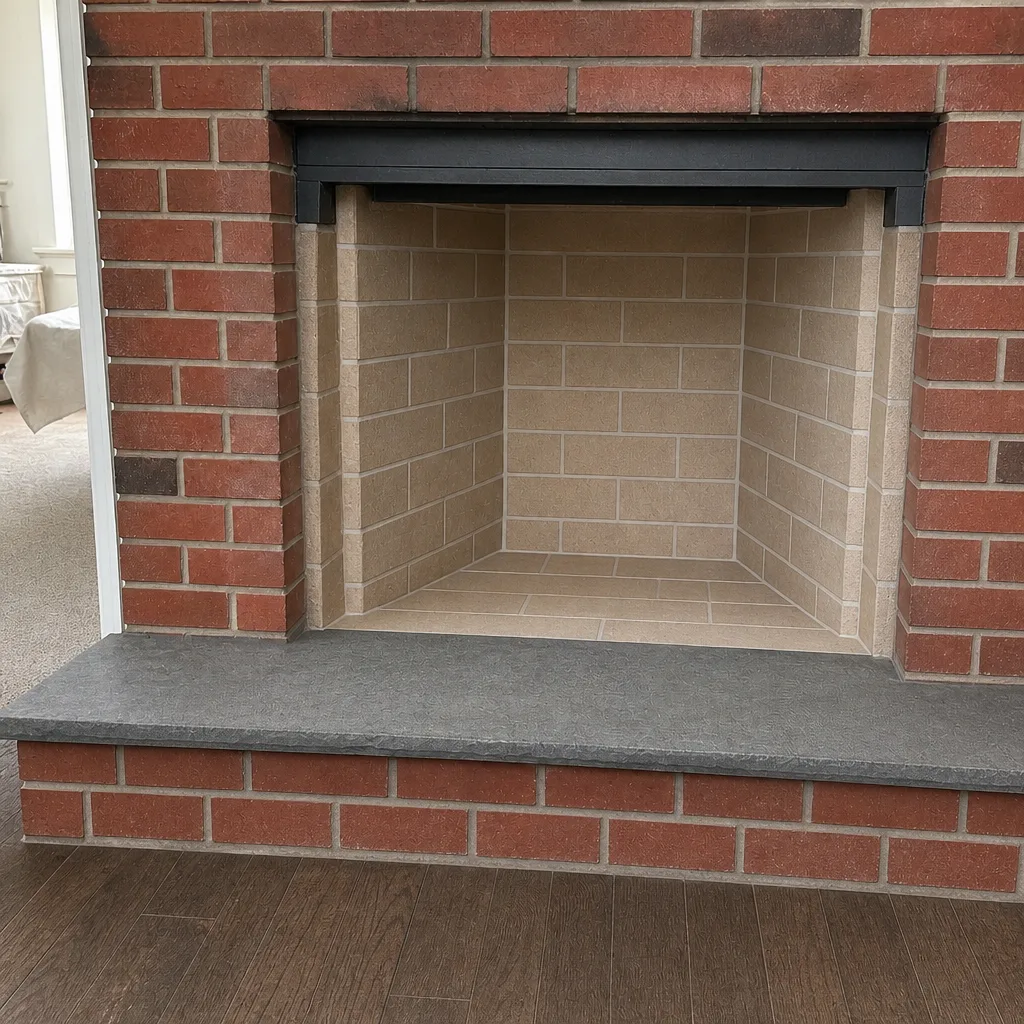 After
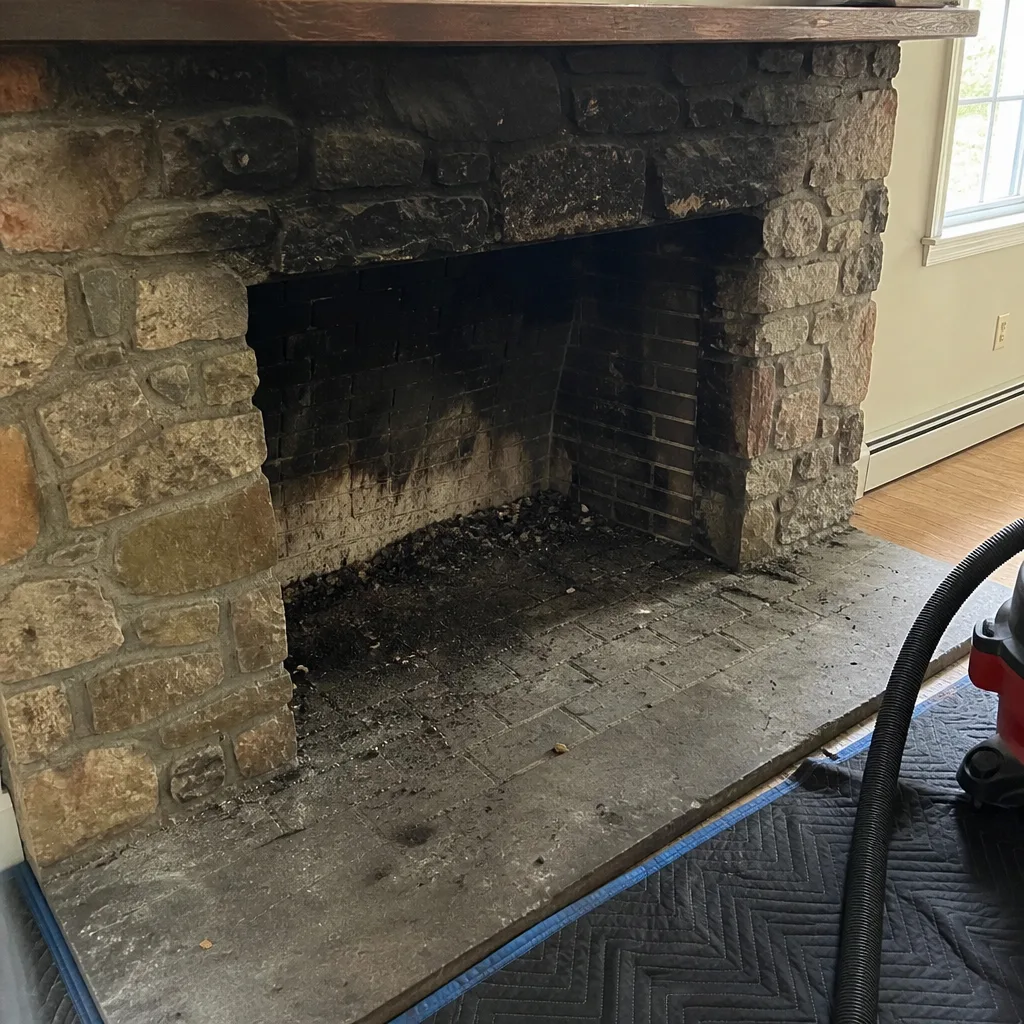 Before
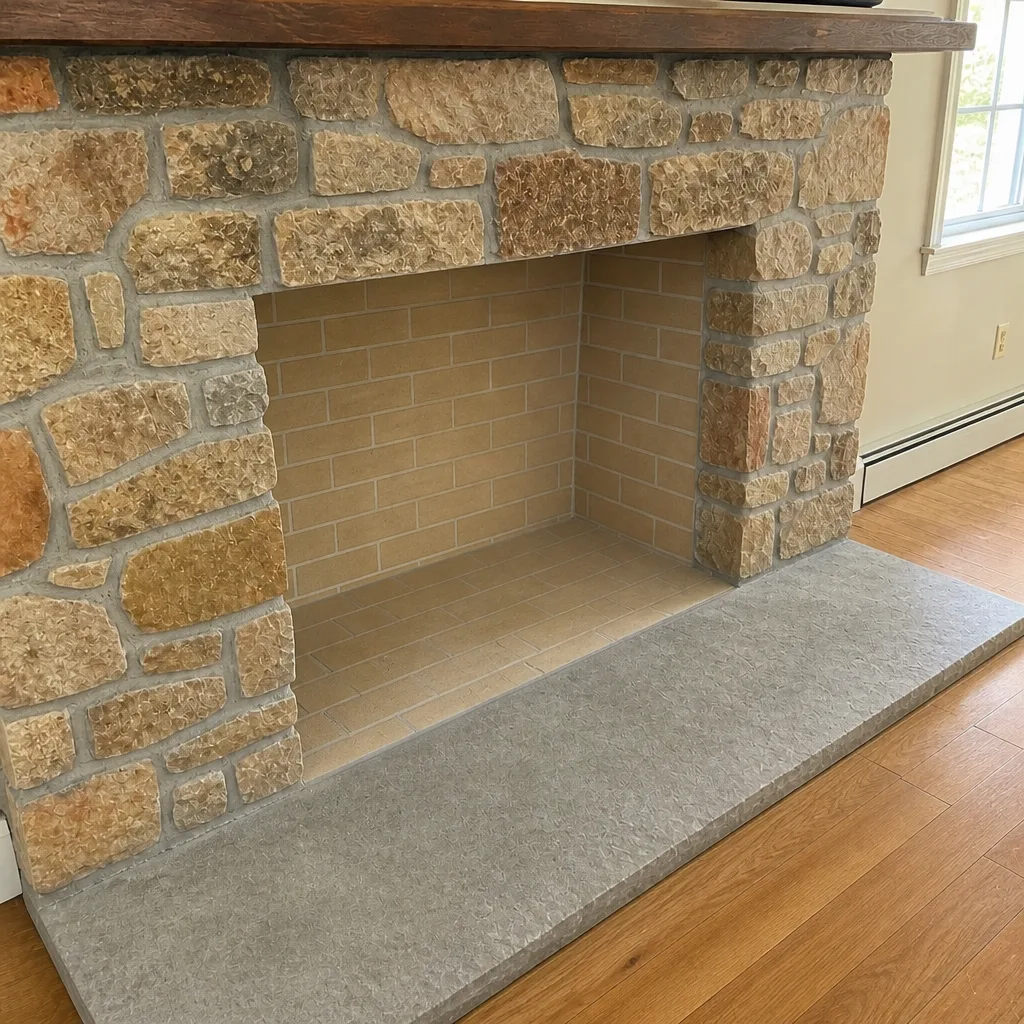 After
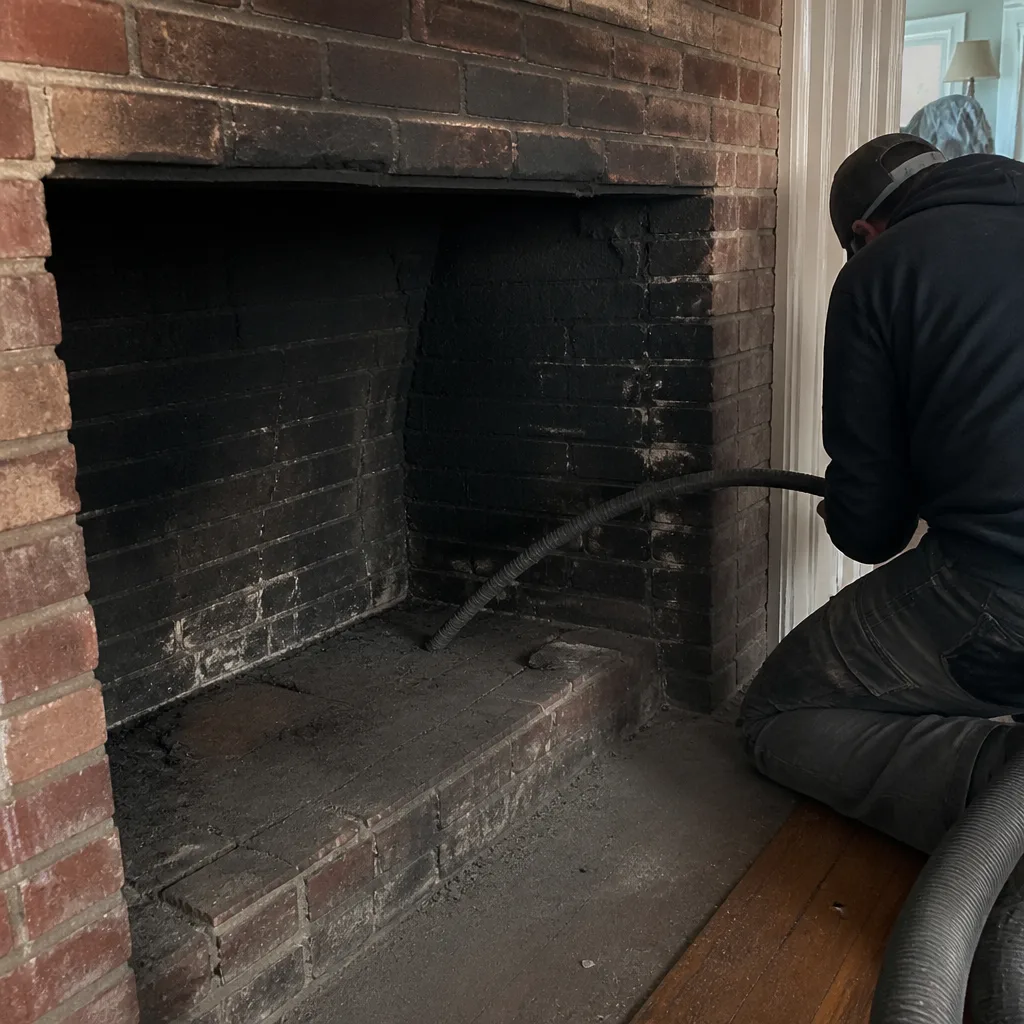 Before
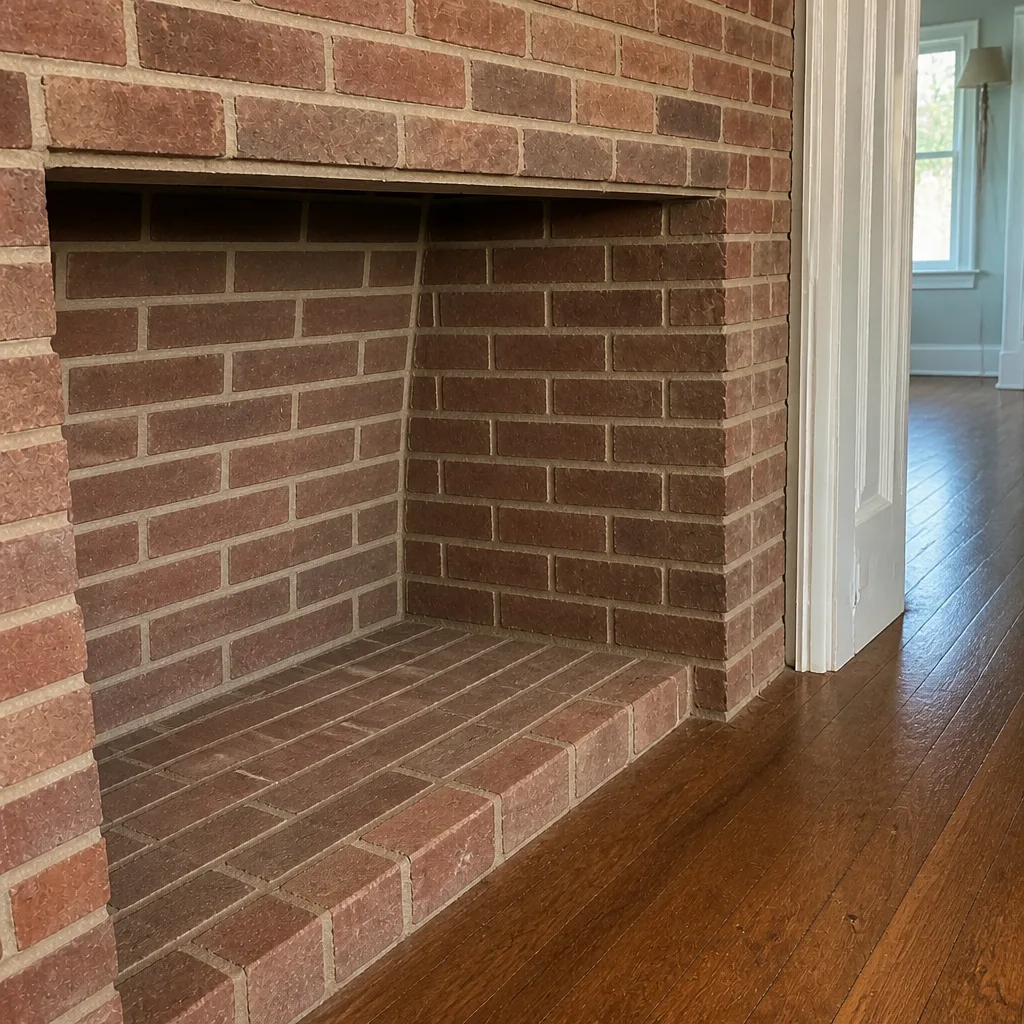 After
When to Call a Professional
Call a professional if you’ve had any suspected chimney fire, no matter how small. Call if a CO detector has gone off in your home. Call if you’ve had smoke push into the room during a fire or when the heat first kicks on. Call if you’re about to relight a fireplace after any gap in use longer than a couple of seasons, because a liner that held fine two years ago may not hold now. And call before the heating season starts if you have a wood fireplace, gas insert, or oil flue that hasn’t been inspected this year.
Our technicians have up to 8 years of experience with the chimney systems inside East Boston’s triple-deckers, row houses, and single-family homes, and we can look at the whole system: sweep, cap and crown, fireplace repair, liner repair, and inspection. Chimney Sweep East Boston offers free estimates in East Boston. Call (888) 898-1071. We answer 24/7. Fast dispatch from 7am to 7pm, Sunday through Friday.
Frequently Asked Questions
Chimney sweep pricing in East Boston depends on the flue and the appliance type – a single wood-burning flue runs differently from an oil flue or a shared chimney. The written estimate sets the final price, and the estimate is free. If you’re comparing quotes, ask what’s included: a camera inspection with a photo report should be part of the answer. Call (888) 898-1071 for an exact quote – estimates are free.
Not always, but you need to know. A chimney fire can damage the liner without damaging the firebox, and whether a new liner is needed depends on the condition of the tile above the firebox – which is what a Level II camera inspection tells you. Sometimes the answer is HeatShield resurfacing, sometimes it’s a DuraFlex reline, and sometimes no liner work is needed at all. Nothing gets recommended without camera evidence you can see for yourself, and we’ll tell you plainly when a repair can safely wait.
For a wood-burning fireplace in regular use, once a year is the working standard, and it should happen before heating season. Oil flues should be inspected every year because they’re in constant use. Gas inserts benefit from an inspection on the same annual schedule. In East Boston’s older housing stock, we recommend the sweep and inspection as separate line items so the camera work gets the attention it deserves.
The creosote layer thickens, and a thicker layer ignites at a lower temperature. That’s the mechanism behind most chimney fires in East Boston homes. The risk doesn’t show up as visible smoke in the room or as a chimney that stops drafting – the chimney often drafts fine until the day it doesn’t. Skipping the sweep for a season is a real increase in fire risk, not a theoretical one. Call (888) 898-1071 to get on the schedule – estimates are free.
Yes. A secondary chimney fire can smolder quietly for hours without the roar and visible flame of a primary fire, and tile cracks can form during either. That’s why we recommend a camera inspection after any suspected chimney fire, even one that didn’t feel like a big event. If you’re unsure, err toward the inspection.
No. A CO detector is the last line of defense, not a substitute for a chimney inspection. It tells you that CO is already in the room, not that a liner is at risk of cracking. The real protection is an annual inspection with a camera plus a properly fitted cap. If you need both looked at, Call (888) 898-1071. We answer 24/7. Fast dispatch from 7am to 7pm, Sunday through Friday.
The Bottom Line
A chimney emergency in East Boston is almost always a preventable event, and the response is almost always the same: call 911 if there’s a fire, get out, alert the building, then book an inspection before you light another fire. The prevention side is simpler than it sounds – a sweep before heating season, a Level II inspection with a camera, and a cap that actually fits do most of the work. What separates one repair from the next is the liner condition, and that’s a question you can only answer with a camera. If you’re unsure where your chimney stands, get a baseline inspection and a written photo report before the first cold snap. Call (888) 898-1071. We answer 24/7. Fast dispatch from 7am to 7pm, Sunday through Friday.
Written by the team at Chimney Sweep East Boston.